9-Benzylcarbazole is a chemical compound classified under heterocyclic building blocks, commonly used in laboratory settings for the synthesis of complex molecules. This compound plays a critical role in organic chemistry and pharmaceutical research, serving as a foundational element in the development of new compounds. Its unique molecular structure, featuring an aromatic ring system and a benzyl group, allows it to participate in various chemical reactions with controlled reactivity. Due to its stability and versatility, it is a key component in the creation of advanced chemical structures and functional derivatives.
The compound's stability and controlled reactivity make it a preferred choice for researchers working on intricate synthetic pathways. Its ability to maintain structural integrity during chemical transformations ensures consistent results in experimental processes. The presence of both aromatic and benzyl functionalities enhances its utility in substitution reactions and other chemical modifications. These properties make it an essential tool for scientists aiming to design and synthesize new compounds with specific functionalities and applications.
In Indonesian laboratories, 9-Benzylcarbazole is widely used in chemical research, pharmaceutical development, and material science. Its availability supports local researchers in conducting experiments that require precision and reliability. The compound's role in drug discovery and molecular modification makes it particularly valuable for academic and industrial applications in Indonesia.
TCI brochures (PDF)
- Carbazoles 2025-06-27 · p. 4
Related TCI products
- TCI B2804 54117-37-2 9-Benzylcarbazole-3-carboxaldehyde
- TCI E0578 81380-24-7 9-Ethylcarbazole-3-carboxaldehyde N-Ethyl-N-(m-tolyl)hydrazone
- TCI E0577 1274948-12-7 9-Ethylcarbazole-3-carboxaldehyde N-Ethyl-N-(o-tolyl)hydrazone
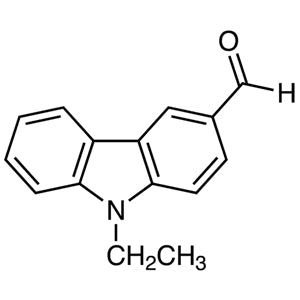
- TCI E0359 7570-45-8 N-Ethylcarbazole-3-carboxaldehyde
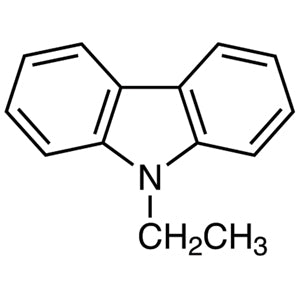
- TCI E0247 86-28-2 9-Ethylcarbazole
- TCI E0071 86-28-2 9-Ethylcarbazole
- Organic synthesis: 9-Benzylcarbazole is ideal for creating complex organic molecules due to its stable aromatic structure and reactive benzyl group.
- Pharmaceutical research: It is used in the development of new drugs, as its molecular framework can be modified to produce bioactive compounds.
- Heterocyclic chemistry: The compound's heterocyclic nature makes it suitable for studying the reactivity and behavior of such structures in various chemical environments.
- Material science: Its unique molecular composition allows it to be used in the development of advanced materials with specific chemical properties.
- Academic research: It is a valuable tool for teaching and research in chemistry, providing students and scientists with a reliable building block for synthetic experiments.
| Brand | TCI |
|---|---|
| CAS number | 19402-87-0 |
| Molecular formula | — |
| Purity | — |
| Category | Chemistry > Building Blocks > Heterocyclic Building Blocks |
| Pack sizes | — |
| Physical form | — |
| Storage | Store in a cool, dry place away from light |
9-Benzylcarbazole should be stored in a cool, dry place, away from direct light and sources of heat. It is recommended to keep the compound in a tightly sealed container to prevent exposure to moisture and air. Due to its chemical nature, it should be handled with appropriate personal protective equipment, such as gloves and safety goggles, to ensure laboratory safety. The compound is generally stable under normal storage conditions, but it is important to avoid contact with incompatible substances. Proper labeling and storage practices help maintain the integrity and safety of the compound in the laboratory environment.
—
Produk Terkait
-
9-Benzylcarbazole-3-carboxaldehyde TCI B2804
Regular price From Rp 1.961.400,00Regular priceRp 1.387.050,00Sale price From Rp 1.961.400,00 -
9-Ethylcarbazole-3-carboxaldehydeN-Ethyl-N-(m-tolyl)hydrazone TCI E0578
Regular price Rp 2.994.600,00Regular priceRp 2.109.450,00Sale price Rp 2.994.600,00 -
9-Ethylcarbazole-3-carboxaldehydeN-Ethyl-N-(o-tolyl)hydrazone TCI E0577
Regular price Rp 2.994.600,00Regular priceRp 2.109.450,00Sale price Rp 2.994.600,00 -
N-Ethylcarbazole-3-carboxaldehyde TCI E0359
Regular price From Rp 1.192.800,00Regular priceRp 849.450,00Sale price From Rp 1.192.800,00 -
9-Ethylcarbazole TCI E0247
Regular price Rp 1.272.600,00Regular priceRp 905.100,00Sale price Rp 1.272.600,00 -
9-Ethylcarbazole TCI E0071
Regular price From Rp 769.650,00Regular priceRp 553.350,00Sale price From Rp 769.650,00 -
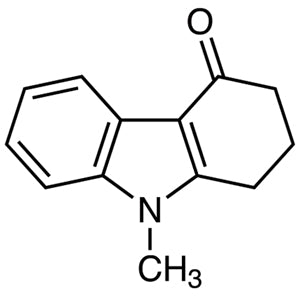
1,2,3,4-Tetrahydro-9-methylcarbazol-4-one TCI T2942
Regular price From Rp 822.150,00Regular priceRp 590.100,00Sale price From Rp 822.150,00 -
9-Benzoylcarbazole TCI B2864
Regular price From Rp 1.961.400,00Regular priceRp 1.387.050,00Sale price From Rp 1.961.400,00