N-(tert-Butoxycarbonyl)-L-pyroglutamic Acid is a chemical compound widely used in laboratory settings, particularly in the fields of organic chemistry and biochemical research. This compound plays a crucial role in peptide synthesis, where it serves as a protecting group for the amino terminus of peptides. Its ability to form stable amide bonds makes it an essential component in the construction of complex molecular structures. In the laboratory, it is frequently utilized as a reagent to facilitate controlled chemical reactions, enabling the synthesis of bioactive molecules with high specificity.
The compound's unique chemical properties make it a preferred choice for researchers. It exhibits high reactivity in deprotonation reactions, allowing for the precise formation of amide linkages with other amino acids. This specificity is vital in the development of peptides with desired biological functions. Additionally, its stability under controlled reaction conditions ensures consistent results in synthetic processes. These characteristics make it a reliable and efficient reagent for advanced chemical and biochemical applications.
In Indonesian laboratories, this compound is commonly used by researchers in biochemistry, pharmacology, and materials science. It is a key component in the development of new drugs and bioactive compounds. Its role in peptide synthesis supports various research initiatives aimed at understanding molecular mechanisms and creating innovative chemical solutions. The compound's versatility and reliability make it an essential tool in modern laboratory research.
TCI brochures (PDF)
- Amino Acids and Peptide Synthesis Reagents 2025-08-14 · p. 14
Related TCI products
- TCI C3143 32159-21-0 N-Carbobenzoxy-L-pyroglutamic Acid
- TCI B5216 91229-91-3 tert-Butyl N-(tert-Butoxycarbonyl)-L-pyroglutamate
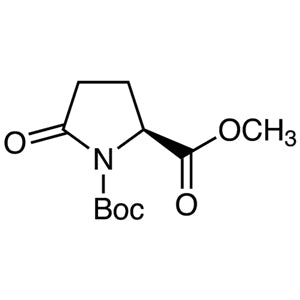
- TCI M2803 108963-96-8 Methyl N-(tert-Butoxycarbonyl)-L-pyroglutamate
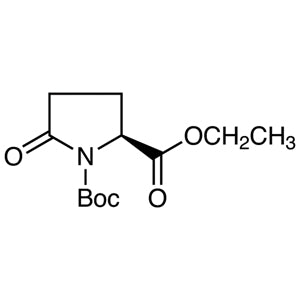
- TCI E1135 144978-12-1 Ethyl N-(tert-Butoxycarbonyl)-L-pyroglutamate
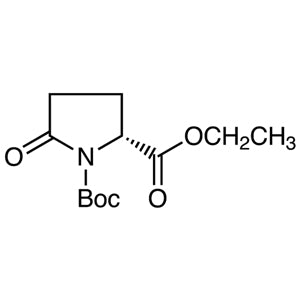
- TCI E0940 144978-35-8 Ethyl N-(tert-Butoxycarbonyl)-D-pyroglutamate
- TCI B5350 68856-96-2 N-(tert-Butoxycarbonyl)-4-methoxy-D-phenylalanine
- Peptide synthesis for drug development due to its ability to form stable amide bonds in controlled environments.
- Biochemical research to study molecular interactions and reaction mechanisms in biological systems.
- Pharmaceutical research for the design and synthesis of bioactive compounds with specific therapeutic properties.
- Materials science applications in the creation of functional polymers and biomaterials.
- Analytical chemistry for the characterization of complex molecular structures and reaction pathways.
| Brand | TCI |
|---|---|
| CAS number | 53100-44-0 |
| Molecular formula | — |
| Purity | — |
| Category | Chemistry > Chemical Biology > Peptide Chemistry |
| Pack sizes | Available in various quantities as per supplier specifications |
| Physical form | Solid powder |
| Storage | Store in a cool, dry place away from moisture and direct sunlight |
This compound should be stored in a cool, dry environment to maintain its chemical integrity. It is recommended to keep it in a tightly sealed container to prevent exposure to moisture and air. Due to its reactivity, it should be handled with care in a well-ventilated laboratory setting. Avoid contact with incompatible substances such as strong acids or bases. Proper personal protective equipment, including gloves and safety goggles, should be worn during handling. Regular monitoring of storage conditions ensures the compound remains suitable for use in laboratory applications.
—
Product Categories
Produk Terkait
-
N-Carbobenzoxy-L-pyroglutamicAcid TCI C3143
Regular price Rp 848.400,00Regular priceRp 609.000,00Sale price Rp 848.400,00 -
tert-ButylN-(tert-Butoxycarbonyl)-L-pyroglutamate TCI B5216
Regular price From Rp 1.087.800,00Regular priceRp 775.950,00Sale price From Rp 1.087.800,00 -
MethylN-(tert-Butoxycarbonyl)-L-pyroglutamate TCI M2803
Regular price From Rp 742.350,00Regular priceRp 534.450,00Sale price From Rp 742.350,00 -
EthylN-(tert-Butoxycarbonyl)-L-pyroglutamate TCI E1135
Regular price From Rp 505.050,00Regular priceRp 368.550,00Sale price From Rp 505.050,00 -
EthylN-(tert-Butoxycarbonyl)-D-pyroglutamate TCI E0940
Regular price From Rp 557.550,00Regular priceRp 405.300,00Sale price From Rp 557.550,00 -
N-(tert-Butoxycarbonyl)-4-methoxy-D-phenylalanine TCI B5350
Regular price From Rp 1.723.050,00Regular priceRp 1.220.100,00Sale price From Rp 1.723.050,00 -
(1R,2S)-1-[(tert-Butoxycarbonyl)amino]-2-vinylcyclopropanecarboxylicAcid TCI B5322
Regular price From Rp 689.850,00Regular priceRp 497.700,00Sale price From Rp 689.850,00 -
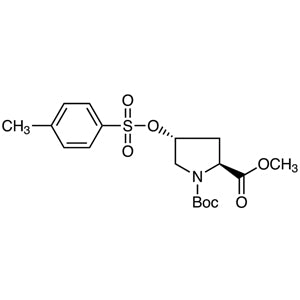
N-(tert-Butoxycarbonyl)-trans-4-(p-toluenesulfonyloxy)-L-prolineMethylEster TCI B5247
Regular price From Rp 610.050,00Regular priceRp 442.050,00Sale price From Rp 610.050,00