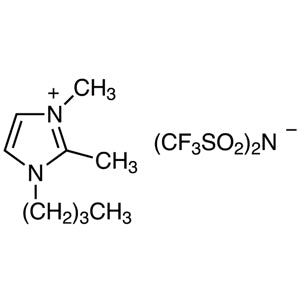
1-Butyl-2,3-dimethylimidazolium Trifluoromethanesulfonate is an ionic liquid widely used in specialized chemical reactions within laboratory settings. As a unique type of ionic liquid, it serves as a versatile medium for chemical synthesis, offering stability and non-volatility under various experimental conditions. Its role in the laboratory is crucial for maintaining reaction environments that are free from interference caused by vaporization or evaporation. This material is particularly valuable in organic synthesis and material science research, where controlled and consistent reaction conditions are essential.
The properties of this ionic liquid make it a preferred choice for many laboratory applications. It exhibits high thermal stability and a high boiling point, ensuring it remains in a liquid state under most experimental conditions. Its non-volatile nature reduces the risk of loss during prolonged reactions, while its ability to minimize polarity effects enhances reaction efficiency. These characteristics contribute to its reliability in both routine and advanced chemical processes, making it a trusted component in modern laboratory workflows.
In Indonesian laboratories, this ionic liquid is extensively used in chemical research, especially in the fields of organic synthesis and material development. Institutions and research centers rely on its stability and performance to conduct experiments that require precise control over reaction conditions. Its widespread application underscores its importance in advancing scientific research and innovation within the Indonesian scientific community.
TCI brochures (PDF)
- Ionic Liquids 2026-06-08 · p. 7
Related TCI products
- TCI B3159 350493-08-2 1-Butyl-2,3-dimethylimidazolium Bis(trifluoromethanesulfonyl)imide
- TCI B2475 402846-78-0 1-Butyl-2,3-dimethylimidazolium Tetrafluoroborate
- TCI B2474 227617-70-1 1-Butyl-2,3-dimethylimidazolium Hexafluorophosphate
- TCI B2473 98892-75-2 1-Butyl-2,3-dimethylimidazolium Chloride
- TCI H1286 288627-94-1 1-Hexyl-2,3-dimethylimidazolium Iodide
- TCI E0753 174899-90-2 1-Ethyl-2,3-dimethylimidazolium Bis(trifluoromethanesulfonyl)imide
- Organic synthesis reactions benefit from this ionic liquid due to its non-volatility and ability to reduce polarity effects, enhancing reaction efficiency and product yield.
- Material science experiments utilize this compound as a reaction medium, offering stable conditions for the synthesis of advanced materials and polymers.
- Green chemistry initiatives incorporate this ionic liquid as a sustainable alternative to traditional solvents, reducing environmental impact without compromising reaction performance.
- Electrochemical studies leverage its high thermal stability and non-volatile properties, ensuring consistent results in battery and fuel cell research.
- Catalytic processes benefit from its ability to maintain reaction environments free from vaporization, supporting efficient and reproducible catalytic transformations.
| Brand | TCI |
|---|---|
| CAS number | 765910-73-4 |
| Molecular formula | — |
| Purity | — |
| Category | Chemistry > Specialty Synthesis > Ionic Liquids |
| Pack sizes | Available in various quantities as per standard laboratory supply |
| Physical form | Liquid |
| Storage | Store in a cool, dry place away from direct sunlight and incompatible materials |
This ionic liquid should be stored in a cool, dry environment, away from direct sunlight and sources of heat. It is recommended to use sealed containers made of materials compatible with its chemical properties to prevent contamination and evaporation. Due to its non-volatile nature, it does not require refrigeration but should be kept in a secure location to avoid accidental exposure. Laboratory personnel should handle it with appropriate personal protective equipment, including gloves and safety goggles, to ensure safe handling. Regular inspection of storage conditions is advised to maintain the integrity of the material and ensure safe usage in all experimental procedures.
—
Produk Terkait
-
1-Butyl-2,3-dimethylimidazoliumBis(trifluoromethanesulfonyl)imide TCI B3159
Regular price From Rp 1.431.150,00Regular priceRp 1.016.400,00Sale price From Rp 1.431.150,00 -
1-Butyl-2,3-dimethylimidazoliumTetrafluoroborate TCI B2475
Regular price From Rp 2.677.500,00Regular priceRp 1.887.900,00Sale price From Rp 2.677.500,00 -
1-Butyl-2,3-dimethylimidazoliumHexafluorophosphate TCI B2474
Regular price From Rp 1.538.250,00Regular priceRp 1.090.950,00Sale price From Rp 1.538.250,00 -
1-Butyl-2,3-dimethylimidazoliumChloride TCI B2473
Regular price From Rp 980.700,00Regular priceRp 701.400,00Sale price From Rp 980.700,00 -
1-Hexyl-2,3-dimethylimidazoliumIodide TCI H1286
Regular price Rp 2.093.700,00Regular priceRp 1.479.450,00Sale price Rp 2.093.700,00 -
1-Ethyl-2,3-dimethylimidazoliumBis(trifluoromethanesulfonyl)imide TCI E0753
Regular price Rp 1.776.600,00Regular priceRp 1.257.900,00Sale price Rp 1.776.600,00 -
1,3-DimethylimidazoliumBis(trifluoromethanesulfonyl)imide TCI D5349
Regular price From Rp 2.809.800,00Regular priceRp 1.980.300,00Sale price From Rp 2.809.800,00 -
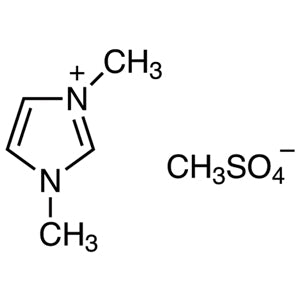
1,3-DimethylimidazoliumMethylSulfate TCI D5348
Regular price From Rp 1.220.100,00Regular priceRp 868.350,00Sale price From Rp 1.220.100,00