1-Butyl-2,3-dimethylimidazolium Hexafluorophosphate is an ionic liquid widely used in modern chemical applications. It is a unique molecular structure composed of an imidazolium cation and a hexafluorophosphate anion, offering exceptional chemical and physical properties. In the laboratory, this material serves as a versatile solvent, reaction medium, or auxiliary in the synthesis of complex compounds. Its non-volatile nature and high boiling point make it suitable for high-temperature reactions without the risk of solvent loss. This ionic liquid is highly valued in chemical research due to its stability and wide range of applications.
The properties of 1-Butyl-2,3-dimethylimidazolium Hexafluorophosphate make it a preferred choice for many laboratory processes. It is non-corrosive and does not produce toxic vapors, ensuring a safer working environment. Additionally, it exhibits excellent ionic conductivity, which is beneficial for electrochemical applications and organic synthesis. Its thermal stability and low volatility further enhance its utility in various experimental setups. These characteristics make it an essential component in both academic and industrial research settings.
In Indonesian laboratories, this ionic liquid is commonly used in chemical synthesis, electrochemistry, and materials science. Its unique properties support a wide range of experiments, from catalytic reactions to the development of new materials. Due to its stability and safety profile, it is a popular choice among researchers in Indonesia. Its versatility ensures that it remains a key material in modern laboratory practices.
TCI brochures (PDF)
- Ionic Liquids 2026-06-08 · p. 7
Related TCI products
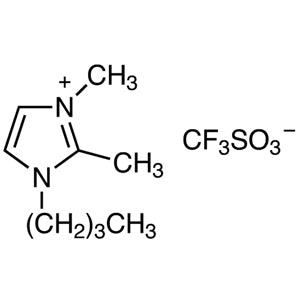
- TCI B4182 765910-73-4 1-Butyl-2,3-dimethylimidazolium Trifluoromethanesulfonate
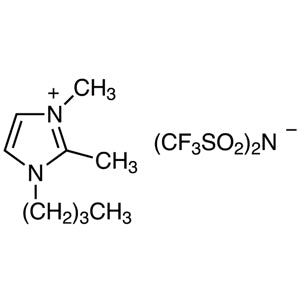
- TCI B3159 350493-08-2 1-Butyl-2,3-dimethylimidazolium Bis(trifluoromethanesulfonyl)imide
- TCI B2475 402846-78-0 1-Butyl-2,3-dimethylimidazolium Tetrafluoroborate
- TCI B2473 98892-75-2 1-Butyl-2,3-dimethylimidazolium Chloride
- TCI B2320 174501-64-5 1-Butyl-3-methylimidazolium Hexafluorophosphate
- TCI M3211 57367-08-5 1-Methyl-1H-imidazol-3-ium Hexafluorophosphate
- Electrochemical studies benefit from this ionic liquid due to its high ionic conductivity and stable electrochemical properties, making it ideal for battery research and corrosion testing.
- Organic synthesis experiments often utilize this material as a non-volatile solvent, allowing for high-temperature reactions without the need for volatile solvents.
- Materials science research employs this ionic liquid as a medium for polymer synthesis and nanomaterial preparation due to its non-reactive nature and thermal stability.
- Catalytic reactions in the laboratory use this compound as a reaction medium, offering a stable environment for catalysts to function efficiently.
- Analytical chemistry applications take advantage of its low volatility and non-corrosive properties, ensuring accurate and safe sample preparation.
| Brand | TCI |
|---|---|
| CAS number | 227617-70-1 |
| Molecular formula | — |
| Purity | — |
| Category | Chemistry > Specialty Synthesis > Ionic Liquids |
| Pack sizes | Available in various sizes as per supplier specifications |
| Physical form | Liquid |
| Storage | Store in a cool, dry place away from direct sunlight |
This ionic liquid should be stored in a cool, dry place, away from direct sunlight and sources of heat. It is recommended to use sealed containers made of materials compatible with ionic liquids, such as glass or high-density polyethylene. Due to its non-volatile nature, it does not require refrigeration but should be kept in a controlled environment to prevent contamination. In laboratory settings, it is important to ensure proper ventilation and use appropriate personal protective equipment when handling. Its non-corrosive and non-toxic properties make it relatively safe to handle, but standard laboratory safety protocols should still be followed.
—
Produk Terkait
-
1-Butyl-2,3-dimethylimidazoliumTrifluoromethanesulfonate TCI B4182
Regular price Rp 2.597.700,00Regular priceRp 1.832.250,00Sale price Rp 2.597.700,00 -
1-Butyl-2,3-dimethylimidazoliumBis(trifluoromethanesulfonyl)imide TCI B3159
Regular price From Rp 1.431.150,00Regular priceRp 1.016.400,00Sale price From Rp 1.431.150,00 -
1-Butyl-2,3-dimethylimidazoliumTetrafluoroborate TCI B2475
Regular price From Rp 2.677.500,00Regular priceRp 1.887.900,00Sale price From Rp 2.677.500,00 -
1-Butyl-2,3-dimethylimidazoliumChloride TCI B2473
Regular price From Rp 980.700,00Regular priceRp 701.400,00Sale price From Rp 980.700,00 -
1-Butyl-3-methylimidazoliumHexafluorophosphate TCI B2320
Regular price From Rp 1.483.650,00Regular priceRp 1.053.150,00Sale price From Rp 1.483.650,00 -
1-Methyl-1H-imidazol-3-iumHexafluorophosphate TCI M3211
Regular price From Rp 1.934.100,00Regular priceRp 1.368.150,00Sale price From Rp 1.934.100,00 -
1-Hexyl-2,3-dimethylimidazoliumIodide TCI H1286
Regular price Rp 2.093.700,00Regular priceRp 1.479.450,00Sale price Rp 2.093.700,00 -
1-Hexyl-3-methylimidazoliumHexafluorophosphate TCI H1098
Regular price From Rp 875.700,00Regular priceRp 627.900,00Sale price From Rp 875.700,00