Butylmalonic Acid (BCA), with CAS number 534-59-8, is a chemical compound widely used in organic laboratory reactions. As a building block in synthetic chemistry, it plays a crucial role in the formation of carbon-carbon bonds, enabling the creation of complex molecular structures. Its versatility makes it a valuable tool for researchers aiming to develop new compounds with applications in pharmaceuticals, materials science, and organic chemistry. BCA is particularly useful in reactions that require controlled reactivity and stability, making it a key component in many synthetic pathways.
The reactivity and structural simplicity of BCA make it a preferred choice for organic chemists. It is capable of participating in various chemical reactions, including Diels-Alder, hydrolysis, and substitution reactions. These properties allow it to be used in a wide range of synthetic strategies, from the synthesis of biologically active compounds to the development of advanced materials. Its ability to undergo multiple reaction types enhances its utility in both academic and industrial research settings.
In Indonesian laboratories, BCA is commonly used in organic chemistry research conducted by universities and research institutions. It is an essential reagent in the synthesis of bioactive compounds and the development of new materials. Its availability in the local market ensures that researchers have access to this important chemical for their experiments and studies.
- Organic synthesis applications benefit from BCA’s ability to form carbon-carbon bonds, enabling the creation of complex molecules.
- Pharmaceutical research utilizes BCA in the development of bioactive compounds due to its reactivity and structural adaptability.
- Material science applications rely on BCA for the synthesis of advanced polymers and functional materials.
- Educational institutions use BCA in teaching organic chemistry to demonstrate key synthetic reactions and molecular transformations.
- Industrial research employs BCA in the design of new chemical processes requiring controlled reactivity and stability.
| Brand | TCI |
|---|---|
| CAS number | 534-59-8 |
| Molecular formula | — |
| Purity | — |
| Category | Chemistry > Building Blocks > Non-Heterocyclic Building Blocks |
| Pack sizes | Available in various quantities as per supplier specifications |
| Physical form | Solid or liquid, depending on supplier packaging |
| Storage | Store in a cool, dry place away from direct sunlight |
Butylmalonic Acid should be stored in a cool, dry environment to maintain its chemical integrity. It is recommended to keep it in airtight containers to prevent moisture absorption and contamination. Due to its reactivity, it should be handled in a well-ventilated area, and appropriate personal protective equipment should be worn. Avoid exposure to strong oxidizing agents or incompatible substances. Ensure that storage conditions are suitable for the specific form of the compound, and always follow standard laboratory safety protocols when working with this material.
—
Produk Terkait
-
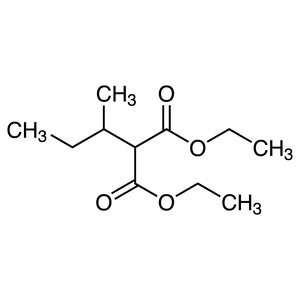
Diethylsec-Butylmalonate TCI B0384
Regular price Rp 2.068.500,00Regular priceRp 1.461.600,00Sale price Rp 2.068.500,00 -
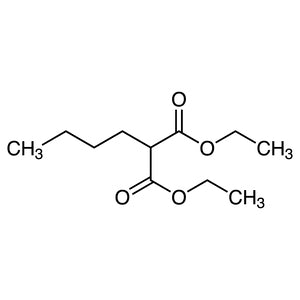
DiethylButylmalonate TCI B0381
Regular price From Rp 582.750,00Regular priceRp 423.150,00Sale price From Rp 582.750,00 -
DiethylIsobutylmalonate TCI I0251
Regular price From Rp 1.749.300,00Regular priceRp 1.239.000,00Sale price From Rp 1.749.300,00 -
DiethylDiisobutylmalonate TCI D2280
Regular price Rp 2.994.600,00Regular priceRp 2.109.450,00Sale price Rp 2.994.600,00 -
DiethylDibutylmalonate TCI D1184
Regular price Rp 1.483.650,00Regular priceRp 1.053.150,00Sale price Rp 1.483.650,00 -
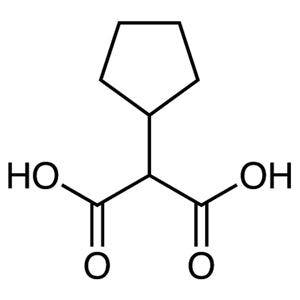
CyclopentylmalonicAcid TCI C0945
Regular price From Rp 3.260.250,00Regular priceRp 2.295.300,00Sale price From Rp 3.260.250,00 -
BenzylmalonicAcid TCI B0422
Regular price From Rp 1.298.850,00Regular priceRp 908.250,00Sale price From Rp 1.298.850,00 -
PhenylmalonicAcid TCI P0987
Regular price Rp 980.700,00Regular priceRp 685.650,00Sale price Rp 980.700,00