Benzofuran-3-boronic Acid (TCI B4522) is a chemical compound widely used in research applications within the fields of materials science and organic chemistry. This material plays a crucial role in laboratory settings by serving as a building block for the synthesis of complex heterocyclic compounds and advanced molecular structures. Its unique molecular structure enables it to participate in a variety of chemical reactions, making it an essential component in the development of new materials and functional molecules. Due to its versatility, it is highly valued in both academic and industrial research environments.
The compound is known for its chemical stability under certain conditions and its reactivity in specific environments, particularly when interacting with alcohols, amines, or halogenated compounds. These properties make it an ideal choice for reactions requiring high precision and efficiency. Its ability to form stable bonds with various functional groups further enhances its utility in the synthesis of semiconductors, polymers, and inorganic materials. This reactivity and stability contribute to its popularity among researchers working on advanced material development.
In Indonesian laboratories, Benzofuran-3-boronic Acid is a preferred choice for its reliability and effectiveness in chemical synthesis. It is commonly used in research focused on material innovation and organic chemistry. Its availability and performance make it a key reagent in the development of new materials and compounds, supporting a wide range of scientific investigations. Its role in enhancing the capabilities of laboratory research is significant and continuously growing.
TCI brochures (PDF)
- Boron Compounds 2025-10-07 · p. 12
- Building Blocks for Organic Semiconductor 2026-03-24 · p. 23
Related TCI products
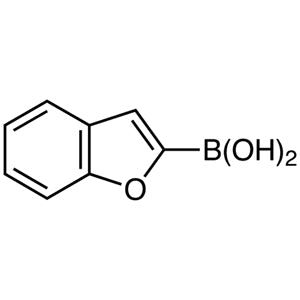
- TCI B2978 98437-24-2 Benzofuran-2-boronic Acid (contains varying amounts of Anhydride)
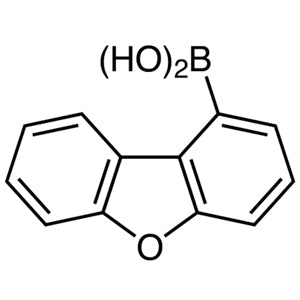
- TCI D5758 162607-19-4 Dibenzofuran-1-boronic Acid (contains varying amounts of Anhydride)
- TCI D4869 402936-15-6 Dibenzo[b,d]furan-2-ylboronic Acid (contains varying amounts of Anhydride)
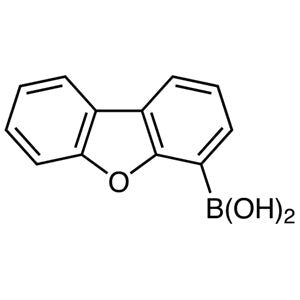
- TCI D4567 100124-06-9 Dibenzofuran-4-boronic Acid (contains varying amounts of Anhydride)
- TCI B6964 2172929-14-3 7-Bromonaphtho[1,2-b]benzofuran
- TCI B6950 1846601-95-3 10-Bromonaphtho[1,2-b]benzofuran
- Used in the synthesis of heterocyclic compounds due to its ability to participate in coupling reactions and form stable intermediates.
- Applied in semiconductor material development as a building block for creating advanced electronic components.
- Utilized in polymer synthesis for modifying molecular structures and enhancing material properties.
- Employed in inorganic material research for creating functional compounds with specific chemical behaviors.
- Integrated into functional group modification processes to improve the reactivity and performance of chemical compounds.
| Brand | TCI |
|---|---|
| CAS number | 317830-83-4 |
| Molecular formula | — |
| Purity | — |
| Category | Materials Science > Material Building Blocks > Small Molecule Semiconductor Building Blocks |
| Pack sizes | — |
| Physical form | — |
| Storage | Store in a cool, dry place away from moisture and direct sunlight |
Benzofuran-3-boronic Acid should be stored in a cool, dry environment to maintain its chemical stability. It is recommended to keep the compound in a sealed container to prevent exposure to moisture and air. Suitable storage containers include glass or high-density polyethylene (HDPE) bottles, which provide protection against chemical degradation. General laboratory precautions include handling the material with appropriate personal protective equipment (PPE) such as gloves and safety goggles. It is important to ensure proper ventilation in the workspace to minimize inhalation risks. Avoid contact with incompatible substances like strong acids or bases to prevent unwanted chemical reactions. Proper storage and handling practices help maintain the integrity and effectiveness of the compound in research applications.
—
Produk Terkait
-
Benzofuran-2-boronicAcid(containsvaryingamountsofAnhydride) TCI B2978
Regular price Rp 1.087.800,00Regular priceRp 775.950,00Sale price Rp 1.087.800,00 -
Dibenzofuran-1-boronicAcid(containsvaryingamountsofAnhydride) TCI D5758
Regular price From Rp 2.757.300,00Regular priceRp 1.943.550,00Sale price From Rp 2.757.300,00 -
Dibenzo[b,d]furan-2-ylboronicAcid(containsvaryingamountsofAnhydride) TCI D4869
Regular price From Rp 1.908.900,00Regular priceRp 1.350.300,00Sale price From Rp 1.908.900,00 -
Dibenzofuran-4-boronicAcid(containsvaryingamountsofAnhydride) TCI D4567
Regular price From Rp 717.150,00Regular priceRp 516.600,00Sale price From Rp 717.150,00 -
7-Bromonaphtho[1,2-b]benzofuran TCI B6964
Regular price Rp 3.870.300,00Regular priceRp 2.721.600,00Sale price Rp 3.870.300,00 -
10-Bromonaphtho[1,2-b]benzofuran TCI B6950
Regular price From Rp 3.153.150,00Regular priceRp 2.220.750,00Sale price From Rp 3.153.150,00 -
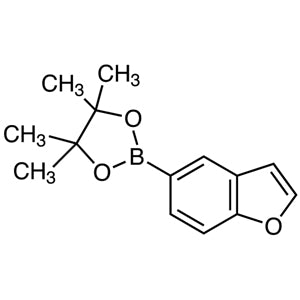
2-(Benzofuran-5-yl)-4,4,5,5-tetramethyl-1,3,2-dioxaborolane TCI B5823
Regular price From Rp 1.351.350,00Regular priceRp 960.750,00Sale price From Rp 1.351.350,00 -
Thieno[3,2-b]thiophene-2-boronicAcid(containsvaryingamountsofAnhydride) TCI T2621
Regular price Rp 5.883.150,00Regular priceRp 4.129.650,00Sale price Rp 5.883.150,00