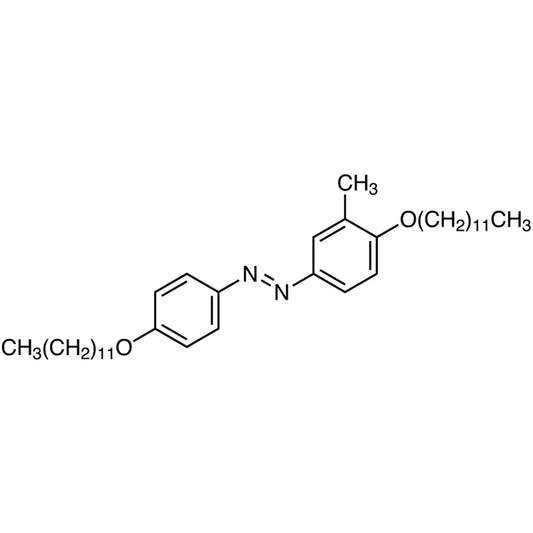
4,4'-Bis(hexyloxy)-3-methylazobenzene is a chemical compound widely used in materials science research, particularly in the field of photonic and optical materials. This compound is known for its photochromic properties, meaning it can change color when exposed to light. This characteristic makes it a valuable tool for studying light-responsive materials and their behavior under different electromagnetic radiation conditions. In the laboratory, it plays a crucial role in the development of advanced optical materials and sensors that rely on light-induced changes in molecular structure. Its unique properties are essential for researchers aiming to create materials with tailored optical responses.
The compound's ability to undergo structural changes upon light exposure, combined with its chemical stability, makes it a preferred choice for various scientific applications. Its molecular structure is complex, allowing for precise control over its optical and photophysical properties. This makes it ideal for use in experiments that require consistent and predictable responses to light stimuli. Additionally, its stability ensures that it remains effective even under prolonged storage and repeated experimental use, which is vital for maintaining the integrity of research outcomes.
In Indonesian laboratories, this compound is commonly used in academic and research institutions to explore new optical materials and sensor technologies. It is particularly relevant for studies in photonics, optoelectronics, and advanced material development. Researchers in Indonesia are increasingly interested in utilizing such compounds to innovate in fields like optical devices, light-sensitive materials, and smart materials that respond to environmental stimuli. Its presence in these labs highlights its importance in advancing scientific knowledge and technological applications.
Advantages (TCI brochure)
- Can be repeatedly liquefied from solid by UV light and solidified from liquid by visible light at room temperature
- Shortest UV photoresponse of the three materials in the film test (8 sec)
TCI brochures (PDF)
Related TCI products
- TCI B4598 1440509-01-2 4,4'-Bis(dodecyloxy)-3-methylazobenzene
- TCI B4597 1627844-78-3 4,4'-Bis(decyloxy)-3-methylazobenzene
- TCI B6252 2052287-45-1 (E)-4,4'-Bis(octyloxy)-3-methylazobenzene
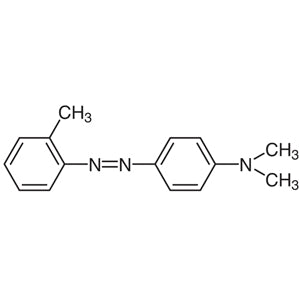
- TCI M0789 3731-39-3 4-(Dimethylamino)-2'-methylazobenzene
- TCI M0207 55-80-1 4-(Dimethylamino)-3'-methylazobenzene
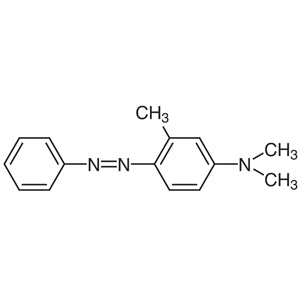
- TCI D1351 54-88-6 4-(Dimethylamino)-2-methylazobenzene
- Photonic Materials Research – This compound is ideal for studying light-responsive materials due to its ability to change color when exposed to light, making it useful in developing new optical materials.
- Optical Sensor Development – Its photochromic properties allow it to be used in creating sensors that detect and respond to light, which is essential for advanced sensor technologies.
- Material Characterization Studies – The compound's structural changes under light exposure make it a valuable tool for analyzing how materials behave under different light conditions.
- Optical Device Prototyping – Researchers use it to create prototypes of optical devices that rely on light-induced changes in material properties.
- Educational Research Projects – It is often used in academic settings to teach students about photochromic materials and their applications in modern technology.
From the TCI brochure
- Light-controlled adhesion of glass slides (Application 1)
- Photoresist for simple lithography (Application 2)
| Brand | TCI |
|---|---|
| CAS number | 1440509-03-4 |
| Molecular formula | — |
| Purity | — |
| Category | Materials Science > Photonic Materials and Optical Materials > Photochromic Dyes |
| Pack sizes | As per supplier specifications |
| Physical form | Solid (as per standard product description) |
| Storage | Store in a cool, dry place away from direct light |
Data from the TCI brochure
| Kemasan | 500 mg / 5 g |
|---|---|
| Light adhesion, liquefaction | 365 nm, 80 mW cm-2, 3 min (Application 1, light adhesion) |
| Light adhesion, solidification | 450 nm, 40 mW cm-2, 3 min (Application 1, light adhesion) |
| Maximal adhesion value (group of materials) | 60 N cm-2 (0.6 MPa) |
| Waktu respons UV | 8 sec (Film kristal ca. 1 μm, polarized light microscopy; bergantung pada ketebalan film dan intensitas cahaya) |
| Waktu respons visible | 1 sec (Film kristal ca. 1 μm, polarized light microscopy; bergantung pada ketebalan film dan intensitas cahaya) |
Source: TCI brochure FF032 (2024-07-05)
This compound should be stored in a cool, dry environment, away from direct sunlight and sources of heat to maintain its stability and photochromic properties. It is recommended to use airtight containers to prevent exposure to moisture and contaminants. Due to its chemical nature, it should be handled with appropriate personal protective equipment, such as gloves and safety goggles, to ensure laboratory safety. Storage conditions should be consistent to avoid any degradation of the compound's optical properties. Proper labeling and safe handling practices are essential to prevent accidental exposure and ensure the compound remains effective for research purposes.
—
Produk Terkait
-
4,4'-Bis(dodecyloxy)-3-methylazobenzene TCI B4598
Regular price From Rp 3.870.300,00Regular priceRp 2.705.850,00Sale price From Rp 3.870.300,00 -
4,4'-Bis(decyloxy)-3-methylazobenzene TCI B4597
Regular price From Rp 4.213.650,00Regular priceRp 2.946.300,00Sale price From Rp 4.213.650,00 -
(E)-4,4'-Bis(octyloxy)-3-methylazobenzene TCI B6252
Regular price Rp 2.359.350,00Regular priceRp 1.649.550,00Sale price Rp 2.359.350,00 -
4-(Dimethylamino)-2'-methylazobenzene TCI M0789
Regular price Rp 2.518.950,00Regular priceRp 1.760.850,00Sale price Rp 2.518.950,00 -
4-(Dimethylamino)-3'-methylazobenzene TCI M0207
Regular price Rp 2.837.100,00Regular priceRp 1.983.450,00Sale price Rp 2.837.100,00 -
4-(Dimethylamino)-2-methylazobenzene TCI D1351
Regular price Rp 1.670.550,00Regular priceRp 1.167.600,00Sale price Rp 1.670.550,00 -
Azobenzene TCI A0565
Regular price From Rp 2.411.850,00Regular priceRp 1.686.300,00Sale price From Rp 2.411.850,00 -
4-Acetamido-2',3-dimethylazobenzene TCI A0073
Regular price Rp 2.625.000,00Regular priceRp 1.835.400,00Sale price Rp 2.625.000,00