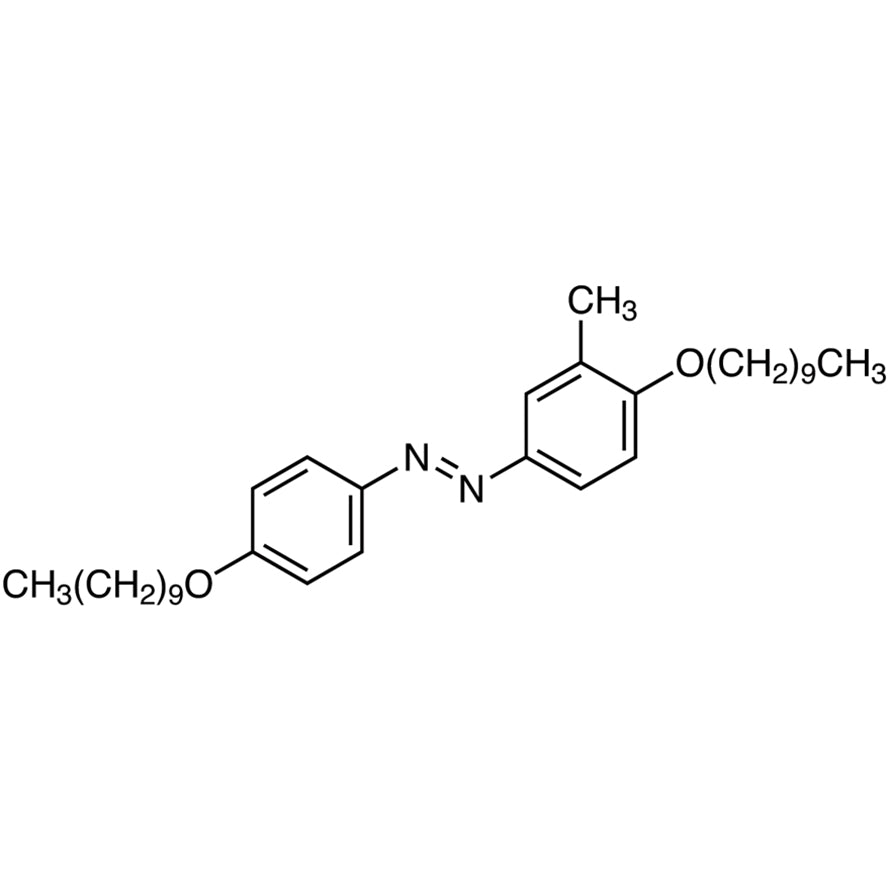
4,4'-Bis(decyloxy)-3-methylazobenzene is a chemical compound widely used in material science research, particularly in the development of optical and photochromic materials. This compound plays a crucial role in laboratories where researchers investigate the optical properties of materials and their response to light. Its unique molecular structure, featuring an azo group, enables reversible color changes when exposed to light, making it a valuable tool for studying photochromic behavior. This property is essential for understanding how materials can alter their optical characteristics under different environmental conditions.
The compound is preferred due to its sensitivity to light and its ability to undergo structural changes when exposed to ultraviolet or visible light. These characteristics make it ideal for applications requiring reversible optical responses. Additionally, it exhibits good chemical stability under certain conditions, ensuring consistent performance in experiments over time. This stability, combined with its optical responsiveness, positions it as a reliable material for long-term research projects.
In Indonesian laboratories, 4,4'-Bis(decyloxy)-3-methylazobenzene is commonly used in material science research, especially in the fields of optics and photochromic materials. Researchers in educational institutions and research organizations frequently utilize this compound for experiments involving light-induced structural changes and optical property analysis. Its versatility and reliability make it a key component in advancing scientific understanding in these areas.
Advantages (TCI brochure)
- Same reversible solid-liquid switching by UV and visible light at room temperature
- UV photoresponse of 17 sec in crystalline film test
TCI brochures (PDF)
Related TCI products
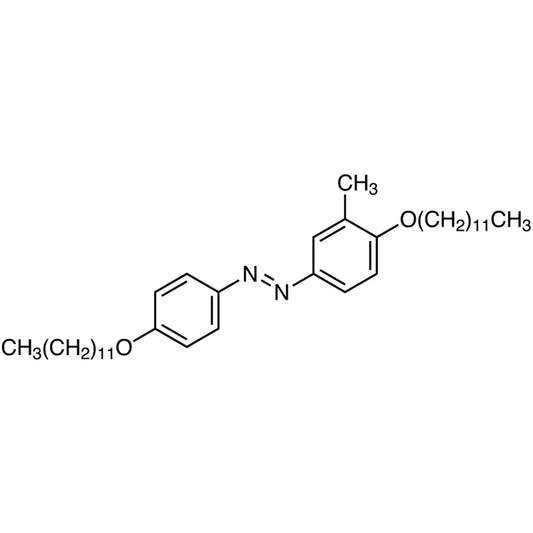
- TCI B4598 1440509-01-2 4,4'-Bis(dodecyloxy)-3-methylazobenzene
- TCI B4596 1440509-03-4 4,4'-Bis(hexyloxy)-3-methylazobenzene
- TCI B6252 2052287-45-1 (E)-4,4'-Bis(octyloxy)-3-methylazobenzene
- TCI D4176 5519-23-3 4-(Decyloxy)benzoic Acid
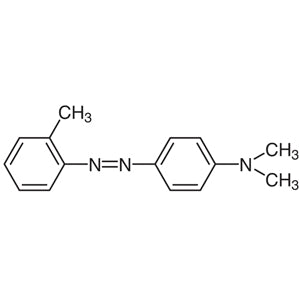
- TCI M0789 3731-39-3 4-(Dimethylamino)-2'-methylazobenzene
- TCI M0207 55-80-1 4-(Dimethylamino)-3'-methylazobenzene
- Photochromic Material Development: This compound is ideal for creating materials that change color in response to light, used in optical sensors and smart materials.
- Optical Response Testing: Its reversible color change under light exposure makes it suitable for testing how materials react to different wavelengths of light.
- Structural Change Analysis: Researchers use it to study molecular rearrangements caused by radiation, aiding in the design of responsive materials.
- Light-Sensitive Coating Formulation: It is incorporated into coatings that alter their properties when exposed to light, useful in advanced optical applications.
- Educational Research Projects: It is frequently used in academic settings to teach and demonstrate photochromic behavior and optical material properties.
From the TCI brochure
- Light-controlled adhesion of glass slides (Application 1)
- Photoresist for simple lithography (Application 2)
| Brand | TCI |
|---|---|
| CAS number | 1627844-78-3 |
| Molecular formula | — |
| Purity | — |
| Category | Materials Science > Photonic Materials and Optical Materials > Photochromic Dyes |
| Pack sizes | — |
| Physical form | — |
| Storage | Store in a cool, dark place away from direct light and moisture |
Data from the TCI brochure
| Kemasan | 500 mg / 5 g |
|---|---|
| Light adhesion, liquefaction | 365 nm, 80 mW cm-2, 3 min (Application 1, light adhesion) |
| Light adhesion, solidification | 450 nm, 40 mW cm-2, 3 min (Application 1, light adhesion) |
| Maximal adhesion value (group of materials) | 60 N cm-2 (0.6 MPa) |
| Waktu respons UV | 17 sec (Film kristal ca. 1 μm, polarized light microscopy; bergantung pada ketebalan film dan intensitas cahaya) |
| Waktu respons visible | 1 sec (Film kristal ca. 1 μm, polarized light microscopy; bergantung pada ketebalan film dan intensitas cahaya) |
Source: TCI brochure FF032 (2024-07-05)
This compound should be stored in a cool, dark environment to prevent degradation due to light exposure. It is recommended to keep it in a tightly sealed container to minimize exposure to air and moisture. Proper ventilation should be maintained in the storage area to ensure safe handling. Due to its sensitivity to light, it should be handled in a controlled setting with appropriate protective equipment. Regular monitoring of storage conditions is advised to maintain its stability and effectiveness for research applications. Always follow standard laboratory safety protocols when working with photochromic materials to ensure safe and consistent results.
—
Produk Terkait
-
4,4'-Bis(dodecyloxy)-3-methylazobenzene TCI B4598
Regular price From Rp 3.870.300,00Regular priceRp 2.705.850,00Sale price From Rp 3.870.300,00 -
4,4'-Bis(hexyloxy)-3-methylazobenzene TCI B4596
Regular price From Rp 3.710.700,00Regular priceRp 2.594.550,00Sale price From Rp 3.710.700,00 -
(E)-4,4'-Bis(octyloxy)-3-methylazobenzene TCI B6252
Regular price Rp 2.359.350,00Regular priceRp 1.649.550,00Sale price Rp 2.359.350,00 -
4-(Decyloxy)benzoicAcid TCI D4176
Regular price From Rp 1.483.650,00Regular priceRp 1.053.150,00Sale price From Rp 1.483.650,00 -
4-(Dimethylamino)-2'-methylazobenzene TCI M0789
Regular price Rp 2.518.950,00Regular priceRp 1.760.850,00Sale price Rp 2.518.950,00 -
4-(Dimethylamino)-3'-methylazobenzene TCI M0207
Regular price Rp 2.837.100,00Regular priceRp 1.983.450,00Sale price Rp 2.837.100,00 -
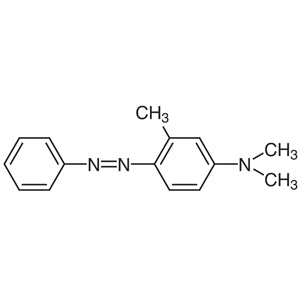
4-(Dimethylamino)-2-methylazobenzene TCI D1351
Regular price Rp 1.670.550,00Regular priceRp 1.167.600,00Sale price Rp 1.670.550,00 -
Azobenzene TCI A0565
Regular price From Rp 2.411.850,00Regular priceRp 1.686.300,00Sale price From Rp 2.411.850,00