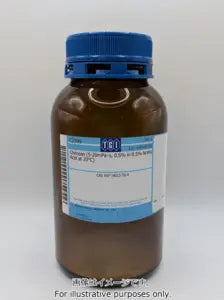
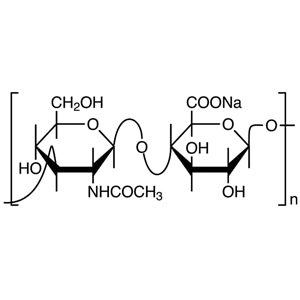
Chitosan from TCI, specified at a viscosity of 200–600 mPa·s (measured as a 0.5% solution in 0.5% acetic acid at 20°C), is a natural polysaccharide. It is produced by deacetylating chitin, a biopolymer found in large amounts in crustacean shells. The polymer chain is built from glucosamine and N-acetylglucosamine units. In the laboratory, chitosan is important in glycoscience, biomaterials, pharmaceutical research, and environmental technology because it is one of the few natural polysaccharides with cationic character.
The free amino groups along the chitosan chain become protonated in dilute acidic solutions. This is why chitosan dissolves in dilute acetic acid and carries a positive charge. Because of this charge, it can interact with negatively charged molecules, form films and gels, and bind metal ions. Chitosan is also known to be biocompatible and biodegradable, which makes it attractive for biomaterials research. The stated viscosity specification helps researchers choose a suitable grade. Solution viscosity reflects polymer chain length, and it affects the properties of the films, gels, and particles that researchers make from it.
In Indonesia, chitosan is a very active research topic. University laboratories, research institutes, and industrial R&D groups study it for biomaterials, pharmaceutical formulations, food applications, and environmental treatment. Using a well-characterized grade with a defined viscosity range from an established brand like TCI helps Indonesian researchers get reproducible results across experiments. It also makes their findings easier to compare with published literature.
TCI brochures (PDF)
- Polysaccharides 2025-02-13 · p. 1
- Drug Delivery System (DDS) Research Reagents 2025-01-29 · p. 1
- Reagents for Glyco Chemistry & Biology 5th Edition · p. 115
- Biomaterials Research Reagents 2025-02-19 · p. 4
Related TCI products
- TCI C2395 9012-76-4 Chitosan (5-20mPa.s, 0.5% in 0.5% Acetic Acid at 20deg C)
- TCI H0652 31799-91-4 Potassium Hyaluronate from Cockscomb
- TCI H0603 9067-32-7 Sodium Hyaluronate from Cockscomb
- TCI D3672 54328-33-5 Dermatan Sulfate Sodium Salt
- TCI X0078 9014-63-5 Xylan from Corn Core
- TCI A1328 9036-66-2 (+)-Arabinogalactan from Larch Wood
- Glycoscience research: As a polysaccharide made of glucosamine and N-acetylglucosamine units, chitosan is a useful model material for studying the structure, behavior, and interactions of carbohydrates.
- Film and gel preparation: Once protonated in dilute acetic acid, chitosan can form films and gels, and its defined viscosity range helps researchers control the properties of the final material.
- Biomaterials development: Chitosan is biocompatible and biodegradable, which makes it a common candidate for scaffolds, coatings, and other materials studied in biomedical research.
- Pharmaceutical formulation studies: Its positive charge in acidic solution lets chitosan interact with negatively charged molecules, which supports research on particles and carrier systems in pharmaceutical work.
- Environmental technology: The free amino groups on the chitosan chain can bind metal ions, so the polymer is widely studied for adsorption and water treatment research.
| Brand | TCI (product code C0831) |
|---|---|
| CAS number | 9012-76-4 |
| Molecular formula | — |
| Purity | — |
| Category | Chemistry > Chemical Biology > Glycoscience |
| Pack sizes | confirm available pack sizes with AMI Scientific when ordering |
| Physical form | — |
| Storage | keep tightly closed in a cool, dry place, following the TCI product label and Safety Data Sheet |
- Viscosity specification: 200–600 mPa·s (0.5% in 0.5% acetic acid at 20°C)
Store chitosan in its original, tightly sealed container in a cool, dry, well-ventilated area, away from direct sunlight and moisture. Polysaccharides can absorb moisture from the air, so close the container promptly after each use. Keep it away from incompatible substances such as strong oxidizing agents. When weighing and handling the powder, wear standard laboratory protective equipment, including gloves, safety glasses, and a lab coat, and avoid creating or breathing in dust. When preparing solutions in dilute acetic acid, follow good laboratory practice and use suitable glassware. Always read the TCI Safety Data Sheet before use for detailed hazard, handling, and disposal information.
—
Product Categories
- GlycoscienceApplications Using Glyco-materialsGlyco-engeneering [Applications Using Glyco-materials]
- GlycoscienceApplications Using Glyco-materialsGlyco-utilization [Applications Using Glyco-materials]
- GlycoscienceFunctional OligosaccharidesPolysaccharides [Functional Oligosaccharides]
- GlycosciencePolysaccharides [Glycoscience]
- Biochemicals and ReagentsCarbohydrates
- Pharmaceutical Development and Drug Discovery ResearchDrug Delivery Systems (DDS)Natural Polymers (for DDS)
Produk Terkait
-
Chitosan(5-20mPa.s,0.5%in0.5%AceticAcidat20degC) TCI C2395
Regular price Rp 717.150,00Regular priceRp 516.600,00Sale price Rp 717.150,00 -
PotassiumHyaluronatefromCockscomb TCI H0652
Regular price Rp 9.459.450,00Regular priceRp 6.630.750,00Sale price Rp 9.459.450,00 -
SodiumHyaluronatefromCockscomb TCI H0603
Regular price From Rp 2.411.850,00Regular priceRp 1.702.050,00Sale price From Rp 2.411.850,00 -
DermatanSulfateSodiumSalt TCI D3672
Regular price From Rp 2.544.150,00Regular priceRp 1.794.450,00Sale price From Rp 2.544.150,00 -
XylanfromCornCore TCI X0078
Regular price From Rp 1.458.450,00Regular priceRp 1.035.300,00Sale price From Rp 1.458.450,00 -
(+)-ArabinogalactanfromLarchWood TCI A1328
Regular price From Rp 1.246.350,00Regular priceRp 887.250,00Sale price From Rp 1.246.350,00 -
PectinfromCitrus TCI P0024
Regular price From Rp 637.350,00Regular priceRp 460.950,00Sale price From Rp 637.350,00 -
GuarGum TCI G0478
Regular price From Rp 662.550,00Regular priceRp 478.800,00Sale price From Rp 662.550,00