TCI C1644 5-Chloro-1-indanone is a bicyclic ketone made of a benzene ring fused to a cyclopentanone ring, with a chlorine atom at the 5-position. The indanone framework is an important structure in synthetic chemistry because it appears in many pharmaceutical, agrochemical, and functional material compounds. In the laboratory, 5-Chloro-1-indanone serves as a building block for indane and indene derivatives and for more complex cyclic systems. It is also known as an intermediate in the research and development of insecticidal compounds, which makes it a useful starting material for synthetic programmes.
Chemists choose this compound because it has several reactive sites. The carbonyl group can be reduced to an alcohol, converted to an amine through reductive amination, or condensed with aldehydes. The position alpha to the carbonyl can be functionalised, for example through alkylation, halogenation, or carboxylation. The chlorine atom on the aromatic ring stays available for later modification through cross-coupling reactions. Its rigid bicyclic framework also helps researchers control the three-dimensional shape of target molecules. Because it combines these reactive handles in one compact scaffold, it supports efficient multi-step synthesis and the preparation of structurally diverse compound series.
For laboratories in Indonesia, this material is relevant to medicinal chemistry and agrochemical research groups, organic synthesis laboratories, and university departments that run academic research in synthetic methodology. Research teams developing new bioactive molecules can use it as a dependable starting point for analogue libraries, while teaching and postgraduate laboratories can use it to show classic carbonyl chemistry and aromatic functionalisation. Its TCI origin gives researchers a consistent reagent source for reproducible work across repeated experiments and project stages.
- Medicinal chemistry scaffold synthesis: the indanone core appears in many pharmaceutical compounds, so this building block lets researchers prepare analogue series around a well-established, drug-relevant framework.
- Agrochemical and insecticide research: the compound is known as an intermediate in insecticide research and development, so it suits groups exploring new crop protection candidates.
- Reductive amination and carbonyl transformations: the ketone group can be reduced to an alcohol, converted to an amine, or condensed with aldehydes, which gives several routes to new functional groups.
- Alpha-functionalisation studies: the position next to the carbonyl accepts alkylation, halogenation, or carboxylation, so researchers can add substituents and build molecular complexity in a controlled way.
- Cross-coupling for late-stage diversification: the aromatic chlorine atom remains available for cross-coupling reactions, so chemists can modify the ring after other synthetic steps are finished.
| Brand | TCI (product code C1644) |
|---|---|
| CAS number | 42348-86-7 |
| Molecular formula | — |
| Purity | — |
| Category | Chemistry > Building Blocks > Non-Heterocyclic Building Blocks |
| Pack sizes | as listed on the product page; contact AMI Scientific for available options |
| Physical form | refer to the manufacturer's certificate of analysis and safety data sheet |
| Storage | keep tightly sealed in a cool, dry, well-ventilated place, following the manufacturer's label |
Store 5-Chloro-1-indanone in its original, tightly closed container in a cool, dry, well-ventilated area, away from direct sunlight, heat sources, and incompatible materials such as strong oxidising agents. Follow any storage temperature on the manufacturer's label. Handle the material in a fume hood or well-ventilated area, and wear suitable gloves, safety glasses, and a laboratory coat. Do not inhale dust or vapour, and avoid contact with skin and eyes. Read the safety data sheet before use, label all secondary containers clearly, and dispose of waste according to local regulations and your institution's chemical waste procedures.
—
Produk Terkait
-
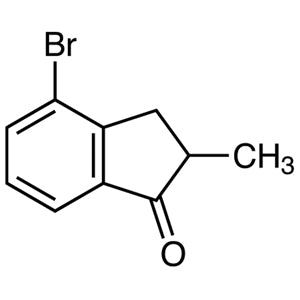
4-Bromo-2-methyl-1-indanone TCI B5096
Regular price From Rp 1.723.050,00Regular priceRp 1.220.100,00Sale price From Rp 1.723.050,00 -
4-Bromo-1-indanone TCI B3801
Regular price From Rp 822.150,00Regular priceRp 590.100,00Sale price From Rp 822.150,00 -
6-Bromo-1-indanone TCI B3711
Regular price From Rp 1.563.450,00Regular priceRp 1.108.800,00Sale price From Rp 1.563.450,00 -
5-Bromo-1-indanone TCI B2342
Regular price From Rp 795.900,00Regular priceRp 572.250,00Sale price From Rp 795.900,00 -
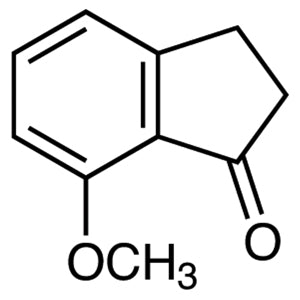
7-Methoxy-1-indanone TCI M3126
Regular price From Rp 1.510.950,00Regular priceRp 1.072.050,00Sale price From Rp 1.510.950,00 -
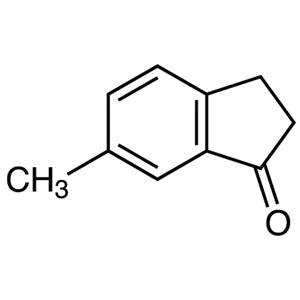
6-Methyl-1-indanone TCI M1901
Regular price Rp 1.644.300,00Regular priceRp 1.149.750,00Sale price Rp 1.644.300,00 -
6-Methoxy-1-indanone TCI M1535
Regular price From Rp 2.411.850,00Regular priceRp 1.702.050,00Sale price From Rp 2.411.850,00 -
5-Methoxy-1-indanone TCI M1467
Regular price From Rp 1.618.050,00Regular priceRp 1.146.600,00Sale price From Rp 1.618.050,00