2-(4-Chlorophenyl)benzimidazole is a chemical compound widely used in scientific research, particularly in organic chemistry and coordination chemistry. It serves as a key building block in the synthesis of functional metal complexes, which are essential for various advanced applications in material science. This compound plays a crucial role in the development of new materials and the exploration of chemical reactivity in laboratory settings. Its unique molecular structure enables it to act as a ligand, facilitating the formation of stable metal complexes with distinct properties.
The compound's molecular structure, featuring a benzimidazole core with a chlorine atom at the para position of the phenyl ring, contributes to its high reactivity. This reactivity allows it to participate in a range of chemical reactions, including substitution, condensation, and complexation processes. These characteristics make it a versatile tool for researchers aiming to design and synthesize novel compounds with specific functional properties. Its adaptability and chemical behavior make it a preferred choice in both fundamental and applied research.
In Indonesian laboratories, 2-(4-Chlorophenyl)benzimidazole is commonly used in pure and applied chemical research, especially in the study of metal complexes, the synthesis of new compounds, and the development of innovative materials. It is also found in environmental and materials technology research, where its chemical properties are leveraged to explore new applications and solutions. Its role in these contexts underscores its importance in advancing scientific knowledge and technological innovation.
TCI brochures (PDF)
- Ligands 2025-12-01 · p. 11
Related TCI products
- TCI B2812 2622-74-4 2-(4-Bromophenyl)benzimidazole
- TCI A2759 7621-86-5 5-Amino-2-(4-aminophenyl)benzimidazole
- TCI H1736 2963-66-8 2-(2-Hydroxyphenyl)-1H-benzimidazole
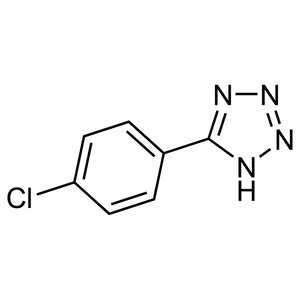
- TCI C4066 16687-61-9 5-(4-Chlorophenyl)-1H-tetrazole
- TCI C2811 50907-46-5 5-(2-Chlorophenyl)-1H-tetrazole
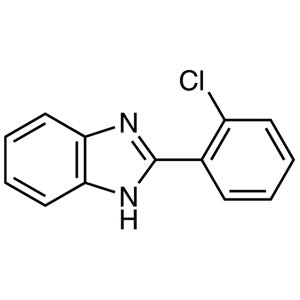
- TCI C3576 3574-96-7 2-(2-Chlorophenyl)benzimidazole
- Metal Complex Synthesis: This compound is ideal for creating functional metal complexes due to its ability to act as a stable ligand, enhancing the structural and functional properties of the resulting complexes.
- Organic Synthesis: Its reactivity and molecular structure make it a valuable reagent in organic synthesis, enabling the formation of complex molecules with desired properties.
- Material Development: It is frequently used in the development of new materials, contributing to the creation of advanced materials with unique chemical and physical characteristics.
- Environmental Research: Its chemical properties are applied in environmental studies to investigate interactions between chemicals and their impact on ecosystems.
- Analytical Chemistry: It serves as a reference compound in analytical methods, aiding in the identification and quantification of various chemical substances in complex mixtures.
| Brand | TCI |
|---|---|
| CAS number | 1019-85-8 |
| Molecular formula | — |
| Purity | — |
| Category | Materials Science > Material Building Blocks > Ligands for Functional Metal Complexes |
| Pack sizes | Available in various quantities as per supplier specifications |
| Physical form | Solid, typically in crystalline or powder form |
| Storage | Store in a cool, dry place away from light and moisture |
This compound should be stored in a cool, dry environment, away from direct sunlight and sources of moisture. It is recommended to use airtight containers to prevent exposure to air and humidity, which may affect its stability. Proper labeling of containers is essential to ensure safe handling and prevent accidental exposure. In laboratory settings, it should be handled with appropriate personal protective equipment, such as gloves and safety goggles, to minimize risk. Due to its chemical nature, it should be stored separately from incompatible substances to avoid potential reactions. Regular inspection of storage conditions is advised to maintain the integrity and safety of the material.
—
Produk Terkait
-
2-(4-Bromophenyl)benzimidazole TCI B2812
Regular price From Rp 2.013.900,00Regular priceRp 1.423.800,00Sale price From Rp 2.013.900,00 -
5-Amino-2-(4-aminophenyl)benzimidazole TCI A2759
Regular price From Rp 2.147.250,00Regular priceRp 1.517.250,00Sale price From Rp 2.147.250,00 -
2-(2-Hydroxyphenyl)-1H-benzimidazole TCI H1736
Regular price From Rp 2.623.950,00Regular priceRp 1.850.100,00Sale price From Rp 2.623.950,00 -
5-(4-Chlorophenyl)-1H-tetrazole TCI C4066
Regular price From Rp 900.900,00Regular priceRp 645.750,00Sale price From Rp 900.900,00 -
5-(2-Chlorophenyl)-1H-tetrazole TCI C2811
Regular price From Rp 1.087.800,00Regular priceRp 775.950,00Sale price From Rp 1.087.800,00 -
2-(2-Chlorophenyl)benzimidazole TCI C3576
Regular price From Rp 1.458.450,00Regular priceRp 1.035.300,00Sale price From Rp 1.458.450,00 -
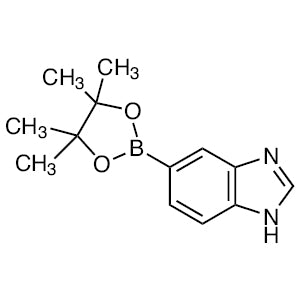
5-(4,4,5,5-Tetramethyl-1,3,2-dioxaborolan-2-yl)-1H-benzimidazole TCI T3275
Regular price Rp 2.173.500,00Regular priceRp 1.535.100,00Sale price Rp 2.173.500,00 -
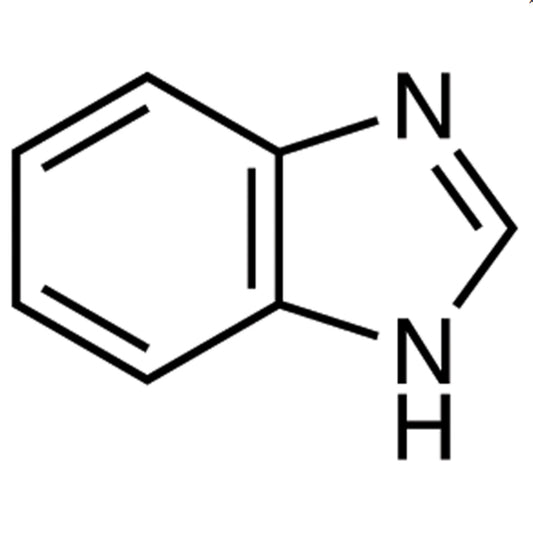
Benzimidazole TCI B0054
Regular price From Rp 928.200,00Regular priceRp 664.650,00Sale price From Rp 928.200,00