


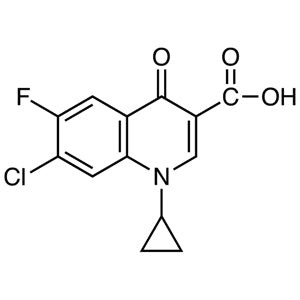
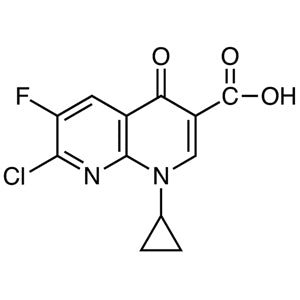
7-Chloro-1-cyclopropyl-6-fluoro-1,4-dihydro-4-oxoquinoline-3-carboxylic Acid is a specialized chemical compound used as a building block in the synthesis of complex molecules. It plays a crucial role in organic chemistry laboratories, particularly in the development of bioactive compounds. This compound is widely utilized in research settings where structural modification is required to create molecules with specific biological activities. Its unique chemical structure makes it a valuable tool for chemists aiming to design new drugs or functional materials.
The presence of both fluorine and chlorine atoms in its structure significantly influences its chemical behavior. Fluorine enhances molecular polarity and stability, contributing to improved reactivity and selectivity in chemical reactions. Chlorine, on the other hand, introduces variability in the molecule’s reactivity, allowing it to participate in a wide range of synthetic transformations. These properties make it a preferred choice for researchers working on drug discovery and molecular design.
In Indonesian laboratories, this compound is commonly used in pharmaceutical and medicinal chemistry research. It is particularly relevant in studies related to antimicrobial and antitumor agents. Its application extends to academic and industrial research settings, where it supports the development of novel compounds with therapeutic potential. Researchers in Indonesia rely on this compound to advance their work in bioactive molecule synthesis and chemical innovation.
Related TCI products
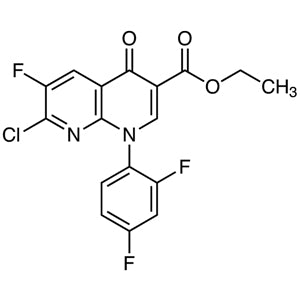
- TCI E1180 100491-29-0 Ethyl 7-Chloro-1-(2,4-difluorophenyl)-6-fluoro-4-oxo-1,4-dihydro-1,8-naphthyridine-3-carboxylate
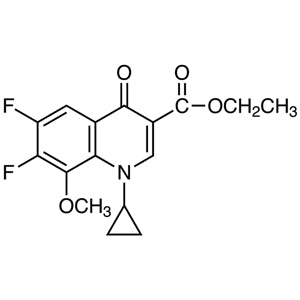
- TCI E1147 112811-71-9 Ethyl 1-Cyclopropyl-6,7-difluoro-1,4-dihydro-8-methoxy-4-oxo-3-quinolinecarboxylate
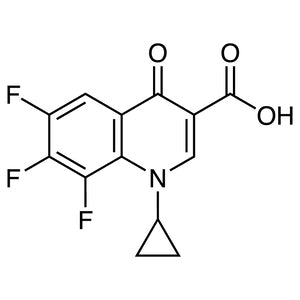
- TCI C4052 94695-52-0 1-Cyclopropyl-6,7,8-trifluoro-4-oxo-1,4-dihydroquinoline-3-carboxylic Acid
- TCI C2779 93107-30-3 1-Cyclopropyl-6,7-difluoro-1,4-dihydro-4-oxoquinoline-3-carboxylic Acid
- TCI C2650 100361-18-0 7-Chloro-1-cyclopropyl-6-fluoro-1,4-dihydro-4-oxo-1,8-naphthyridine-3-carboxylic Acid
- TCI O0404 82419-35-0 9,10-Difluoro-2,3-dihydro-3-methyl-7-oxo-7H-pyrido[1,2,3-de]-1,4-benzoxazine-6-carboxylic Acid
- Drug discovery and development as a key building block for synthesizing bioactive compounds.
- Organic synthesis research to modify molecular structures for specific biological activities.
- Pharmaceutical chemistry applications in the creation of antimicrobial and antitumor agents.
- Academic research in medicinal chemistry for the design of novel therapeutic agents.
- Chemical innovation projects requiring fluorinated and chlorinated functional groups for molecular diversity.
| Brand | TCI |
|---|---|
| CAS number | 86393-33-1 |
| Molecular formula | — |
| Purity | — |
| Category | Chemistry > Building Blocks > Fluorinated Building Blocks |
| Pack sizes | Available in standard laboratory quantities as per supplier specifications |
| Physical form | Solid powder (as per typical chemical compound form) |
| Storage | Store in a cool, dry, and well-ventilated area away from light |
This compound should be stored in a cool, dry, and well-ventilated area, away from direct sunlight and sources of heat. It is recommended to keep it in a sealed container to prevent moisture absorption and contamination. Due to its chemical nature, it should be handled with appropriate personal protective equipment, such as gloves and safety goggles, to ensure laboratory safety. Avoid exposure to incompatible substances and ensure proper ventilation when working with it. Regular monitoring of storage conditions is advised to maintain the integrity of the compound. Always follow standard laboratory safety protocols when handling and using this material.
—
Produk Terkait
-
Ethyl7-Chloro-1-(2,4-difluorophenyl)-6-fluoro-4-oxo-1,4-dihydro-1,8-naphthyridine-3-carboxylate TCI E1180
Regular price From Rp 875.700,00Regular price -
Ethyl1-Cyclopropyl-6,7-difluoro-1,4-dihydro-8-methoxy-4-oxo-3-quinolinecarboxylate TCI E1147
Regular price From Rp 505.050,00Regular price -
1-Cyclopropyl-6,7,8-trifluoro-4-oxo-1,4-dihydroquinoline-3-carboxylicAcid TCI C4052
Regular price From Rp 1.458.450,00Regular price -
1-Cyclopropyl-6,7-difluoro-1,4-dihydro-4-oxoquinoline-3-carboxylicAcid TCI C2779
Regular price Rp 1.035.300,00Regular price -
7-Chloro-1-cyclopropyl-6-fluoro-1,4-dihydro-4-oxo-1,8-naphthyridine-3-carboxylicAcid TCI C2650
Regular price From Rp 664.650,00Regular price -
9,10-Difluoro-2,3-dihydro-3-methyl-7-oxo-7H-pyrido[1,2,3-de]-1,4-benzoxazine-6-carboxylicAcid TCI O0404
Regular price From Rp 2.545.200,00Regular price -
tert-Butyl5'-Fluoro-1',4'-dihydro-2'H-spiro[piperidine-4,3'-quinoline]-1-carboxylate TCI B6777
Regular price Rp 7.182.000,00Regular price -
tert-Butyl7'-Fluoro-1',4'-dihydro-2'H-spiro[piperidine-4,3'-quinoline]-1-carboxylate TCI B6776
Regular price Rp 7.182.000,00Regular price

![82419-35-0 9,10-Difluoro-2,3-dihydro-3-methyl-7-oxo-7H-pyrido[1,2,3-de]-1,4-benzoxazine-6-carboxylic Acid - AMI Scientific](http://amiscientific.com/cdn/shop/files/TCI2510O0404.jpg?v=1767131869&width=533)
![tert-Butyl 5'-Fluoro-1',4'-dihydro-2'H-spiro[piperidine-4,3'-quinoline]-1-carboxylate (CAS 1402232-95-4) - TCI B6777 - AMI Scientific](http://amiscientific.com/cdn/shop/files/TCI2510B6777.jpg?v=1768816103&width=533)
![tert-Butyl 7'-Fluoro-1',4'-dihydro-2'H-spiro[piperidine-4,3'-quinoline]-1-carboxylate (CAS 1402232-83-0) - TCI B6776 - AMI Scientific](http://amiscientific.com/cdn/shop/files/TCI2510B6776.jpg?v=1771058548&width=533)