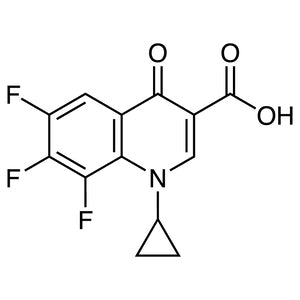
1-Cyclopropyl-6,7-difluoro-1,4-dihydro-4-oxoquinoline-3-carboxylic Acid is a complex chemical compound widely used in synthetic laboratory reactions. It belongs to the category of fluorinated building blocks, which are essential in the development of organic compounds with intricate structures. This compound plays a crucial role in the synthesis of pharmaceuticals, industrial chemicals, and bioactive molecules due to its unique molecular structure. Its presence in various research fields highlights its importance as a versatile reagent for chemical synthesis and modification.
The compound's unique molecular structure, featuring a cyclopropyl group and two fluorine atoms, contributes to its specific chemical and reactivity properties. These characteristics make it an ideal choice for substitution reactions, hydrolysis, and molecular coupling processes. The presence of fluorine atoms enhances its stability and reactivity, making it suitable for a wide range of chemical transformations. Its fluorinated nature also allows for the fine-tuning of molecular properties, which is essential in the development of new compounds with targeted applications.
In Indonesian laboratories, this compound is commonly used in organic chemistry research, particularly in pharmacology and the synthesis of active compounds. Researchers from educational institutions and research organizations rely on this material for experiments that require high-quality building blocks. Its versatility and chemical stability make it a preferred choice for both academic and industrial research settings, supporting the advancement of chemical sciences in the region.
TCI brochures (PDF)
- Fluorination Reagents, Fluorinated Building Blocks 2026-03-18 · p. 49
Related TCI products
- TCI C4052 94695-52-0 1-Cyclopropyl-6,7,8-trifluoro-4-oxo-1,4-dihydroquinoline-3-carboxylic Acid
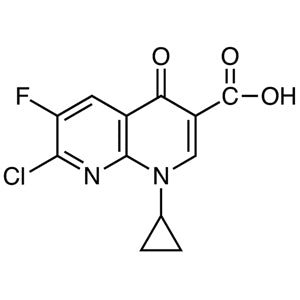
- TCI C2650 100361-18-0 7-Chloro-1-cyclopropyl-6-fluoro-1,4-dihydro-4-oxo-1,8-naphthyridine-3-carboxylic Acid
- TCI O0404 82419-35-0 9,10-Difluoro-2,3-dihydro-3-methyl-7-oxo-7H-pyrido[1,2,3-de]-1,4-benzoxazine-6-carboxylic Acid
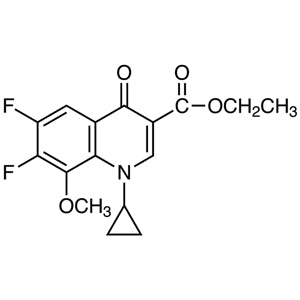
- TCI E1147 112811-71-9 Ethyl 1-Cyclopropyl-6,7-difluoro-1,4-dihydro-8-methoxy-4-oxo-3-quinolinecarboxylate
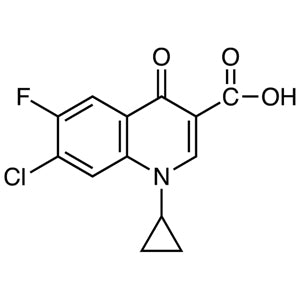
- TCI C2293 86393-33-1 7-Chloro-1-cyclopropyl-6-fluoro-1,4-dihydro-4-oxoquinoline-3-carboxylic Acid
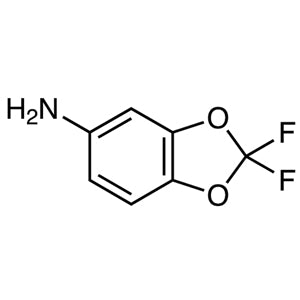
- TCI A3107 1544-85-0 5-Amino-2,2-difluoro-1,3-benzodioxole
- Organic synthesis in pharmaceutical research due to its fluorinated structure and reactivity.
- Development of bioactive compounds for medicinal and therapeutic applications.
- Industrial chemical production requiring stable and reactive fluorinated building blocks.
- Molecular modification processes in compound design and functional group introduction.
- Research in medicinal chemistry for the creation of novel drug candidates and active pharmaceutical ingredients.
| Brand | TCI |
|---|---|
| CAS number | 93107-30-3 |
| Molecular formula | — |
| Purity | — |
| Category | Chemistry > Building Blocks > Fluorinated Building Blocks |
| Pack sizes | Available in various quantities as per standard laboratory requirements |
| Physical form | Solid (exact form may vary depending on supplier packaging) |
| Storage | Store in a cool, dry place away from direct sunlight and moisture |
This compound should be stored in a cool, dry environment, away from direct sunlight and moisture to maintain its chemical integrity. It is recommended to use airtight containers made of glass or high-density polyethylene to prevent contamination and degradation. Due to its fluorinated nature, it is important to handle it with care, using appropriate personal protective equipment such as gloves and safety goggles. Avoid exposure to heat and incompatible substances to ensure safe handling. In laboratory settings, it should be stored in a designated chemical storage area that is well-ventilated and accessible only to authorized personnel. Proper labeling and documentation are essential for safe and efficient management of this compound.
—
Product Categories
Produk Terkait
-
1-Cyclopropyl-6,7,8-trifluoro-4-oxo-1,4-dihydroquinoline-3-carboxylicAcid TCI C4052
Regular price From Rp 1.510.950,00Regular priceRp 1.072.050,00Sale price From Rp 1.510.950,00 -
7-Chloro-1-cyclopropyl-6-fluoro-1,4-dihydro-4-oxo-1,8-naphthyridine-3-carboxylicAcid TCI C2650
Regular price From Rp 717.150,00Regular priceRp 516.600,00Sale price From Rp 717.150,00 -
9,10-Difluoro-2,3-dihydro-3-methyl-7-oxo-7H-pyrido[1,2,3-de]-1,4-benzoxazine-6-carboxylicAcid TCI O0404
Regular price From Rp 2.597.700,00Regular priceRp 1.832.250,00Sale price From Rp 2.597.700,00 -
Ethyl1-Cyclopropyl-6,7-difluoro-1,4-dihydro-8-methoxy-4-oxo-3-quinolinecarboxylate TCI E1147
Regular price From Rp 557.550,00Regular priceRp 405.300,00Sale price From Rp 557.550,00 -
7-Chloro-1-cyclopropyl-6-fluoro-1,4-dihydro-4-oxoquinoline-3-carboxylicAcid TCI C2293
Regular price From Rp 530.250,00Regular priceRp 386.400,00Sale price From Rp 530.250,00 -
5-Amino-2,2-difluoro-1,3-benzodioxole TCI A3107
Regular price From Rp 2.068.500,00Regular priceRp 1.461.600,00Sale price From Rp 2.068.500,00 -
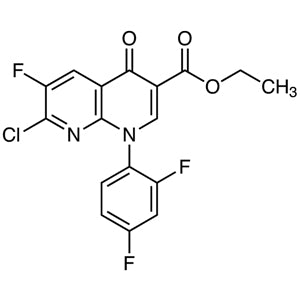
Ethyl7-Chloro-1-(2,4-difluorophenyl)-6-fluoro-4-oxo-1,4-dihydro-1,8-naphthyridine-3-carboxylate TCI E1180
Regular price From Rp 928.200,00Regular priceRp 664.650,00Sale price From Rp 928.200,00 -
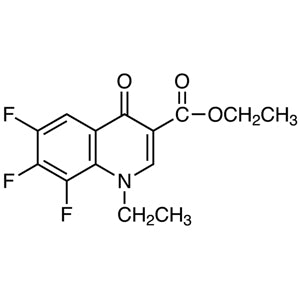
Ethyl1-Ethyl-6,7,8-trifluoro-1,4-dihydro-4-oxo-3-quinolinecarboxylate TCI E0888
Regular price From Rp 1.378.650,00Regular priceRp 979.650,00Sale price From Rp 1.378.650,00


![TCI O0404 82419-35-0 9,10-Difluoro-2,3-dihydro-3-methyl-7-oxo-7H-pyrido[1,2,3-de]-1,4-benzoxazine-6-carboxylic Acid](http://amiscientific.com/cdn/shop/files/TCI2510O0404_59ba5287-d503-44a5-96c3-7eed5f71f415.jpg?v=1792651426&width=533)
![82419-35-0 9,10-Difluoro-2,3-dihydro-3-methyl-7-oxo-7H-pyrido[1,2,3-de]-1,4-benzoxazine-6-carboxylic Acid - AMI Scientific](http://amiscientific.com/cdn/shop/files/TCI2510O0404.jpg?v=1767131869&width=533)