


6-Chloro-7-deazapurine is a chemical compound widely used as a building block in the synthesis of heterocyclic compounds. Its structural similarity to purine, with modifications to nitrogen and chlorine atoms, makes it a valuable tool in organic chemistry research. In the laboratory, it serves as a flexible reagent that enables the development of compounds with specific biological activities. This compound plays a crucial role in the design and synthesis of complex molecules, supporting advancements in various scientific fields.
The compound is known for its chemical stability under controlled conditions, though it is highly sensitive to moisture and UV light exposure. Its complex molecular structure allows for precise chemical reactions, making it ideal for applications requiring accuracy and reproducibility. These properties make it a preferred choice for researchers aiming to control reaction outcomes and achieve desired products with high efficiency.
In Indonesian laboratories, 6-Chloro-7-deazapurine is extensively used in pharmacological, medicinal chemistry, and biochemical research. It is a key component in the development of new drugs, anticancer agents, and bioactive compounds. Its versatility and chemical properties make it a staple in academic and industrial research settings across the country.
TCI brochures (PDF)
- Nucleosides, Nucleotides, Nucleic Acids and Related Reagents 2026-03-23 · p. 9
- Pharmacological research utilizes 6-Chloro-7-deazapurine for the synthesis of bioactive compounds due to its structural similarity to purine, enabling the design of molecules with targeted biological activities.
- Medicinal chemistry applications benefit from its role as a heterocyclic building block, allowing the creation of compounds with therapeutic potential for various diseases.
- Biochemical studies incorporate this compound to investigate its interactions with enzymes and proteins, aiding in the understanding of molecular mechanisms in biological systems.
- Organic synthesis projects rely on its chemical stability and reactivity to produce complex molecules with high purity and specificity.
- Academic research in Indonesian universities uses it to explore new synthetic pathways and develop novel compounds for pharmaceutical and industrial applications.
| Brand | TCI |
|---|---|
| CAS number | 3680-69-1 |
| Molecular formula | — |
| Purity | — |
| Category | Chemistry > Building Blocks > Heterocyclic Building Blocks |
| Pack sizes | Available in various quantities as per standard laboratory supply |
| Physical form | Solid |
| Storage | Keep in a cool, dry place away from moisture and UV light exposure |
6-Chloro-7-deazapurine should be stored in a cool, dry environment to maintain its chemical stability. It is recommended to use airtight containers to prevent moisture absorption, which can degrade the compound. Exposure to UV light should be minimized to avoid decomposition. When handling, it is advisable to use appropriate personal protective equipment, such as gloves and safety goggles, to ensure safety. Proper labeling of storage containers is essential for easy identification and safe handling. Regular monitoring of storage conditions is necessary to ensure the compound remains in optimal condition for use in laboratory applications.
—
Produk Terkait
-
6-Chloro-7-iodo-7-deazapurine TCI C3130
Regular price Rp 1.167.600,00Regular priceRp 831.600,00Sale price Rp 1.167.600,00 -
2,6-Dichloro-7-deazapurine TCI D4284
Regular price Rp 4.320.750,00Regular priceRp 3.036.600,00Sale price Rp 4.320.750,00 -
4-Chloro-1H-pyrrolo[2,3-b]pyridine TCI C2470
Regular price Rp 717.150,00Regular priceRp 516.600,00Sale price Rp 717.150,00 -
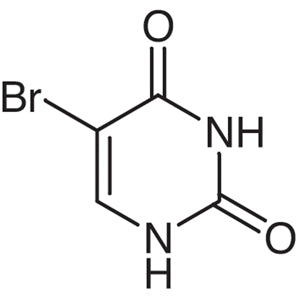
5-Bromouracil TCI B0665
Regular price Rp 1.723.050,00Regular priceRp 1.220.100,00Sale price Rp 1.723.050,00 -
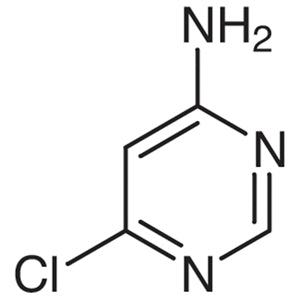
4-Amino-6-chloropyrimidine TCI A2136
Regular price Rp 1.167.600,00Regular priceRp 831.600,00Sale price Rp 1.167.600,00 -
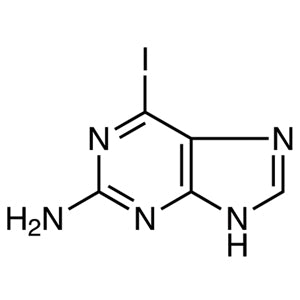
2-Amino-6-iodopurine TCI A2068
Regular price Rp 2.068.500,00Regular priceRp 1.461.600,00Sale price Rp 2.068.500,00 -
2-Amino-6-chloropurine TCI A1407
Regular price Rp 1.008.000,00Regular priceRp 720.300,00Sale price Rp 1.008.000,00 -
5-Iodo-7H-pyrrolo[2,3-d]pyrimidin-4-amine TCI I1161
Regular price Rp 2.279.550,00Regular priceRp 1.609.650,00Sale price Rp 2.279.550,00
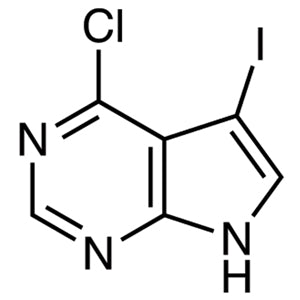
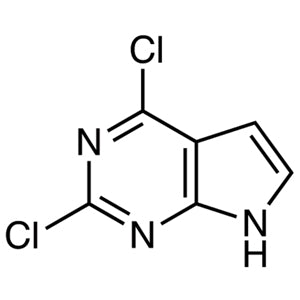
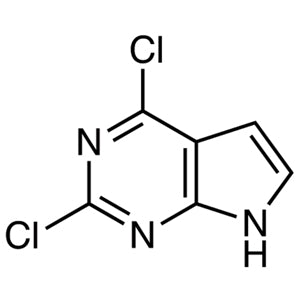
![4-Chloro-1H-pyrrolo[2,3-b]pyridine (CAS 55052-28-3) - TCI C2470 - AMI Scientific](http://amiscientific.com/cdn/shop/files/TCI2510C2470.jpg?v=1767098381&width=533)
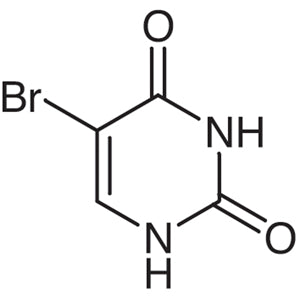

![163622-50-2 5-Iodo-7H-pyrrolo[2,3-d]pyrimidin-4-amine - AMI Scientific](http://amiscientific.com/cdn/shop/files/TCI2510I1161.jpg?v=1767120854&width=533)