2-Chloro-5-fluoropyrimidine from TCI is a fluorinated heterocyclic building block based on the pyrimidine ring. The molecule has a chlorine atom at position 2 and a fluorine atom at position 5. Organic synthesis laboratories use it as an intermediate for building more complex molecules, especially drug candidates and agrochemicals that need a pyrimidine core. The pyrimidine scaffold appears in many bioactive compounds, so this material is often the starting point for assembling compound libraries in medicinal chemistry research.
The main feature of this compound is that its two halogens react differently. The chlorine at position 2 sits between the two ring nitrogen atoms, which makes that position reactive toward nucleophilic aromatic substitution by amines, alkoxides, or thiolates. The same chlorine can also take part in palladium-catalysed cross-coupling reactions. The fluorine at position 5 usually stays intact during these reactions. This lets chemists modify one site selectively while keeping the fluorine. Drug designers value that fluorine because it can affect lipophilicity, metabolic stability, and how a molecule interacts with its biological target.
In Indonesia, this material is relevant to pharmaceutical and organic chemistry research groups at universities and research institutions. These groups work on synthesising and modifying heterocyclic compounds for drug discovery, crop protection research, and academic studies of reaction methods. Because it has a pyrimidine core and two separate reactive sites, it fits student thesis projects, funded research programmes, and early-stage development work that needs a dependable fluorinated building block from an established brand such as TCI.
Related TCI products
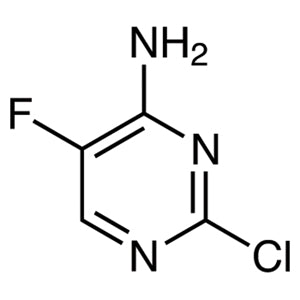
- TCI A2809 155-10-2 4-Amino-2-chloro-5-fluoropyrimidine
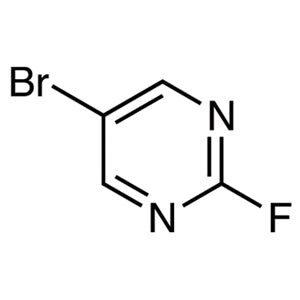
- TCI B3685 62802-38-4 5-Bromo-2-fluoropyrimidine
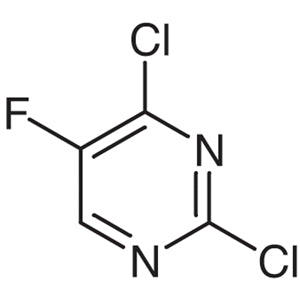
- TCI D3374 2927-71-1 2,4-Dichloro-5-fluoropyrimidine
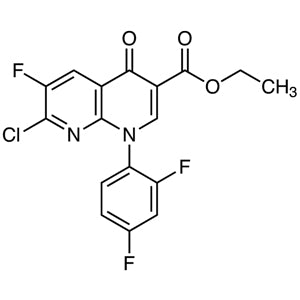
- TCI E1180 100491-29-0 Ethyl 7-Chloro-1-(2,4-difluorophenyl)-6-fluoro-4-oxo-1,4-dihydro-1,8-naphthyridine-3-carboxylate
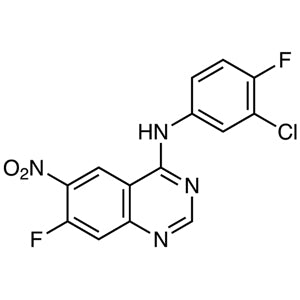
- TCI C3276 162012-67-1 N-(3-Chloro-4-fluorophenyl)-7-fluoro-6-nitro-4-quinazolinamine
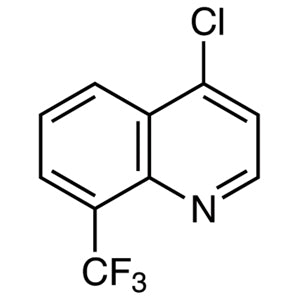
- TCI C3067 23779-97-7 4-Chloro-8-(trifluoromethyl)quinoline
- Synthesis of 2-amino-5-fluoropyrimidine derivatives: the activated chlorine at position 2 reacts with primary and secondary amines through nucleophilic aromatic substitution, and the fluorine at position 5 stays in place.
- Preparation of ether and thioether analogues: alkoxides and thiolates can displace the chlorine at position 2, giving chemists a simple way to add oxygen- or sulfur-linked groups to a fluorinated pyrimidine core.
- Palladium-catalysed cross-coupling reactions: the C2 chlorine can serve as the coupling handle for forming carbon–carbon or carbon–nitrogen bonds, which helps build biaryl and more elaborate heterocyclic structures.
- Compound library construction for medicinal chemistry: the pyrimidine scaffold is common in bioactive molecules, so this building block suits the parallel synthesis of related analogues for structure–activity relationship studies.
- Agrochemical research and development: synthetic routes to crop protection candidates that need a fluorinated pyrimidine core can use this compound as the intermediate that introduces the core early in the route.
| Brand | TCI |
|---|---|
| CAS number | 62802-42-0 |
| Molecular formula | — |
| Purity | — |
| Category | Chemistry > Building Blocks > Fluorinated Building Blocks |
| Pack sizes | as listed on the product page options |
| Physical form | — |
| Storage | follow the conditions on the TCI label and Safety Data Sheet |
- Product code: C2546
Keep 2-Chloro-5-fluoropyrimidine in its original, tightly closed manufacturer's container, and follow the storage conditions on the TCI label and Safety Data Sheet. Store it in a cool, dry, well-ventilated place away from heat, moisture, and incompatible materials such as strong oxidising agents and strong bases. Handle it in a fume hood while wearing chemical-resistant gloves, safety glasses, and a laboratory coat. Do not inhale it or let it touch your skin or eyes. After each use, reseal the container right away to protect the contents from air and moisture. Dispose of residues and contaminated materials according to institutional and local chemical waste regulations.
—
Produk Terkait
-
4-Amino-2-chloro-5-fluoropyrimidine TCI A2809
Regular price From Rp 1.801.800,00Regular priceRp 1.275.750,00Sale price From Rp 1.801.800,00 -
5-Bromo-2-fluoropyrimidine TCI B3685
Regular price Rp 1.167.600,00Regular priceRp 831.600,00Sale price Rp 1.167.600,00 -
2,4-Dichloro-5-fluoropyrimidine TCI D3374
Regular price From Rp 1.618.050,00Regular priceRp 1.146.600,00Sale price From Rp 1.618.050,00 -
Ethyl7-Chloro-1-(2,4-difluorophenyl)-6-fluoro-4-oxo-1,4-dihydro-1,8-naphthyridine-3-carboxylate TCI E1180
Regular price From Rp 928.200,00Regular priceRp 664.650,00Sale price From Rp 928.200,00 -
N-(3-Chloro-4-fluorophenyl)-7-fluoro-6-nitro-4-quinazolinamine TCI C3276
Regular price From Rp 1.298.850,00Regular priceRp 924.000,00Sale price From Rp 1.298.850,00 -
4-Chloro-8-(trifluoromethyl)quinoline TCI C3067
Regular price From Rp 3.021.900,00Regular priceRp 2.128.350,00Sale price From Rp 3.021.900,00 -
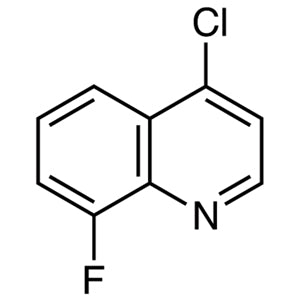
4-Chloro-8-fluoroquinoline TCI C3062
Regular price From Rp 2.013.900,00Regular priceRp 1.423.800,00Sale price From Rp 2.013.900,00 -
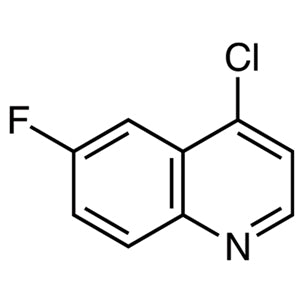
4-Chloro-6-fluoroquinoline TCI C2989
Regular price From Rp 582.750,00Regular priceRp 423.150,00Sale price From Rp 582.750,00