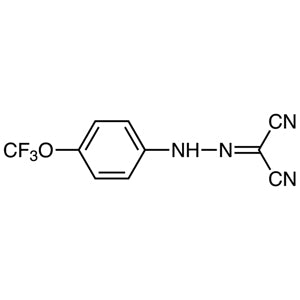
Carbonyl Cyanide 4-(Trifluoromethoxy)phenylhydrazone (CCCP), also known as TCI C3463, is a chemical compound widely used in life sciences research, particularly in cell biology and neuroscience. This compound plays a crucial role in laboratory studies by inhibiting mitochondrial function, specifically in the electron transport chain and ATP synthesis. Its ability to modulate mitochondrial activity makes it an essential tool for understanding cellular energy regulation and mitochondrial roles in both physiological and pathological conditions. Researchers rely on CCCP to investigate mitochondrial dysfunction and its implications in various diseases.
CCCP is valued for its chemical stability under specific conditions and its strong interaction with mitochondrial membranes. The compound’s complex molecular structure allows for selective targeting of mitochondrial components, making it a preferred choice for experiments requiring precise mitochondrial inhibition. Its effectiveness and specificity contribute to its widespread use in both academic and industrial research settings. The compound’s consistent performance and reliability in laboratory protocols further enhance its appeal among scientists.
In Indonesian laboratories, CCCP is commonly used in research related to neurodegenerative diseases, cellular metabolism, and drug development. Its relevance extends to studies exploring mitochondrial roles in disease mechanisms and therapeutic interventions. Researchers in Indonesia utilize CCCP to gain insights into mitochondrial function and its impact on cellular health, supporting advancements in biomedical research and therapeutic strategies.
TCI brochures (PDF)
- Mitochondrial Membrane Potential Assay Kit 2026-01-19 · p. 2
- Organelle Research Reagents 2026-08-06 · p. 3
Related TCI products
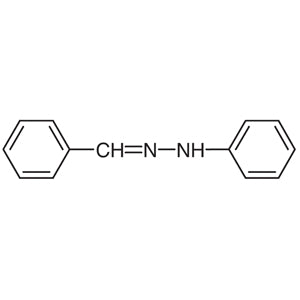
- TCI B0014 588-64-7 Benzaldehyde Phenylhydrazone
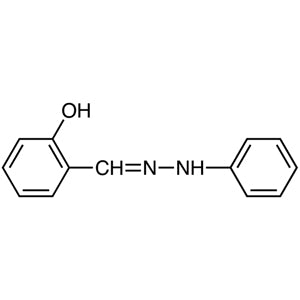
- TCI H1478 614-65-3 2-Hydroxybenzaldehyde Phenylhydrazone
- TCI E0576 84678-52-4 9-Ethylcarbazole-3-carboxaldehyde N-Ethyl-N-phenylhydrazone
- TCI E0575 88107-84-0 9-Ethylcarbazole-3-carboxaldehyde N-Butyl-N-phenylhydrazone
- TCI E0574 75238-79-8 9-Ethylcarbazole-3-carboxaldehyde N-Benzyl-N-phenylhydrazone
- TCI E0570 75232-44-9 9-Ethylcarbazole-3-carboxaldehyde N-Methyl-N-phenylhydrazone
- Mitochondrial Function Studies – CCCP is ideal for investigating mitochondrial respiration and ATP production by selectively inhibiting the electron transport chain.
- Neurodegenerative Disease Research – The compound helps explore mitochondrial dysfunction in conditions like Parkinson’s and Alzheimer’s by mimicking pathological mitochondrial impairment.
- Cellular Metabolism Analysis – CCCP is used to study how mitochondrial inhibition affects cellular energy metabolism and metabolic pathways in various cell types.
- Drug Development – Researchers employ CCCP to evaluate mitochondrial-targeted drugs and assess their efficacy in modulating mitochondrial activity.
- Toxicology Testing – CCCP is used to assess the effects of mitochondrial inhibitors on cell viability and to study cellular responses to mitochondrial stress.
| Brand | — |
|---|---|
| CAS number | — |
| Molecular formula | — |
| Purity | — |
| Category | — |
| Pack sizes | — |
| Physical form | — |
| Storage | — |
- Brand – TCI
- CAS Number – 370-86-5
- Category – Life Science > Cell Biology > Cell Signaling and Neuroscience
- Pack Sizes – Available in various quantities as per supplier specifications
- Physical Form – Solid powder
- Storage Note – Store in a cool, dry place away from light
CCCP should be stored in a cool, dry environment, away from direct sunlight and sources of heat to maintain its chemical stability. It is recommended to use airtight containers to prevent moisture absorption and contamination. Due to its potential reactivity, it should be handled with appropriate personal protective equipment, including gloves and safety goggles. Laboratory personnel should ensure proper ventilation when working with this compound. Storage conditions should be monitored to prevent degradation, and the compound should be kept in a secure location to avoid accidental exposure. Regular checks on storage conditions are advised to ensure the integrity of the material during long-term use.
—
Produk Terkait
-
BenzaldehydePhenylhydrazone TCI B0014
Regular price Rp 3.551.100,00Regular price -
2-HydroxybenzaldehydePhenylhydrazone TCI H1478
Regular price From Rp 1.936.200,00Regular price -
9-Ethylcarbazole-3-carboxaldehydeN-Ethyl-N-phenylhydrazone TCI E0576
Regular price Rp 2.969.400,00Regular price -
9-Ethylcarbazole-3-carboxaldehydeN-Butyl-N-phenylhydrazone TCI E0575
Regular price Rp 2.545.200,00Regular price -
9-Ethylcarbazole-3-carboxaldehydeN-Benzyl-N-phenylhydrazone TCI E0574
Regular price Rp 2.625.000,00Regular price -
9-Ethylcarbazole-3-carboxaldehydeN-Methyl-N-phenylhydrazone TCI E0570
Regular price Rp 2.068.500,00Regular price -
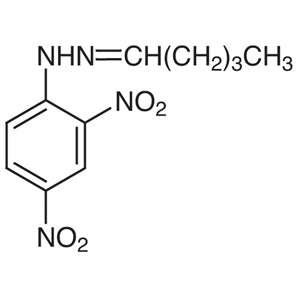
Valeraldehyde2,4-Dinitrophenylhydrazone TCI V0066
Regular price From Rp 477.750,00Regular price -
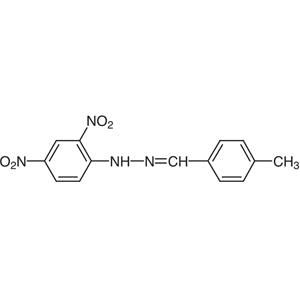
p-Tolualdehyde2,4-Dinitrophenylhydrazone TCI T1449
Regular price From Rp 1.035.300,00Regular price