

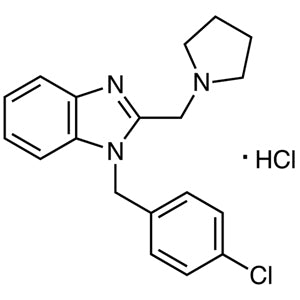
Clemizole Hydrochloride (TCI C3468, CAS 1163-36-6) is a chemical compound widely utilized in scientific experiments, particularly in the fields of biochemistry and pharmacology. This compound plays a crucial role in laboratory research by enabling the study of antibiotic activity and the pharmacological effects of various substances. Its unique chemical structure allows it to interact with proteins and enzymes within biological systems, making it an essential tool for investigating antimicrobial mechanisms and drug action. Clemizole Hydrochloride is a versatile reagent that supports a range of analytical and synthetic processes in modern laboratories.
Clemizole Hydrochloride is valued for its chemical stability and solubility in organic solvents such as ethyl acetate and acetone. These properties make it easy to handle and incorporate into various experimental protocols. Its high purity ensures reliable and reproducible results, which is critical for scientific accuracy. Additionally, its stability allows for long-term storage and repeated use, reducing waste and enhancing laboratory efficiency. The compound’s consistent performance across different experimental conditions makes it a preferred choice for researchers seeking dependable reagents.
In Indonesian laboratories, Clemizole Hydrochloride is commonly used in antibiotic development studies and pharmacological compound testing. It is an integral part of research focused on understanding microbial resistance and the effectiveness of new drug candidates. Its availability and reliability make it a standard reagent in both academic and industrial research settings across the country.
- Used in antibiotic screening assays to evaluate the inhibitory effects of compounds against bacterial strains.
- Applied in pharmacological studies to investigate the mechanism of action of various drug molecules.
- Utilized in biochemical experiments to study enzyme inhibition and protein interactions.
- Employed in synthetic chemistry for the preparation of derivatives and related compounds.
- Integrated into microbiological research to assess the efficacy of antimicrobial agents in different environments.
| Brand | TCI |
|---|---|
| CAS number | 1163-36-6 |
| Molecular formula | — |
| Purity | — |
| Category | Life Science > Biochemicals and Reagents > Antibiotics |
| Pack sizes | Available in various quantities as per standard laboratory requirements |
| Physical form | White crystalline powder |
| Storage | Store in a cool, dry place away from light |
Clemizole Hydrochloride should be stored in a cool, dry environment, away from direct light and moisture. It is recommended to use airtight containers to prevent contamination and maintain its chemical integrity. Due to its stability, it can be stored for extended periods without significant degradation. In laboratory settings, it is important to handle the compound with care, using appropriate personal protective equipment when necessary. Proper labeling and storage conditions ensure the safety of both the material and the researchers working with it. Always follow standard laboratory safety protocols to minimize risks during handling and experimentation.
—