Cobalt(II) Fluoride (CoF₂), with CAS number 10026-17-2, is a chemical compound widely used in laboratory settings, particularly in catalysis and inorganic chemistry. This material serves as a catalyst in various chemical reactions, especially those involving C-H activation, where it facilitates the transformation of carbon-hydrogen bonds into more reactive intermediates. Its role in the laboratory is critical in enabling efficient and selective chemical transformations, making it an essential component in synthetic processes.
CoF₂ is valued for its chemical stability under controlled conditions and its ability to function as an effective catalyst in a range of reactions. It exhibits a unique crystalline structure and typically appears as a white or yellowish powder, depending on impurities. Its reactivity towards moisture and air necessitates careful handling and storage. Despite its reactivity, CoF₂ remains a preferred choice due to its reliability and performance in catalytic applications.
In Indonesian laboratories, Cobalt(II) Fluoride is extensively used in chemical research, especially in catalysis and organic synthesis. It is a favored material due to its availability and consistent performance in various experimental setups. Its application in C-H activation reactions has made it a staple in both academic and industrial research environments.
TCI brochures (PDF)
- C-H Bond Activation Reaction 2025-06-20 · p. 6
- Metallic Salts 2025-11-06 · p. 2
- Transition Metal Catalysts 2026-04-10 · p. 9
Related TCI products
- TCI B2681 14024-48-7 Bis(2,4-pentanedionato)cobalt(II)
- TCI T0746 16092-38-9 Bis(trifluoro-2,4-pentanedionato)cobalt(II)
- TCI H0553 19648-83-0 Bis(hexafluoroacetylacetonato)cobalt(II)
- TCI D5924 23638-66-6 Dichloro(dimethylglyoxime)(dimethylglyoximato)cobalt(III)
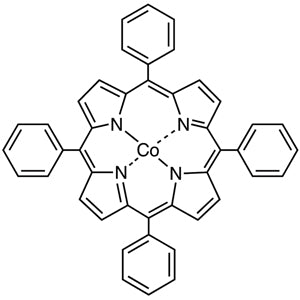
- TCI C3579 14172-90-8 Cobalt(II) Tetraphenylporphyrin
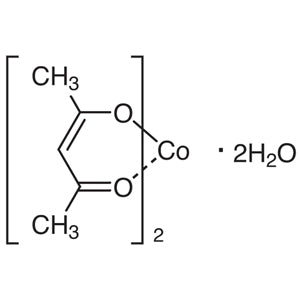
- TCI C0373 123334-29-2 Bis(2,4-pentanedionato)cobalt(II) Dihydrate
- C-H Activation Reactions – Cobalt(II) Fluoride is ideal for these reactions due to its ability to activate carbon-hydrogen bonds, enabling the synthesis of complex organic compounds.
- Organic Synthesis – This compound is frequently used in organic synthesis as a catalyst for reactions requiring precise control over bond-breaking and bond-forming processes.
- Inorganic Chemistry Experiments – Its role in inorganic chemistry is significant, particularly in reactions involving transition metal compounds and fluoride-based reagents.
- Catalytic Conversion Processes – The material is well-suited for catalytic conversion reactions where efficiency and selectivity are crucial.
- Research and Development – It is a key component in R&D settings where new chemical processes and materials are being explored.
| Brand | TCI |
|---|---|
| CAS number | 10026-17-2 |
| Molecular formula | — |
| Purity | — |
| Category | Chemistry > Catalysis and Inorganic Chemistry > C-H Activation [Catalysis] |
| Pack sizes | Available in various quantities as per standard laboratory supply |
| Physical form | White or yellowish powder |
| Storage | Should be stored in a dry, sealed container away from moisture and air |
Cobalt(II) Fluoride should be stored in a dry, cool environment to prevent exposure to moisture and air, which can lead to degradation. It is recommended to use airtight containers made of inert materials such as glass or polyethylene to ensure long-term stability. Due to its reactivity, it should be handled in a well-ventilated area, and appropriate personal protective equipment should be worn. Avoid contact with water and keep it away from any sources of heat or ignition. Regular monitoring of storage conditions is essential to maintain the material's integrity and effectiveness in laboratory applications.
—
Product Categories
- Catalysis and Inorganic ChemistryC-H Activation [Catalysis]Cobalt Compounds [C-H Activation]
- Catalysis and Inorganic ChemistryTransition Elements [Catalysis and Inorganic Chemistry]Cobalt [Catalysis and Inorganic Chemistry]
- Catalysis and Inorganic ChemistryMetallic Salts [Catalysis and Inorganic Chemistry]Fluoride Salts [Metallic Salts]
Produk Terkait
-
Bis(2,4-pentanedionato)cobalt(II) TCI B2681
Regular price Rp 1.696.800,00Regular priceRp 1.186.500,00Sale price Rp 1.696.800,00 -
Bis(trifluoro-2,4-pentanedionato)cobalt(II) TCI T0746
Regular price From Rp 2.597.700,00Regular priceRp 1.832.250,00Sale price From Rp 2.597.700,00 -
Bis(hexafluoroacetylacetonato)cobalt(II) TCI H0553
Regular price Rp 4.266.150,00Regular priceRp 2.998.800,00Sale price Rp 4.266.150,00 -
Dichloro(dimethylglyoxime)(dimethylglyoximato)cobalt(III) TCI D5924
Regular price From Rp 1.881.600,00Regular priceRp 1.331.400,00Sale price From Rp 1.881.600,00 -
Cobalt(II)Tetraphenylporphyrin TCI C3579
Regular price Rp 2.702.700,00Regular priceRp 1.905.750,00Sale price Rp 2.702.700,00 -
Bis(2,4-pentanedionato)cobalt(II)Dihydrate TCI C0373
Regular price From Rp 2.041.200,00Regular priceRp 1.426.950,00Sale price From Rp 2.041.200,00 -
Cobalt(II)Iodide TCI C3901
Regular price From Rp 1.696.800,00Regular priceRp 1.202.250,00Sale price From Rp 1.696.800,00 -
Cobalt(II)Hydroxide TCI C3824
Regular price Rp 1.988.700,00Regular priceRp 1.390.200,00Sale price Rp 1.988.700,00