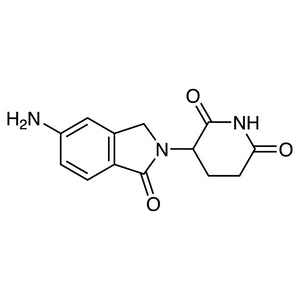
3-(5-Amino-1-oxoisoindolin-2-yl)piperidine-2,6-dione is a complex chemical compound widely used in pharmaceutical research and drug development. This reagent plays a crucial role in laboratory settings by enabling the study of protein degradation mechanisms through its application in PROTAC (Proteolysis Targeting Chimera) research. Its unique molecular structure allows it to act as a bridge between target proteins and the proteasome, facilitating the selective degradation of harmful proteins associated with various diseases. This makes it an essential tool for researchers aiming to develop targeted therapies with high specificity and efficacy.
The compound's stability and controlled reactivity make it a preferred choice for laboratory use. It maintains its chemical integrity under standard experimental conditions, ensuring reliable results in sensitive assays. Its molecular complexity allows for specific interactions with a range of protein targets, enhancing its utility in drug discovery. Additionally, its availability in small pack sizes, such as 100mg, ensures ease of handling and cost-effectiveness for laboratory experiments without compromising quality or performance.
In Indonesian laboratories, this compound is commonly used by researchers focused on drug development and biomedical research. Its application in PROTAC-based studies supports the advancement of innovative therapeutic strategies. The compound's versatility and reliability make it a valuable resource for both academic and industrial research settings in Indonesia, contributing to the country's growing pharmaceutical and biotechnology sectors.
Related TCI products
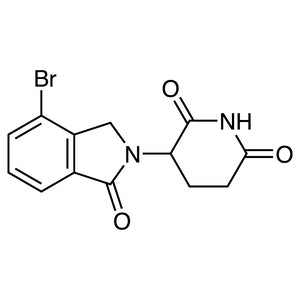
- TCI B6546 2093387-36-9 3-(4-Bromo-1-oxoisoindolin-2-yl)piperidine-2,6-dione
- TCI B6528 1010100-26-1 3-(5-Bromo-1-oxoisoindolin-2-yl)piperidine-2,6-dione
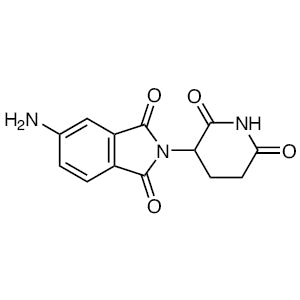
- TCI A3455 191732-76-0 5-Amino-2-(2,6-dioxopiperidin-3-yl)isoindoline-1,3-dione
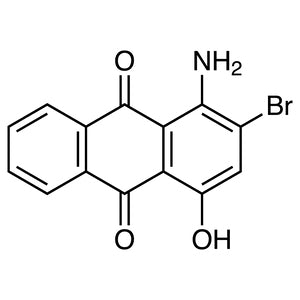
- TCI A1082 116-82-5 1-Amino-2-bromo-4-hydroxyanthracene-9,10-dione
- TCI P3373 2754428-18-5 2-[(4-Methylpentan-2-yl)amino]-5-(phenylamino)cyclohexa-2,5-diene-1,4-dione
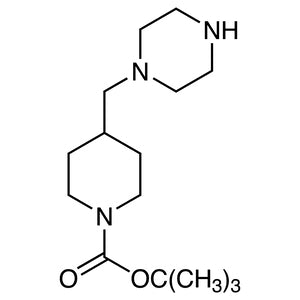
- TCI D5966 381722-48-1 tert-Butyl 4-(Piperazin-1-ylmethyl)piperidine-1-carboxylate
- PROTAC-Based Drug Discovery: This reagent is ideal for PROTAC research as it enables the targeted degradation of disease-related proteins, offering a novel approach to drug development.
- Protein Degradation Studies: Its ability to interact with specific proteins makes it suitable for investigating the mechanisms of protein degradation in cellular systems.
- Biochemical Assays: The compound's stability and reactivity make it a reliable component in biochemical assays that require precise and reproducible results.
- Small-Scale Research Experiments: Its availability in small quantities facilitates use in preliminary studies and laboratory testing without the need for large-scale procurement.
- Biomedical Research: It supports research in biomedical fields by enabling the study of protein interactions and their impact on disease progression.
| Brand | TCI |
|---|---|
| CAS number | 191732-70-4 |
| Molecular formula | — |
| Purity | — |
| Category | Chemistry > Pharmaceutical Development and Drug Discovery Research Reagents > Proteolysis Targeting Chimera Research Reagents |
| Pack sizes | 100mg |
| Physical form | Solid |
| Storage | — |
This compound should be stored in a cool, dry place away from direct sunlight and moisture to maintain its chemical stability. It is recommended to use airtight containers to prevent contamination and degradation. Due to its chemical complexity, it is important to handle it with care, using appropriate personal protective equipment such as gloves and safety goggles. Avoid exposure to incompatible substances and ensure proper ventilation in the laboratory. The compound is suitable for use in standard laboratory conditions provided that all safety protocols are followed. Its controlled reactivity ensures that it remains effective for research applications when stored and handled correctly.
—
Product Categories
Produk Terkait
-
3-(4-Bromo-1-oxoisoindolin-2-yl)piperidine-2,6-dione TCI B6546
Regular price From Rp 1.220.100,00Regular price -
3-(5-Bromo-1-oxoisoindolin-2-yl)piperidine-2,6-dione TCI B6528
Regular price From Rp 1.060.500,00Regular price -
5-Amino-2-(2,6-dioxopiperidin-3-yl)isoindoline-1,3-dione TCI A3455
Regular price From Rp 2.386.650,00Regular price -
1-Amino-2-bromo-4-hydroxyanthracene-9,10-dione TCI A1082
Regular price Rp 795.900,00Regular price -
2-[(4-Methylpentan-2-yl)amino]-5-(phenylamino)cyclohexa-2,5-diene-1,4-dione TCI P3373
Regular price From Rp 2.889.600,00Regular price -
tert-Butyl4-(Piperazin-1-ylmethyl)piperidine-1-carboxylate TCI D5966
Regular price From Rp 1.510.950,00Regular price -
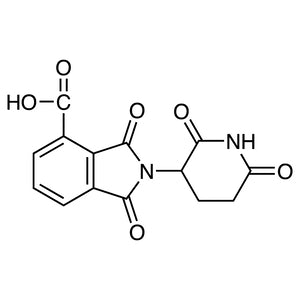
2-(2,6-Dioxopiperidin-3-yl)-1,3-dioxoisoindoline-4-carboxylicAcid TCI D6235
Regular price From Rp 2.147.250,00Regular price -
2-(2,6-Dioxopiperidin-3-yl)-1,3-dioxoisoindoline-5-carboxylicAcid TCI D6191
Regular price Rp 3.843.000,00Regular price

![2754428-18-5 2-[(4-Methylpentan-2-yl)amino]-5-(phenylamino)cyclohexa-2,5-diene-1,4-dione - AMI Scientific](http://amiscientific.com/cdn/shop/files/TCI2510P3373.jpg?v=1767137436&width=533)