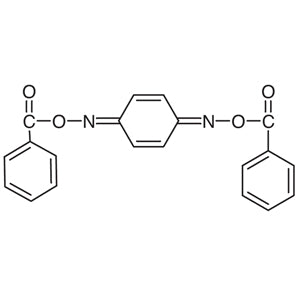
4,4'-Dibenzoylquinone Dioxime is a chemical compound widely used in laboratory settings for its versatility in various chemical reactions. It plays a crucial role in the synthesis of complex compounds and qualitative analysis, particularly in the field of analytical chemistry. This compound is valued for its ability to form stable complexes with metal ions, making it an essential reagent in metal ion detection and identification. Its unique molecular structure allows it to act as a ligand in metal complex formations, contributing to its effectiveness in multiple chemical processes.
The properties that make 4,4'-Dibenzoylquinone Dioxime a preferred choice include its stability under normal chemical conditions and its solubility in organic solvents. These characteristics ensure that it remains effective in a wide range of laboratory applications without degrading easily. Additionally, its reactivity and ability to form stable complexes with heavy metal ions enhance its utility in analytical procedures. The compound’s chemical stability and solubility also contribute to its ease of handling and integration into various experimental protocols.
In Indonesian laboratories, 4,4'-Dibenzoylquinone Dioxime is commonly used in chemical analysis, organic synthesis, and environmental testing. It is a key component in the identification of heavy metal ions such as copper, lead, and tin. Its reliability and efficiency make it a preferred choice for researchers and analysts working in both academic and industrial settings. Its role in environmental sample analysis further underscores its importance in laboratory research in Indonesia.
- Qualitative Analysis: This compound is ideal for identifying heavy metal ions due to its ability to form stable complexes, making it a key reagent in analytical chemistry.
- Organic Synthesis: Its unique molecular structure allows it to participate in various synthetic reactions, contributing to the creation of complex organic compounds.
- Environmental Testing: It is used in the analysis of water and environmental samples to detect the presence of heavy metals, ensuring accurate and reliable results.
- Metal Ion Detection: Its reactivity with metal ions makes it suitable for use in analytical procedures that require the identification of specific metal species.
- Research and Development: It is widely used in laboratory research for its versatility and effectiveness in various chemical processes and applications.
| Brand | TCI |
|---|---|
| CAS number | 120-52-5 |
| Molecular formula | — |
| Purity | — |
| Category | Chemistry > Building Blocks > Non-Heterocyclic Building Blocks |
| Pack sizes | Available in standard laboratory quantities |
| Physical form | Solid |
| Storage | Store in a cool, dry place away from direct sunlight |
This compound should be stored in a cool, dry place away from direct sunlight to maintain its chemical stability. It is recommended to use airtight containers to prevent moisture absorption and contamination. Due to its reactivity, it should be handled with appropriate personal protective equipment, such as gloves and safety goggles, to ensure laboratory safety. It is important to keep it away from incompatible substances to avoid any potential chemical interactions. Proper labeling of storage containers is essential for safe handling and easy identification. Regular inspection of storage conditions ensures the compound remains in optimal condition for use in laboratory applications.
—
Produk Terkait
-
O-ButylhydroxylamineHydrochloride TCI B5686
Regular price From Rp 1.485.750,00Regular price -
4-Bromo-N-methoxy-N-methylbenzamide TCI B5728
Regular price From Rp 1.670.550,00Regular price -
Bifenazate TCI B6341
Regular price Rp 7.234.500,00Regular price