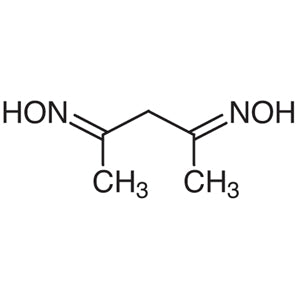
2,4-Pentanedione Dioxime is a chemical compound widely used in laboratory settings for its reactivity and versatility in organic synthesis. As a building block in chemical reactions, it plays a crucial role in the formation of complex molecules by facilitating the bonding of specific atoms or functional groups. This compound is particularly valuable in synthetic chemistry due to its ability to participate in various reaction mechanisms, making it a key reagent in modern research. Its unique chemical structure allows it to interact with transition metals, enhancing its utility in catalytic processes and metal complex formation.
The compound’s chemical properties make it a preferred choice for researchers seeking reagents with high reactivity and selectivity. It exhibits stability under controlled conditions, yet remains highly reactive in diverse environments, allowing for a wide range of applications. Its ability to form stable complexes with transition metals is a significant advantage, enabling it to be used in both synthetic and analytical processes. This dual functionality makes it an essential component in many laboratory workflows, especially in organic chemistry and analytical chemistry.
In Indonesian laboratories, 2,4-Pentanedione Dioxime is commonly used in research and educational institutions. It is frequently employed in experiments requiring high reactivity and controlled chemical behavior. Its presence in both academic and industrial research settings highlights its importance in advancing chemical synthesis and analytical techniques. The compound’s reliability and effectiveness have made it a staple in the chemical laboratories of Indonesia.
- Synthesis of complex compounds for organic chemistry research due to its reactivity and ability to form stable intermediates.
- Formation of metal complexes in catalytic reactions, leveraging its interaction with transition metals for enhanced reaction efficiency.
- Oxidation and reduction reactions in analytical chemistry, where its chemical stability and reactivity aid in precise chemical analysis.
- Development of new chemical compounds through functional group transformations, benefiting from its versatility in reaction pathways.
- Research into metal-based compounds for applications in materials science and pharmaceutical development, supported by its complex-forming properties.
| Brand | TCI |
|---|---|
| CAS number | 2157-56-4 |
| Molecular formula | — |
| Purity | — |
| Category | Chemistry > Building Blocks > Non-Heterocyclic Building Blocks |
| Pack sizes | Available in various quantities as per standard laboratory supply |
| Physical form | Liquid |
| Storage | Store in a cool, dry place away from direct sunlight and incompatible materials |
This compound should be stored in a cool, dry environment, away from direct sunlight and sources of heat. It is recommended to use sealed, airtight containers to prevent exposure to moisture and air, which could affect its stability. Due to its reactivity, it should be kept separate from strong oxidizing or reducing agents to avoid unintended chemical reactions. In laboratory settings, proper personal protective equipment, including gloves and safety goggles, should always be worn when handling this material. Regular monitoring of storage conditions is advised to ensure the compound remains in optimal condition for use.
—
Produk Terkait
-
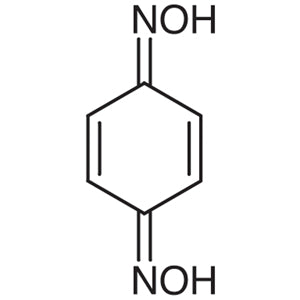
1,4-BenzoquinoneDioxime TCI B0090
Regular price Rp 584.850,00Regular price -
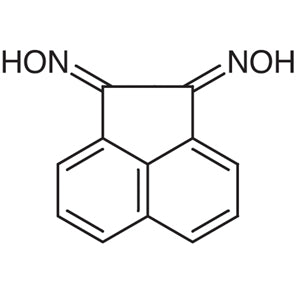
AcenaphthenequinoneDioxime TCI A0981
Regular price Rp 5.300.400,00Regular price -
BenzilDioxime TCI D0891
Regular price Rp 1.565.550,00Regular price -
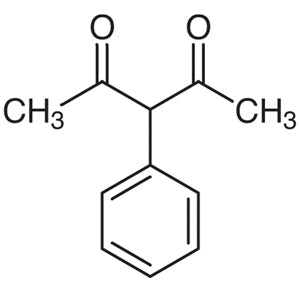
3-Phenyl-2,4-pentanedione TCI P1297
Regular price From Rp 4.479.300,00Regular price -
2,3-Pentanedione TCI P0051
Regular price From Rp 1.881.600,00Regular price -
3-Methyl-2,4-pentanedione TCI M1132
Regular price Rp 3.817.800,00Regular price -
4,4'-DibenzoylquinoneDioxime TCI D0246
Regular price From Rp 530.250,00Regular price -
3-Methyl-1,2-cyclopentanedione TCI M2904
Regular price Rp 2.016.000,00Regular price