1,4-Benzoquinone Dioxime is a chemical compound widely used in laboratory settings for its versatile reactivity and structural properties. This compound plays a crucial role in various chemical reactions and analytical procedures, particularly in oxidation and reduction processes. It is a valuable reagent in organic chemistry due to its ability to participate in multiple reaction mechanisms. Its unique molecular structure, featuring two oxime groups attached to a benzene ring, makes it a key component in the identification and analysis of organic compounds. The compound’s stability and reactivity contribute to its effectiveness in a wide range of chemical experiments.
The properties that make 1,4-Benzoquinone Dioxime a preferred choice include its ability to form complexes with metal ions and organic compounds. This characteristic makes it particularly useful in qualitative and quantitative analysis. Its solubility in organic solvents further enhances its utility in separation and identification processes. The compound’s chemical versatility allows it to be applied in different experimental setups, making it a reliable reagent in both research and educational environments. Its stability under controlled conditions ensures consistent performance in laboratory applications.
In Indonesian laboratories, 1,4-Benzoquinone Dioxime is commonly used in educational and research settings. It is an essential material for students and researchers involved in organic chemistry and analytical techniques. Its presence in laboratory kits and research projects underscores its importance in both academic and industrial applications. The compound’s role in teaching and experimentation supports the development of practical skills and scientific knowledge in the field of chemistry.
Related TCI products
- Oxidation and Reduction Reactions: This compound is ideal for facilitating redox processes due to its reactivity and ability to participate in electron transfer mechanisms.
- Organic Compound Identification: Its unique molecular structure allows for the detection and analysis of various organic substances through chemical interactions.
- Metal Ion Complexation: The compound’s ability to form complexes with metal ions makes it useful in qualitative and quantitative analysis of metallic elements.
- Analytical Chemistry Techniques: It is widely used in analytical procedures for its solubility in organic solvents and its role in separation and identification methods.
- Educational Laboratory Work: It is commonly used in teaching environments to demonstrate chemical reactions and analytical techniques to students.
| Brand | TCI |
|---|---|
| CAS number | 105-11-3 |
| Molecular formula | — |
| Purity | — |
| Category | Chemistry > Building Blocks > Non-Heterocyclic Building Blocks |
| Pack sizes | Available in various quantities as per standard laboratory supply specifications |
| Physical form | Solid |
| Storage | Store in a cool, dry place away from direct sunlight and moisture |
1,4-Benzoquinone Dioxime should be stored in a cool, dry place away from direct sunlight and moisture to maintain its chemical stability. It is recommended to use airtight containers to prevent exposure to air and humidity. Due to its reactivity, it should be handled with care in a well-ventilated area. Laboratory personnel should wear appropriate personal protective equipment, such as gloves and safety goggles, when working with this compound. It is important to avoid contact with skin and eyes and to ensure proper disposal of any waste material in accordance with local regulations. Proper storage and handling practices help ensure the safety of laboratory staff and the integrity of the compound.
—
Produk Terkait
-
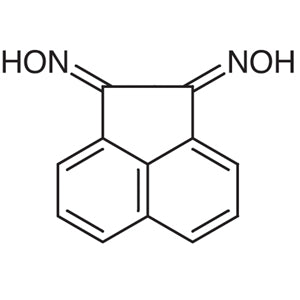
AcenaphthenequinoneDioxime TCI A0981
Regular price Rp 5.352.900,00Regular priceRp 3.759.000,00Sale price Rp 5.352.900,00 -
2,4-PentanedioneDioxime TCI P0792
Regular price Rp 6.281.100,00Regular priceRp 4.407.900,00Sale price Rp 6.281.100,00 -
BenzilDioxime TCI D0891
Regular price Rp 1.618.050,00Regular priceRp 1.146.600,00Sale price Rp 1.618.050,00 -
4,4'-DibenzoylquinoneDioxime TCI D0246
Regular price From Rp 582.750,00Regular priceRp 423.150,00Sale price From Rp 582.750,00 -
2-tert-Butyl-1,4-benzoquinone TCI B1984
Regular price Rp 1.167.600,00Regular priceRp 831.600,00Sale price Rp 1.167.600,00 -
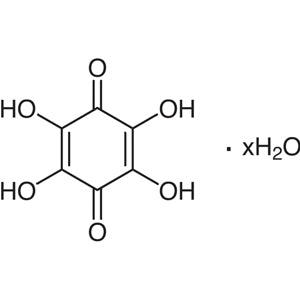
Tetrahydroxy-1,4-benzoquinoneHydrate TCI T1090
Regular price Rp 1.618.050,00Regular priceRp 1.146.600,00Sale price Rp 1.618.050,00 -
Tetramethyl-1,4-benzoquinone TCI T0672
Regular price From Rp 1.538.250,00Regular priceRp 1.090.950,00Sale price From Rp 1.538.250,00 -
Tetrahydroxy-1,4-benzoquinoneDisodiumSalt TCI T0122
Regular price From Rp 1.167.600,00Regular priceRp 831.600,00Sale price From Rp 1.167.600,00