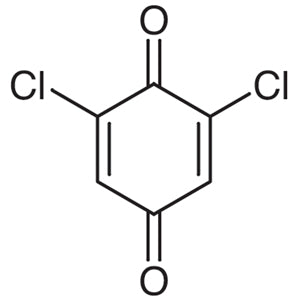
2,6-Dichloro-1,4-benzoquinone is a chemical compound widely used in organic reactions for the synthesis of complex molecules. As a key building block in chemical research, it serves as a fundamental reagent in the development of heterocyclic compounds, pharmaceuticals, and industrial chemicals. Its presence in laboratory settings is essential for processes involving substitution and oxidation reactions, making it a versatile tool for chemists. This compound is particularly valued for its ability to participate in controlled chemical transformations, which are critical in both academic and industrial research environments.
The compound's high reactivity is attributed to its aromatic structure and the presence of two chlorine atoms at positions 2 and 6. These substituents enhance its chemical activity while also contributing to its stability compared to standard benzoquinone. The combination of reactivity and stability makes it an ideal choice for reactions requiring precise control. Its chemical properties allow it to be used in a variety of synthetic pathways, especially in applications where selective reactivity is necessary.
In Indonesian laboratories, 2,6-Dichloro-1,4-benzoquinone is commonly used in organic chemistry research, particularly in academic institutions and research centers. Its availability in small pack sizes, such as 1g and 5g, facilitates its use in both small-scale and mid-scale experiments. This accessibility supports a wide range of experimental needs, from basic research to more advanced synthetic projects.
Related TCI products
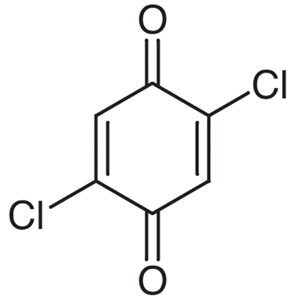
- TCI D0343 615-93-0 2,5-Dichloro-1,4-benzoquinone
- TCI B1984 3602-55-9 2-tert-Butyl-1,4-benzoquinone
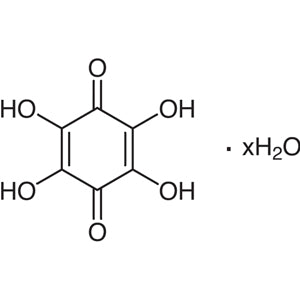
- TCI T1090 123334-16-7 Tetrahydroxy-1,4-benzoquinone Hydrate
- TCI T0672 527-17-3 Tetramethyl-1,4-benzoquinone
- TCI T0122 1887-02-1 Tetrahydroxy-1,4-benzoquinone Disodium Salt
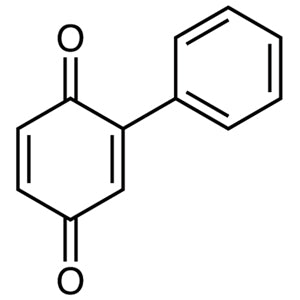
- TCI P2674 363-03-1 2-Phenyl-1,4-benzoquinone
- Synthesis of heterocyclic compounds for pharmaceutical development due to its reactivity and structural versatility.
- Chlorine substitution reactions in aromatic compound synthesis to create functionalized derivatives.
- Oxidation reactions of aromatic compounds to introduce or modify functional groups in organic molecules.
- Research in organic chemistry for the development of new materials and chemical intermediates.
- Educational experiments in undergraduate and graduate chemistry courses to demonstrate synthetic methodologies.
| Brand | TCI |
|---|---|
| CAS number | 697-91-6 |
| Molecular formula | — |
| Purity | — |
| Category | Chemistry > Building Blocks > Non-Heterocyclic Building Blocks |
| Pack sizes | 1g, 5g |
| Physical form | Solid (exact form may vary depending on supplier) |
| Storage | Store in a cool, dry place away from light and incompatible substances |
This compound should be stored in a cool, dry place, away from direct sunlight and sources of heat. It is recommended to use airtight containers to prevent moisture absorption and contamination. Due to its reactivity, it should be kept separate from strong bases, reducing agents, and other reactive substances. In laboratory settings, proper personal protective equipment (PPE) such as gloves and safety goggles should be worn when handling. The compound should never be stored in areas with high humidity or exposed to air for prolonged periods. Regular inspection of storage conditions is advised to ensure chemical integrity and safety.
—
Produk Terkait
-
2,5-Dichloro-1,4-benzoquinone TCI D0343
Regular price From Rp 848.400,00Regular price -
2-tert-Butyl-1,4-benzoquinone TCI B1984
Regular price Rp 1.115.100,00Regular price -
Tetrahydroxy-1,4-benzoquinoneHydrate TCI T1090
Regular price Rp 1.565.550,00Regular price -
Tetramethyl-1,4-benzoquinone TCI T0672
Regular price From Rp 1.485.750,00Regular price -
Tetrahydroxy-1,4-benzoquinoneDisodiumSalt TCI T0122
Regular price From Rp 1.115.100,00Regular price -
2-Phenyl-1,4-benzoquinone TCI P2674
Regular price From Rp 637.350,00Regular price -
2,6-Dimethoxy-1,4-benzoquinone TCI D2706
Regular price Rp 2.279.550,00Regular price -
3,5-Di-tert-butyl-1,2-benzoquinone TCI D2430
Regular price From Rp 3.498.600,00Regular price