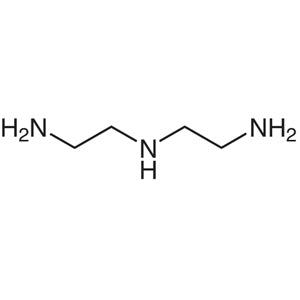
Diethylenetriamine (DETA), with the CAS number 111-40-0, is a versatile chemical compound widely used in laboratory settings, particularly in catalysis and inorganic chemistry. As a nitrogen-donor ligand, DETA plays a crucial role in the formation of metal complexes, enabling the activation of various chemical reactions. Its ability to coordinate with transition metals makes it an essential component in the development of catalysts and in the study of redox processes. This compound is commonly utilized in both research and industrial applications due to its stability and reactivity.
DETA is valued for its molecular stability and strong coordinating ability, which allow it to form stable complexes with a wide range of metals. Its high boiling point and solubility in organic solvents make it suitable for use in diverse experimental conditions. These properties contribute to its reliability in laboratory environments, where consistency and performance are critical. Additionally, its relatively low toxicity in small doses ensures a safer working environment, making it a preferred choice for many researchers.
In Indonesian laboratories, DETA is frequently used in both fundamental and applied chemical research. It is particularly relevant for academic institutions and research centers that focus on synthetic chemistry, catalysis, and materials science. Its applications span across various disciplines, supporting the development of new compounds and the optimization of chemical processes. DETA’s versatility and effectiveness make it an essential reagent in the Indonesian scientific community.
TCI brochures (PDF)
- Polyamines 2025-10-21 · p. 2
- Ligands 2025-12-01 · p. 9
- Biomaterials Research Reagents 2025-02-19 · p. 18
- Monomers 2025-05-28 · p. 31
- Reagents for Biological Research 2025-03-11 · p. 59
Related TCI products
- TCI B1952 10563-26-5 N,N'-Bis(3-aminopropyl)ethylenediamine
- TCI B1468 306-67-2 N,N'-Bis(3-aminopropyl)-1,4-butanediamine Tetrahydrochloride
- TCI B1445 4741-99-5 N,N'-Bis(2-aminoethyl)-1,3-propanediamine
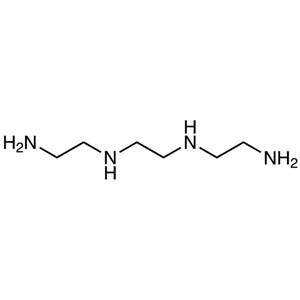
- TCI T0429 112-24-3 Triethylenetetramine
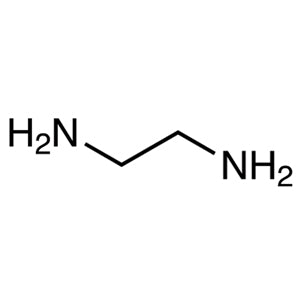
- TCI E0077 107-15-3 Ethylenediamine Anhydrous
- TCI D0239 110-60-1 1,4-Diaminobutane
- In catalysis research, DETA is used to create metal complexes that enhance reaction efficiency and selectivity.
- For inorganic chemistry experiments, DETA serves as a ligand that stabilizes transition metal ions in solution.
- In redox studies, DETA acts as a reducing agent, facilitating electron transfer processes in chemical reactions.
- In synthetic chemistry, DETA is employed to form coordination compounds, which are essential in drug development and material synthesis.
- For analytical chemistry, DETA helps in the preparation of reagents that improve the accuracy of spectroscopic and chromatographic analyses.
| Brand | TCI |
|---|---|
| CAS number | 111-40-0 |
| Molecular formula | — |
| Purity | — |
| Category | Chemistry > Catalysis and Inorganic Chemistry > Nitrogen-Donor Ligands [Catalysis] |
| Pack sizes | Available in various sizes as per standard laboratory supply |
| Physical form | Liquid |
| Storage | Store in a cool, dry place away from direct sunlight and incompatible substances |
DETA should be stored in a cool, dry, and well-ventilated area, away from direct sunlight and sources of heat. It is recommended to use airtight containers made of glass or polyethylene to prevent contamination and evaporation. Due to its solubility in organic solvents, it should be kept separate from strong oxidizing agents and acids to avoid unwanted reactions. In laboratory settings, personal protective equipment such as gloves and safety goggles should always be worn when handling DETA. Regular monitoring of storage conditions is advised to ensure the compound remains stable and safe for use. Its relatively low toxicity in small doses makes it safer to handle compared to many other reagents, but proper precautions should still be taken to maintain a secure working environment.
—
Product Categories
Produk Terkait
-
N,N'-Bis(3-aminopropyl)ethylenediamine TCI B1952
Regular price From Rp 610.050,00Regular priceRp 426.300,00Sale price From Rp 610.050,00 -
N,N'-Bis(3-aminopropyl)-1,4-butanediamineTetrahydrochloride TCI B1468
Regular price From Rp 4.823.700,00Regular priceRp 3.372.600,00Sale price From Rp 4.823.700,00 -
N,N'-Bis(2-aminoethyl)-1,3-propanediamine TCI B1445
Regular price Rp 1.378.650,00Regular priceRp 963.900,00Sale price Rp 1.378.650,00 -
Triethylenetetramine TCI T0429
Regular price From Rp 505.050,00Regular priceRp 352.800,00Sale price From Rp 505.050,00 -
EthylenediamineAnhydrous TCI E0077
Regular price From Rp 505.050,00Regular priceRp 352.800,00Sale price From Rp 505.050,00 -
1,4-Diaminobutane TCI D0239
Regular price From Rp 505.050,00Regular priceRp 352.800,00Sale price From Rp 505.050,00 -
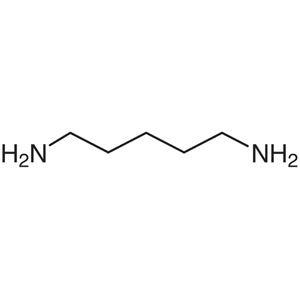
1,5-Diaminopentane TCI D0108
Regular price From Rp 2.227.050,00Regular priceRp 1.557.150,00Sale price From Rp 2.227.050,00 -
1,5-DiaminopentaneDihydrochloride TCI D0099
Regular price From Rp 1.458.450,00Regular priceRp 1.019.550,00Sale price From Rp 1.458.450,00