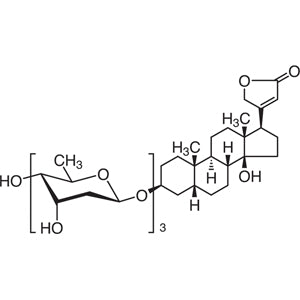
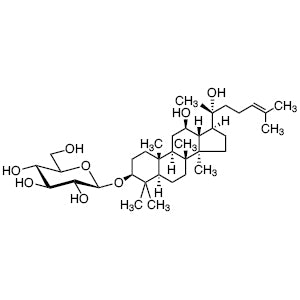
Digitonin from TCI (product code D0540) is a steroidal saponin obtained from the plant Digitalis purpurea. Each molecule combines a steroidal aglycone with a sugar chain. This structure makes it amphiphilic and places it among the glycoscience compounds. In cell biology and biochemistry laboratories, Digitonin is known as a mild detergent that can form pores in cholesterol-rich membranes. Researchers use it to permeabilize cells, isolate organelles and solubilize membrane protein complexes without disrupting their native structure.
Digitonin's main advantage is its ability to form complexes with cholesterol. The plasma membrane is rich in cholesterol, while the inner mitochondrial membrane and the endoplasmic reticulum contain much less. At the right concentration, Digitonin can selectively perforate the plasma membrane and leave the organelles inside the cell intact. As a mild nonionic detergent, it also preserves the interactions between protein subunits. For this reason, it is a preferred reagent for analyzing mitochondrial respiratory chain complexes and membrane protein supercomplexes.
In Indonesia, Digitonin is used in molecular biology, biochemistry and medical research laboratories at universities, research institutes and life-science facilities. Typical work includes studies of cell physiology, mitochondrial function and membrane proteins, where intact organelles or native protein assemblies are essential. Its selective action on cholesterol-rich membranes makes it a practical tool for researchers who need to reach the cell interior in a controlled way. It also lets them extract membrane complexes without losing information about how the subunits are organized.
TCI brochures (PDF)
- Traditional Medicine/Crude Medicine Research Reagents 2024-09-11 · p. 2
- Steroids 2026-07-28 · p. 7
- Plant Research Reagents 2026-02-24 · p. 9
- Phytochemicals 2025-12-17 · p. 5
- Reagents for Glyco Chemistry & Biology 5th Edition · p. 101
- Reagents for Biological Research 2025-03-11 · p. 52
- Cell permeabilization: Digitonin selectively forms pores in the cholesterol-rich plasma membrane, giving reagents access to the cytosol while internal organelle membranes remain largely intact.
- Organelle isolation: Because cholesterol-poor membranes such as the inner mitochondrial membrane and the endoplasmic reticulum are less affected, Digitonin helps release and separate organelles in their intact form.
- Solubilization of membrane protein complexes: As a mild nonionic detergent, Digitonin extracts membrane proteins while preserving the native interactions between subunits that harsher detergents would disrupt.
- Analysis of mitochondrial respiratory chain complexes: Its gentle action keeps respiratory chain complexes assembled, so researchers can study their composition and organization close to their native state.
- Membrane protein supercomplex studies: Digitonin keeps higher-order assemblies of membrane proteins intact, which supports research into how these supercomplexes form and work together in biological membranes.
| Brand | TCI (product code D0540) |
|---|---|
| CAS number | 11024-24-1 |
| Molecular formula | — |
| Purity | — |
| Category | Chemistry > Chemical Biology > Glycoscience |
| Pack sizes | see the available options on the product listing |
| Physical form | refer to the TCI specification sheet and certificate of analysis |
| Storage | follow the storage conditions stated on the TCI label and Safety Data Sheet |
Store Digitonin under the conditions specified on the TCI label and Safety Data Sheet. Keep it in its original tightly closed container in a dry, well-ventilated area, away from incompatible materials and direct heat or light. Handle it in a well-ventilated space or fume hood, and wear suitable gloves, safety glasses and a lab coat. Avoid breathing in dust and avoid contact with skin or eyes. Weigh and prepare solutions carefully to keep dust generation to a minimum. Label every working solution clearly. Read the Safety Data Sheet before use, and dispose of waste according to institutional and local regulations for chemical waste.
—
Product Categories
- GlycoscienceFunctional OligosaccharidesNatural Glycosides [Functional Oligosaccharides]
- GlycoscienceOligosaccharides [Glycoscience]Oligosaccharides (Other) [Glycoscience]
- GlycoscienceOligosaccharides by Component SugarGalactose [Oligosaccharides by Component Sugar]
- Biochemicals and ReagentsCarbohydrates
- Biochemicals and ReagentsCrude Medicine Ingredients for Research and Experimental Use
- Biochemicals and ReagentsSteroidsPhytosteroids [Steroids]
- Biochemicals and ReagentsSteroidsSteroid Glycosides [Steroids]
- Cell BiologyCell Signaling and NeuroscienceCytokines, Growth Factors and Hormones
- Cell BiologyNutrition ResearchPhytochemicals
- Pharmaceutical Development and Drug Discovery ResearchCrude Medicine Ingredients for Research and Experimental Use
Produk Terkait
-
Digoxin TCI D1828
Regular price From Rp 1.113.000,00Regular priceRp 793.800,00Sale price From Rp 1.113.000,00 -
Digitoxin TCI D0542
Regular price Rp 3.843.000,00Regular priceRp 2.702.700,00Sale price Rp 3.843.000,00 -
20(R)-GinsenosideRh2 TCI G0567
Regular price From Rp 4.293.450,00Regular priceRp 3.017.700,00Sale price From Rp 4.293.450,00 -
NonasaccharideGlc4Xyl3Gal2 TCI N0693
Regular price Rp 19.105.800,00Regular priceRp 1,37Sale price Rp 19.105.800,00 -
HyaluronateHexasaccharide TCI H1285
Regular price From Rp 3.153.150,00Regular priceRp 2.220.750,00Sale price From Rp 3.153.150,00 -
ChitosanOligosaccharides TCI C2849
Regular price From Rp 2.702.700,00Regular priceRp 1.905.750,00Sale price From Rp 2.702.700,00 -
ChitinOligosaccharides(containsN-Acetylglucosamine) TCI C2762
Regular price From Rp 2.969.400,00Regular priceRp 2.091.600,00Sale price From Rp 2.969.400,00 -
G2F2AB(500pmol/vial) TCI G0564
Regular price Rp 6.095.250,00Regular priceRp 4.277.700,00Sale price Rp 6.095.250,00