3,5-Dihydroxybenzoic Acid is a chemical compound widely used in laboratory experiments and analytical processes. It is a key component in various chemical syntheses, particularly in the development of complex molecules. This compound is a building block in organic chemistry, playing a vital role in substitution and oxidation reactions. Its aromatic structure, with hydroxyl groups at positions 3 and 5, makes it versatile for further chemical modifications. It is commonly found in research settings where reactivity and structural versatility are required.
One of the main reasons for its popularity is its reactivity and compatibility with a wide range of functional groups. This allows chemists to create new compounds with more complex structures. Additionally, its solubility in organic solvents such as ethyl acetate and ethanol facilitates purification and separation processes. These properties make it a reliable choice for high-precision chemical experiments and industrial applications. The compound’s stability under certain conditions also enhances its usability in controlled laboratory environments.
In Indonesian laboratories, 3,5-Dihydroxybenzoic Acid is extensively used in pure and applied chemical research. It supports the development of pharmaceuticals, industrial chemicals, and analytical reagents. Its presence in research institutions and academic settings highlights its importance in advancing chemical knowledge and innovation. The compound’s versatility and reliability make it a preferred material for both educational and industrial applications in the region.
Related TCI products
- TCI B1425 16534-12-6 4-Bromo-3,5-dihydroxybenzoic Acid
- TCI R0011 303-07-1 2,6-Dihydroxybenzoic Acid
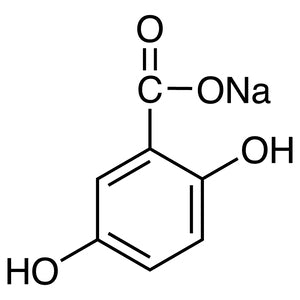
- TCI D4893 4955-90-2 2,5-Dihydroxybenzoic Acid Sodium Salt
- TCI D2933 490-79-9 2,5-Dihydroxybenzoic Acid [Matrix for MALDI-TOF/MS]
- TCI D0569 490-79-9 2,5-Dihydroxybenzoic Acid
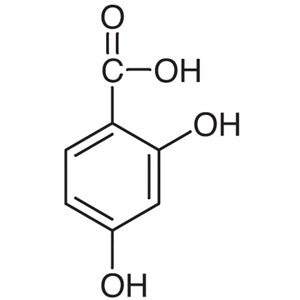
- TCI D0568 89-86-1 2,4-Dihydroxybenzoic Acid
- Pharmaceutical research utilizes 3,5-Dihydroxybenzoic Acid for the synthesis of drug molecules due to its reactivity and structural adaptability.
- Industrial chemical production benefits from its ability to form complex compounds, making it suitable for manufacturing specialized chemical products.
- Analytical chemistry applications rely on its solubility and reactivity for the development of reagents and analytical tools.
- Organic synthesis experiments use it as a building block for creating new compounds through substitution and oxidation reactions.
- Environmental studies incorporate it for the analysis of organic pollutants and the development of detection methods.
| Brand | TCI |
|---|---|
| CAS number | 99-10-5 |
| Molecular formula | — |
| Purity | — |
| Category | Chemistry > Building Blocks > Non-Heterocyclic Building Blocks |
| Pack sizes | Available in various quantities as per supplier specifications |
| Physical form | Solid |
| Storage | Store in a cool, dry place away from direct sunlight |
3,5-Dihydroxybenzoic Acid should be stored in a cool, dry place, away from direct sunlight and sources of heat. It is recommended to keep the compound in a tightly sealed container to prevent moisture absorption and contamination. Due to its reactivity, it should be handled with care, using appropriate personal protective equipment such as gloves and safety goggles. It is advisable to store it in a well-ventilated area to minimize exposure to airborne particles. Proper labeling of storage containers is essential for safe handling and to prevent accidental use. Regular inspection of storage conditions ensures the compound remains in optimal condition for laboratory use.
—
Produk Terkait
-
4-Bromo-3,5-dihydroxybenzoicAcid TCI B1425
Regular price From Rp 2.466.450,00Regular price -
2,6-DihydroxybenzoicAcid TCI R0011
Regular price Rp 1.485.750,00Regular price -
2,5-DihydroxybenzoicAcidSodiumSalt TCI D4893
Regular price From Rp 1.246.350,00Regular price -
2,5-DihydroxybenzoicAcid[MatrixforMALDI-TOF/MS] TCI D2933
Regular price From Rp 955.500,00Regular price -
2,5-DihydroxybenzoicAcid TCI D0569
Regular price From Rp 1.246.350,00Regular price -
2,4-DihydroxybenzoicAcid TCI D0568
Regular price Rp 848.400,00Regular price -
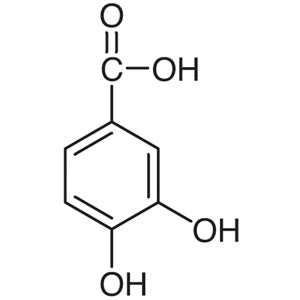
3,4-DihydroxybenzoicAcid TCI C0055
Regular price From Rp 2.386.650,00Regular price -
2,3-DihydroxybenzoicAcid TCI C0054
Regular price From Rp 1.298.850,00Regular price


![2,5-Dihydroxybenzoic Acid [Matrix for MALDI-TOF/MS] (CAS 490-79-9) - TCI D2933 - AMI Scientific](http://amiscientific.com/cdn/shop/files/TCI2510D2933.jpg?v=1767105578&width=533)