2,5-Dihydroxybenzoic Acid is a chemical compound widely used in various laboratory experiments and analytical procedures. It belongs to the category of non-heterocyclic building blocks and is commonly employed in organic chemistry for its reactivity and versatility. This compound is particularly useful in the synthesis of complex molecules due to its ability to participate in multiple chemical reactions. Its presence in laboratory settings is essential for both qualitative and quantitative analysis, making it a fundamental component in many research and development processes.
The compound is known for its good solubility in both organic solvents and water, which enhances its applicability across a wide range of experimental conditions. Its chemical stability ensures that it maintains its properties under various reaction environments, making it a reliable choice for laboratory use. Additionally, its ability to form complexes with heavy metals expands its utility in analytical chemistry and environmental studies. These characteristics make it a preferred material for researchers and analysts who require consistent and predictable results.
In Indonesian laboratories, 2,5-Dihydroxybenzoic Acid is frequently used in chemical research, sample analysis, and pharmaceutical development. Its role in supporting scientific investigations is crucial, particularly in fields that require precise and reproducible chemical reactions. The compound's reliability and adaptability make it an essential tool for both academic and industrial research in Indonesia.
TCI brochures (PDF)
- Antioxidants for Research and Experimental Use 2026-07-29 · p. 1
- Used in organic synthesis for its reactivity and ability to form stable intermediates in complex molecule creation.
- Applied in quantitative analysis as a standard reference material for accurate and reproducible results.
- Employed in mass spectrometry techniques due to its ability to act as a binding agent for ionization processes.
- Utilized in chromatographic analysis for its compatibility with various solvent systems and detection methods.
- Incorporated in environmental studies for its capacity to bind heavy metals and aid in contaminant detection.
| Brand | TCI |
|---|---|
| CAS number | 490-79-9 |
| Molecular formula | — |
| Purity | — |
| Category | Chemistry > Building Blocks > Non-Heterocyclic Building Blocks |
| Pack sizes | Available in various quantities as per supplier specifications |
| Physical form | Solid |
| Storage | Store in a cool, dry place away from direct sunlight |
This compound should be stored in a cool, dry location, away from direct sunlight and sources of heat. It is recommended to use airtight containers to prevent moisture absorption and contamination. Due to its chemical stability, it does not require special handling under normal laboratory conditions. However, it is advisable to keep it in a well-ventilated area to ensure safe handling. Avoid contact with incompatible substances and ensure proper labeling of storage containers for easy identification. Regular inspection of storage conditions is recommended to maintain the integrity of the compound.
—
Produk Terkait
-
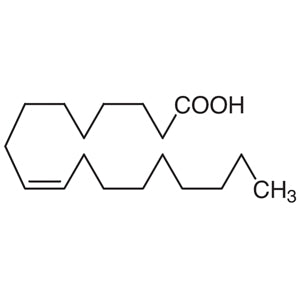
OleicAcid TCI O0180
Regular price From Rp 1.618.050,00Regular price -
trans-FerulicAcid TCI H0267
Regular price From Rp 1.881.600,00Regular price -
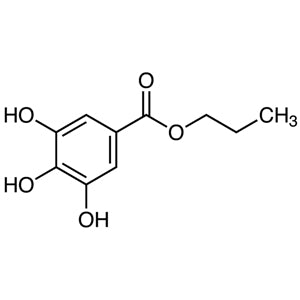
PropylGallate TCI G0018
Regular price From Rp 637.350,00Regular price -
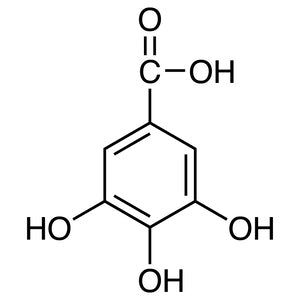
GallicAcid TCI G0011
Regular price From Rp 505.050,00Regular price -
Ethyl3,4-Dihydroxybenzoate TCI D0571
Regular price From Rp 689.850,00Regular price -
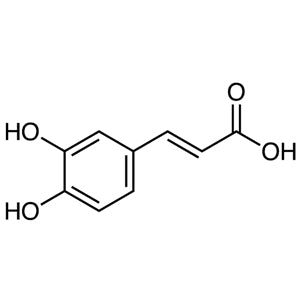
CaffeicAcid TCI C0002
Regular price From Rp 903.000,00Regular price -
4-Bromo-3,5-dihydroxybenzoicAcid TCI B1425
Regular price From Rp 2.466.450,00Regular price -
2,6-DihydroxybenzoicAcid TCI R0011
Regular price Rp 1.485.750,00Regular price