2,6-Dihydroxybenzoic Acid is a chemical compound widely used in various laboratory reactions across multiple scientific disciplines. As a building block in organic and analytical chemistry, it plays a crucial role in the synthesis of complex molecules. Its aromatic structure, with hydroxyl groups at positions 2 and 6 on the benzene ring, makes it a versatile reagent in chemical processes. This compound is valued for its ability to participate in a range of chemical transformations, including esterification, condensation, and coupling reactions. Its presence in laboratory workflows supports the development of new compounds and the analysis of existing ones.
The properties of 2,6-Dihydroxybenzoic Acid make it a preferred choice for many applications. It exhibits good solubility in organic solvents such as ethyl acetate and ethanol, which facilitates its use in solution-based reactions. Its stability under controlled conditions allows for consistent results in experimental settings. Additionally, the compound’s ability to form hydrogen bonds with other functional groups enhances its reactivity in synthetic pathways. These characteristics contribute to its reliability and effectiveness in chemical synthesis and analytical procedures.
In Indonesian laboratories, 2,6-Dihydroxybenzoic Acid is commonly used in research settings, including academic institutions and research centers. It appears frequently in experiments related to the synthesis of new compounds and qualitative analysis. Its role in supporting both fundamental and applied research makes it an essential component in the chemical toolkit of Indonesian scientists and researchers.
Related TCI products
- TCI B1425 16534-12-6 4-Bromo-3,5-dihydroxybenzoic Acid
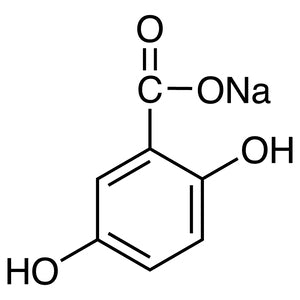
- TCI D4893 4955-90-2 2,5-Dihydroxybenzoic Acid Sodium Salt
- TCI D2933 490-79-9 2,5-Dihydroxybenzoic Acid [Matrix for MALDI-TOF/MS]
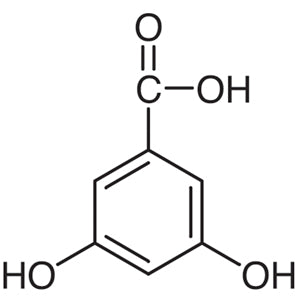
- TCI D0570 99-10-5 3,5-Dihydroxybenzoic Acid
- TCI D0569 490-79-9 2,5-Dihydroxybenzoic Acid
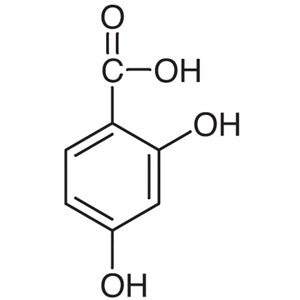
- TCI D0568 89-86-1 2,4-Dihydroxybenzoic Acid
- Organic synthesis applications benefit from 2,6-Dihydroxybenzoic Acid due to its reactivity and ability to form stable intermediates in complex molecule construction.
- Analytical chemistry uses this compound for its solubility and reactivity, aiding in the detection and quantification of various functional groups in samples.
- Pharmaceutical research often incorporates this acid as a building block for the development of new drug compounds and therapeutic agents.
- Environmental analysis leverages its chemical properties for the identification of pollutants and the study of organic contaminants in natural samples.
- Material science applications utilize this compound in the development of polymers and coatings due to its functional group versatility and chemical stability.
| Brand | TCI |
|---|---|
| CAS number | 303-07-1 |
| Molecular formula | — |
| Purity | — |
| Category | Chemistry > Building Blocks > Non-Heterocyclic Building Blocks |
| Pack sizes | Available in various quantities as per standard chemical supply practices |
| Physical form | Solid |
| Storage | Store in a cool, dry place away from direct sunlight and moisture |
2,6-Dihydroxybenzoic Acid should be stored in a cool, dry environment to maintain its chemical integrity. It is recommended to keep the compound in a sealed container to prevent exposure to moisture and air. Suitable storage containers include glass or high-density polyethylene bottles with tight-fitting lids. Due to its chemical nature, it is important to handle the compound with appropriate personal protective equipment, such as gloves and safety goggles. Avoid contact with skin and eyes, and ensure proper ventilation in the workspace. This compound is not classified as hazardous under standard laboratory conditions, but standard safety protocols should still be followed to ensure safe handling and storage.
—
Produk Terkait
-
4-Bromo-3,5-dihydroxybenzoicAcid TCI B1425
Regular price From Rp 2.466.450,00Regular price -
2,5-DihydroxybenzoicAcidSodiumSalt TCI D4893
Regular price From Rp 1.246.350,00Regular price -
2,5-DihydroxybenzoicAcid[MatrixforMALDI-TOF/MS] TCI D2933
Regular price From Rp 955.500,00Regular price -
3,5-DihydroxybenzoicAcid TCI D0570
Regular price From Rp 928.200,00Regular price -
2,5-DihydroxybenzoicAcid TCI D0569
Regular price From Rp 1.246.350,00Regular price -
2,4-DihydroxybenzoicAcid TCI D0568
Regular price Rp 848.400,00Regular price -
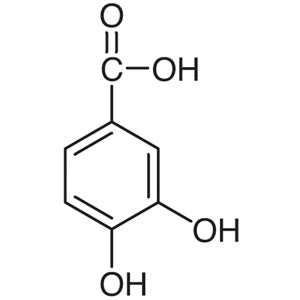
3,4-DihydroxybenzoicAcid TCI C0055
Regular price From Rp 2.386.650,00Regular price -
2,3-DihydroxybenzoicAcid TCI C0054
Regular price From Rp 1.298.850,00Regular price

![2,5-Dihydroxybenzoic Acid [Matrix for MALDI-TOF/MS] (CAS 490-79-9) - TCI D2933 - AMI Scientific](http://amiscientific.com/cdn/shop/files/TCI2510D2933.jpg?v=1767105578&width=533)