


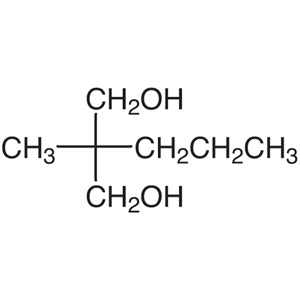
2-Methyl-2-propyl-1,3-propanediol is a chemical compound widely used as a foundational material in various laboratory reactions. It serves as a key building block in organic synthesis, enabling the creation of more complex molecular structures. This compound is particularly valuable in the development of heterocyclic compounds and polymers, where its ability to connect different functional groups is essential. Its versatility makes it a staple in both academic and industrial research settings.
The compound’s chemical stability and resistance to degradation are key factors that make it a preferred choice for laboratory use. It can effectively interact with a range of functional groups such as amines, carboxylic acids, and aldehydes, allowing for diverse synthetic pathways. Its non-toxic nature and availability further enhance its appeal, making it a reliable and safe option for researchers. These properties contribute to its widespread application in chemical synthesis and material development.
In Indonesian laboratories, 2-Methyl-2-propyl-1,3-propanediol is commonly used in organic chemistry research, especially in pharmaceutical and chemical industries. Its role in constructing complex molecules and its stability make it an essential component in many experimental processes. Due to its safety profile and effectiveness, it is a popular choice among researchers and educators in various institutions across Indonesia.
Related TCI products
- Organic synthesis of heterocyclic compounds due to its ability to connect multiple functional groups.
- Polymer development where cross-linking and structural stability are required.
- Pharmaceutical research for the creation of complex drug molecules and intermediates.
- Chemical modification of functional groups in compound synthesis processes.
- Educational use in teaching organic chemistry and synthetic methods to students.
| Brand | TCI |
|---|---|
| CAS number | 78-26-2 |
| Molecular formula | — |
| Purity | — |
| Category | Chemistry > Building Blocks > Non-Heterocyclic Building Blocks |
| Pack sizes | 250g, 1kg |
| Physical form | Liquid |
| Storage | Store in a cool, dry place away from direct sunlight. |
This compound should be stored in a cool, dry environment, away from direct sunlight and sources of heat. It is recommended to use sealed containers made of glass or high-density polyethylene to prevent contamination and evaporation. As it is non-toxic, general laboratory safety protocols should be followed, including proper ventilation and the use of personal protective equipment when handling. Due to its chemical stability, it does not require special storage conditions beyond standard laboratory practices. Always ensure that the container is tightly closed to maintain its integrity and prevent any unwanted reactions.
—
Produk Terkait
-
2-(Bromomethyl)-2-(hydroxymethyl)-1,3-propanediol TCI B4057
Regular price From Rp 1.644.300,00Regular priceRp 1.149.750,00Sale price From Rp 1.644.300,00 -
2-Bromo-2-nitro-1,3-propanediol TCI B1247
Regular price From Rp 1.008.000,00Regular priceRp 704.550,00Sale price From Rp 1.008.000,00 -
2-Butyl-2-ethyl-1,3-propanediol TCI B0922
Regular price From Rp 530.250,00Regular priceRp 386.400,00Sale price From Rp 530.250,00 -
3-Phenoxy-1,2-propanediol TCI P1335
Regular price From Rp 3.340.050,00Regular priceRp 2.350.950,00Sale price From Rp 3.340.050,00 -
2-Phenyl-1,3-propanediol TCI P1249
Regular price From Rp 1.485.750,00Regular priceRp 1.038.450,00Sale price From Rp 1.485.750,00 -
1,3-Propanediol TCI P0486
Regular price From Rp 530.250,00Regular priceRp 386.400,00Sale price From Rp 530.250,00 -
2-Methylene-1,3-propanediol TCI M2473
Regular price From Rp 1.113.000,00Regular priceRp 793.800,00Sale price From Rp 1.113.000,00 -
2-Methyl-1,3-propanediol TCI M1114
Regular price From Rp 610.050,00Regular priceRp 442.050,00Sale price From Rp 610.050,00


