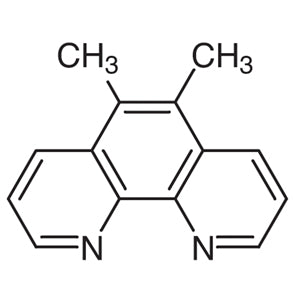
Neocuproine Hemihydrate is a chemical compound widely used in catalytic reactions and metal complex studies within laboratory settings. It serves as a nitrogen-donor ligand, playing a crucial role in the coordination chemistry of transition metals, particularly copper. Its unique molecular structure enables it to form stable complexes with various metal ions, making it a valuable reagent in synthetic chemistry. This compound is often employed in research that requires precise control over reaction environments, enhancing the efficiency and selectivity of chemical processes.
The compound’s chemical stability under controlled conditions makes it a preferred choice for many researchers. However, it is sensitive to moisture and air exposure, which necessitates careful handling and storage. Its hemihydrate form offers advantages in solubility and ease of use, allowing for straightforward preparation of solutions. These properties contribute to its versatility in both organic and inorganic chemistry applications. Additionally, its compatibility with a range of solvents and reagents enhances its utility in diverse experimental setups.
In Indonesian laboratories, Neocuproine Hemihydrate is commonly used in organic and inorganic chemistry research. It is a key component in studies involving metal complexes and catalytic reactions, supporting both academic and industrial research. Many research institutions and universities rely on this compound to meet the demands of experiments requiring nitrogen-donor ligands with specific reactivity and stability characteristics. Its availability through reliable suppliers like AMI Scientific ensures that it remains a staple in the chemical research toolkit across Indonesia.
TCI brochures (PDF)
- C-H Bond Activation Reaction 2025-06-20 · p. 8
- Ligands 2025-12-01 · p. 14
Related TCI products
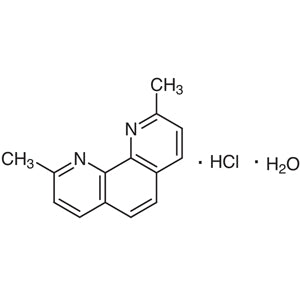
- TCI N0423 303136-82-5 Neocuproine Hydrochloride Monohydrate
- TCI D0711 4733-39-5 Bathocuproine
- TCI B0989 53744-42-6 Bathophenanthrolinedisulfonic Acid Disodium Salt Hydrate [for Determination of Ferrous Ion]
- TCI B0985 52698-84-7 Disodium Bathocuproinedisulfonate [for Determination of Cu in Blood]
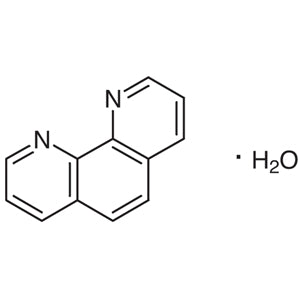
- TCI P0221 5144-89-8 1,10-Phenanthroline Monohydrate
- TCI P0081 18851-33-7 1,10-Phenanthroline Hydrochloride Monohydrate
- Metal Complex Synthesis: Neocuproine Hemihydrate is ideal for forming stable coordination complexes with transition metals, particularly copper, due to its nitrogen-donor ligand properties.
- Catalytic Reaction Studies: It is frequently used in catalytic processes where precise control over reaction environments is essential for achieving high selectivity and efficiency.
- Organic Chemistry Research: The compound supports a variety of organic reactions, especially those involving metal-catalyzed transformations and functional group modifications.
- Inorganic Chemistry Experiments: Its ability to coordinate with metal ions makes it valuable in studies of metal-based compounds and their reactivity under different conditions.
- Analytical Chemistry Applications: It is used in analytical methods to detect and quantify metal ions, offering a reliable and sensitive approach in qualitative and quantitative analysis.
| Brand | TCI |
|---|---|
| CAS number | 34302-69-7 |
| Molecular formula | — |
| Purity | — |
| Category | Chemistry > Catalysis and Inorganic Chemistry > Nitrogen-Donor Ligands [Catalysis] |
| Pack sizes | Available in various quantities as per supplier specifications |
| Physical form | Hemihydrate powder |
| Storage | — |
Neocuproine Hemihydrate should be stored in a cool, dry place away from moisture and direct exposure to air. It is recommended to keep the compound in a sealed container to prevent degradation due to humidity. Laboratory personnel should handle the material with care, using appropriate personal protective equipment such as gloves and safety goggles. The compound should be stored in a well-ventilated area to minimize the risk of inhalation. Due to its sensitivity, it is important to ensure that the storage conditions are consistent and monitored regularly to maintain its chemical integrity and effectiveness in experimental applications.
—
Product Categories
Produk Terkait
-
NeocuproineHydrochlorideMonohydrate TCI N0423
Regular price From Rp 795.900,00Regular price -
Bathocuproine TCI D0711
Regular price From Rp 3.232.950,00Regular price -
BathophenanthrolinedisulfonicAcidDisodiumSaltHydrate[forDeterminationofFerrousIon] TCI B0989
Regular price Rp 5.672.100,00Regular price -
DisodiumBathocuproinedisulfonate[forDeterminationofCuinBlood] TCI B0985
Regular price From Rp 1.485.750,00Regular price -
1,10-PhenanthrolineMonohydrate TCI P0221
Regular price From Rp 505.050,00Regular price -
1,10-PhenanthrolineHydrochlorideMonohydrate TCI P0081
Regular price Rp 1.644.300,00Regular price -
5-Methyl-1,10-phenanthroline[forColorimetricDeterminationofIron] TCI M0300
Regular price From Rp 1.060.500,00Regular price -
5,6-Dimethyl-1,10-phenanthroline TCI D1559
Regular price From Rp 1.220.100,00Regular price

![53744-42-6 Bathophenanthrolinedisulfonic Acid Disodium Salt Hydrate [for Determination of Ferrous Ion] - AMI Scientific](http://amiscientific.com/cdn/shop/files/TCI2510B0989.jpg?v=1768193262&width=533)
![52698-84-7 Disodium Bathocuproinedisulfonate [for Determination of Cu in Blood] - AMI Scientific](http://amiscientific.com/cdn/shop/files/TCI2510B0985_83228026-b61a-4ecc-a297-f4efaf5cf802.jpg?v=1767230689&width=533)

![3002-78-6 5-Methyl-1,10-phenanthroline [for Colorimetric Determination of Iron] - AMI Scientific](http://amiscientific.com/cdn/shop/files/TCI2510M0300.jpg?v=1767122633&width=533)