Dodecylsuccinic Anhydride (DDSA), with the CAS number 2561-85-5, is a chemical compound widely used in laboratory settings for its reactivity and versatility. As an anhydride, it plays a crucial role in organic synthesis, particularly in the formation of esters and amides. Its ability to react with alcohols and amines makes it an essential reagent in various chemical reactions. In the laboratory, DDSA serves as a building block for creating complex organic molecules, contributing to the development of surfactants, solvents, and industrial chemicals.
DDSA is valued for its chemical stability under controlled conditions and its reactivity towards polar substances. It has a high melting and boiling point, which facilitates its handling and storage. Its reactivity with water and polar solvents requires careful handling to maintain its integrity. These properties make it a preferred choice for researchers seeking reliable and effective chemical intermediates. The compound’s ability to participate in multiple reaction pathways enhances its utility in synthetic chemistry.
In Indonesian laboratories, DDSA is commonly used in scientific research across disciplines such as organic chemistry, pharmaceutical development, and industrial chemical production. Its availability and effectiveness make it a popular choice among researchers. The compound’s role in creating functional groups and its compatibility with various reaction conditions ensure its continued use in both academic and industrial settings.
Related TCI products
- TCI B1613 7538-42-3 2-Buten-1-ylsuccinic Anhydride
- TCI H0616 10500-34-2 2-Hexen-1-ylsuccinic Anhydride (cis- and trans- mixture)
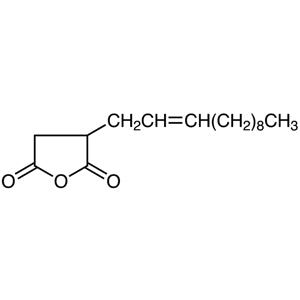
- TCI D0976 19780-11-1 2-Dodecen-1-ylsuccinic Anhydride (cis- and trans- mixture)
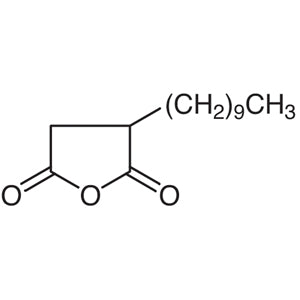
- TCI D0036 18470-76-3 Decylsuccinic Anhydride
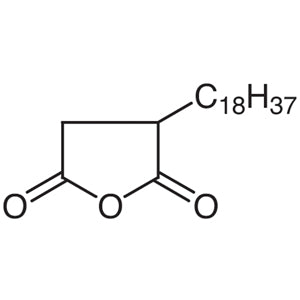
- TCI O0018 47458-32-2 Octadecylsuccinic Anhydride
- TCI I0146 41375-88-6 Isooctadecylsuccinic Anhydride (mixture of branched chain isomers)
- Organic synthesis is a primary application where DDSA is used to form esters and amides, making it ideal for creating complex organic molecules.
- Surfactant production benefits from DDSA’s ability to react with alcohols, enabling the synthesis of surfactants with desired surface-active properties.
- Pharmaceutical research utilizes DDSA to develop compounds with specific chemical functionalities, aiding in drug formulation and modification.
- Industrial chemical manufacturing relies on DDSA for its reactivity and stability, supporting the production of solvents and specialty chemicals.
- Analytical chemistry applications benefit from DDSA’s chemical properties, allowing it to be used as a reagent in various analytical procedures.
| Brand | TCI |
|---|---|
| CAS number | 2561-85-5 |
| Molecular formula | — |
| Purity | — |
| Category | Chemistry > Building Blocks > Non-Heterocyclic Building Blocks |
| Pack sizes | Available in various quantities as per supplier specifications |
| Physical form | Solid |
| Storage | Store in a cool, dry place away from moisture and incompatible materials |
DDSA should be stored in a cool, dry environment to maintain its chemical stability. It is recommended to keep the compound in airtight containers to prevent exposure to moisture and polar substances, which can cause unwanted reactions. Due to its reactivity with water, it is essential to use appropriate personal protective equipment when handling DDSA. The compound should be stored away from incompatible materials such as strong acids or bases. In laboratory settings, it is important to ensure proper ventilation and follow standard safety protocols to minimize risks. Proper storage and handling practices are crucial to maintaining the integrity and effectiveness of DDSA in research applications.
—
Produk Terkait
-
2-Buten-1-ylsuccinicAnhydride TCI B1613
Regular price From Rp 2.439.150,00Regular price -
2-Hexen-1-ylsuccinicAnhydride(cis-andtrans-mixture) TCI H0616
Regular price Rp 4.213.650,00Regular price -
2-Dodecen-1-ylsuccinicAnhydride(cis-andtrans-mixture) TCI D0976
Regular price From Rp 610.050,00Regular price -
DecylsuccinicAnhydride TCI D0036
Regular price Rp 3.551.100,00Regular price -
OctadecylsuccinicAnhydride TCI O0018
Regular price From Rp 2.942.100,00Regular price -
IsooctadecylsuccinicAnhydride(mixtureofbranchedchainisomers) TCI I0146
Regular price Rp 3.021.900,00Regular price -
HexadecylsuccinicAnhydride TCI H0079
Regular price Rp 3.021.900,00Regular price -
ValericAnhydride TCI V0006
Regular price From Rp 875.700,00Regular price