

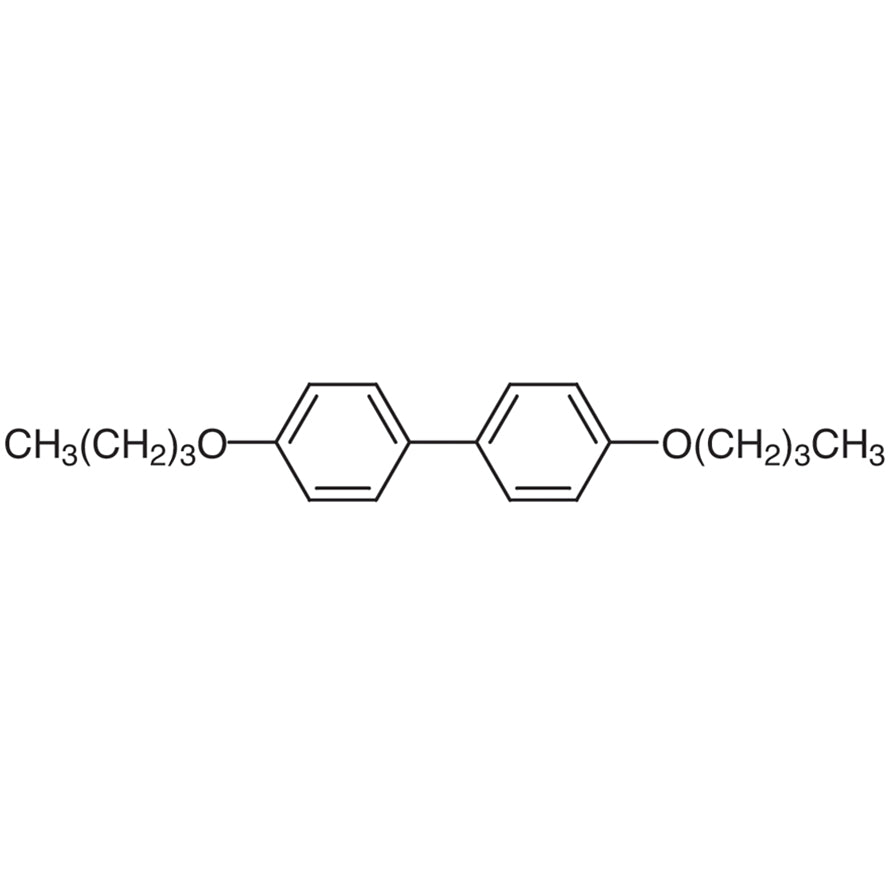
4,4'-Dibutoxybiphenyl is a chemical compound widely used in scientific research, particularly in the field of materials science and technology. This material is commonly found in studies involving liquid crystals, which exhibit unique properties between solid and liquid states. In the laboratory, it serves as a fundamental building block for the development of materials with specific structural characteristics, such as display materials, sensors, and organic electronic components. Its role is critical in the synthesis of advanced materials that require precise molecular arrangements.
The compound is preferred due to its stable chemical properties and its ability to form complex structures. These characteristics make it an ideal candidate for applications requiring high chemical stability and structural integrity. Its molecular structure is well-defined, allowing for predictable interactions with other chemical substances. This predictability ensures consistent results in experiments, which is essential for reliable scientific research. Additionally, its compatibility with various chemical reagents without significant degradation enhances its utility in diverse laboratory settings.
In Indonesian laboratories, 4,4'-Dibutoxybiphenyl is utilized for advanced research in materials and technology. Researchers at universities and research institutions use this compound to develop innovative solutions in information technology, energy, and manufacturing. Its presence in these laboratories underscores its importance in driving technological advancements and scientific discovery within the region.
Related TCI products
- Liquid Crystal Research - This compound is ideal for studying liquid crystals due to its ability to form ordered structures with unique physical properties.
- Organic Electronics Development - Its molecular structure supports the creation of organic electronic components, making it suitable for advanced material synthesis.
- Sensor Material Fabrication - The compound's stability and reactivity make it a valuable component in the development of chemical and physical sensors.
- Display Technology Innovation - It is used in the production of display materials, contributing to the development of high-performance liquid crystal displays.
- Energy Material Synthesis - Its structural versatility allows it to be incorporated into energy-related materials, aiding in the exploration of new energy solutions.
| Brand | TCI |
|---|---|
| CAS number | 39800-63-0 |
| Molecular formula | — |
| Purity | — |
| Category | Materials Science > Material Building Blocks > Liquid Crystal (LC) Building Blocks |
| Pack sizes | — |
| Physical form | Liquid |
| Storage | Store in a cool, dry place away from light and moisture |
This compound should be stored in a cool, dry place, away from direct light and moisture to maintain its chemical stability. It is recommended to use airtight containers to prevent exposure to air and contaminants. Due to its chemical nature, it should be handled with appropriate personal protective equipment, such as gloves and safety goggles, to ensure laboratory safety. Proper ventilation is essential when working with this material to minimize inhalation risks. Storage conditions should be consistent to avoid any degradation of the compound's properties. Regular monitoring of storage conditions is advised to ensure the material remains in optimal condition for use in research applications.
—
Produk Terkait
-
4-Hydroxy-4'-methoxybiphenyl TCI H0819
Regular price From Rp 1.881.600,00Regular price -
4-Bromo-4'-hydroxybiphenyl TCI H0690
Regular price From Rp 1.590.750,00Regular price -
4-Cyano-4'-hydroxybiphenyl TCI H0523
Regular price From Rp 1.193.850,00Regular price -
4-Fluoro-4'-hydroxybiphenyl TCI F0704
Regular price Rp 1.167.600,00Regular price -
4-Chloro-4'-hydroxybiphenyl TCI C1239
Regular price From Rp 3.525.900,00Regular price -
4-Octadecyloxybiphenyl TCI B1924
Regular price From Rp 1.326.150,00Regular price -
4-(6-Hydroxyhexyloxy)-4'-methoxybiphenyl TCI H0767
Regular price Rp 1.405.950,00Regular price -
4'-Decyloxybiphenyl-4-carboxylicAcid TCI D2041
Regular price Rp 3.446.100,00Regular price


