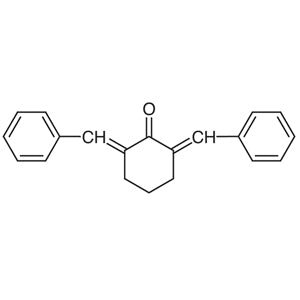
1,3-Dibenzylidene-2-cyclohexanone is an organic compound widely used in chemical reactions for the synthesis of complex molecules. This compound plays a crucial role in laboratory settings as a building block for creating structurally intricate compounds. Its stability and reactivity make it a valuable tool for chemists working on a variety of synthetic pathways. It is commonly employed in the development of heterocyclic compounds and their derivatives, contributing to advancements in organic chemistry and related fields.
The compound's molecular structure, consisting of a cyclohexanone core linked to two benzylidene groups, provides it with unique chemical properties. These characteristics enable it to participate in various reactions such as Diels-Alder and condensation reactions, making it highly versatile in synthetic chemistry. Its chemical stability ensures that it remains effective under different experimental conditions, reducing the risk of degradation during laboratory procedures. This reliability enhances its appeal for use in both academic and industrial research environments.
In Indonesian laboratories, 1,3-Dibenzylidene-2-cyclohexanone is frequently utilized by chemists and researchers for the development of new compounds with potential applications in medicine and industry. Its availability in small pack sizes, such as 1 gram, facilitates its use in controlled experimental settings, supporting both basic and applied research activities. The compound’s role in synthesizing complex structures underscores its importance in modern chemical research and innovation.
Related TCI products
- Synthesis of Heterocyclic Compounds: This compound is ideal for creating complex ring structures due to its stable molecular framework and reactivity.
- Organic Synthesis Research: Its ability to participate in multiple reaction types makes it a preferred choice for diverse synthetic pathways in chemical research.
- Pharmaceutical Development: The compound is used in the synthesis of drug-related molecules, supporting the creation of new therapeutic agents.
- Material Science Applications: Its structural properties make it useful in the development of advanced materials with specific chemical functionalities.
- Academic Teaching and Training: It serves as a practical example for students learning about organic synthesis and reaction mechanisms.
| Brand | TCI |
|---|---|
| CAS number | 897-78-9 |
| Molecular formula | — |
| Purity | — |
| Category | Chemistry > Building Blocks > Non-Heterocyclic Building Blocks |
| Pack sizes | 1 gram |
| Physical form | Solid |
| Storage | Store in a cool, dry place away from light |
This compound should be stored in a cool, dry environment, away from direct light and sources of heat. It is recommended to use airtight containers to prevent moisture absorption and maintain its chemical integrity. Due to its organic nature, it should be handled with care, using appropriate personal protective equipment such as gloves and safety goggles. Avoid exposure to incompatible substances, and ensure proper ventilation in the laboratory. The compound is generally stable under standard storage conditions, making it suitable for long-term use in research settings. Regular inspection of storage containers is advised to ensure no degradation occurs over time.
—
Produk Terkait
-
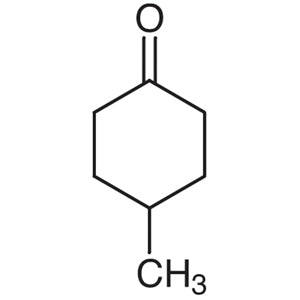
4-Methylcyclohexanone TCI M0199
Regular price From Rp 980.700,00Regular price -
3-Methylcyclohexanone TCI M0198
Regular price From Rp 689.850,00Regular price -
2-Methylcyclohexanone TCI M0197
Regular price From Rp 769.650,00Regular price -
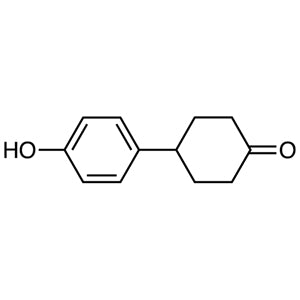
4-(4-Hydroxyphenyl)cyclohexanone TCI H1316
Regular price From Rp 1.167.600,00Regular price -
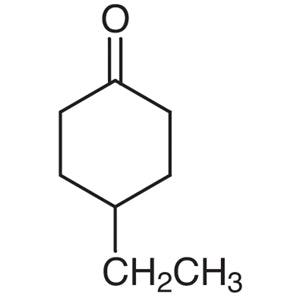
4-Ethylcyclohexanone TCI E0398
Regular price Rp 2.068.500,00Regular price -
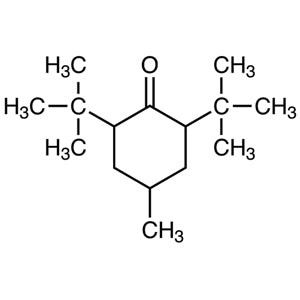
2,6-Di-tert-butyl-4-methylcyclohexanone(mixtureofisomers) TCI D4385
Regular price From Rp 1.856.400,00Regular price -
Cyclohexanone TCI C0489
Regular price From Rp 505.050,00Regular price -
4-(trans-4-Butylcyclohexyl)cyclohexanone TCI B4946
Regular price From Rp 689.850,00Regular price