

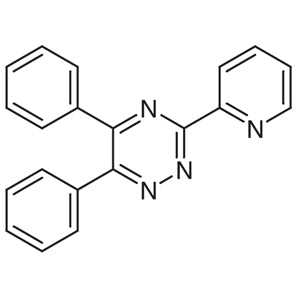
5,6-Diphenyl-3-(2-pyridyl)-1,2,4-triazine is a chemical compound widely used in catalytic reactions and organic synthesis within laboratory settings. As a nitrogen-donor ligand, it plays a crucial role in coordinating with transition metals, enabling the formation of stable metal complexes that enhance reaction efficiency. This compound is particularly valuable in catalysis due to its ability to facilitate electron transfer and stabilize reactive intermediates. Its presence in various chemical processes helps researchers achieve higher yields and improved reaction control.
The compound’s unique molecular structure and chemical stability make it a preferred choice for laboratory applications. It exhibits strong binding affinity with a range of transition metals, which allows for the development of versatile catalytic systems. Its stability under specific conditions ensures consistent performance in experimental setups, reducing the risk of degradation during prolonged use. These properties make it a reliable and effective component in both inorganic and organic chemistry research.
In Indonesian laboratories, this compound is commonly utilized in scientific research across various disciplines, including inorganic chemistry and catalysis. Its role in accelerating chemical reactions without significant degradation makes it an essential tool for researchers aiming to optimize synthetic pathways and explore new catalytic mechanisms. Its availability and performance have made it a standard choice for many laboratory applications in Indonesia.
TCI brochures (PDF)
- Ligands 2025-12-01 · p. 11
Related TCI products
- TCI T1937 42333-78-8 2,4,6-Tri(4-pyridyl)-1,3,5-triazine (purified by sublimation)
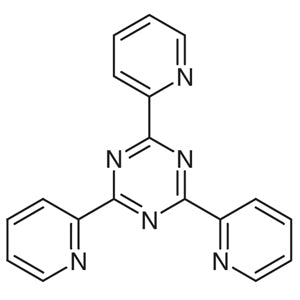
- TCI T0530 3682-35-7 2,4,6-Tri(2-pyridyl)-1,3,5-triazine
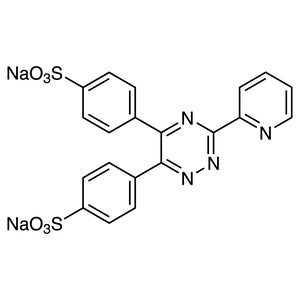
- TCI P0830 28048-33-1 3-(2-Pyridyl)-5,6-bis(4-sulfophenyl)-1,2,4-triazine Disodium Salt
- TCI B4104 117408-98-7 (S)-4-tert-Butyl-2-(2-pyridyl)oxazoline
- TCI P2142 13228-40-5 2-(2-Pyridyl)indole
- TCI P2098 32959-62-9 2-(2-Pyridyl)benzoxazole
- Organic synthesis reactions benefit from this compound’s ability to form stable metal complexes, enhancing reaction efficiency and selectivity.
- Inorganic chemistry research utilizes it for the coordination of transition metals, enabling the study of metal-ligand interactions and catalytic mechanisms.
- Catalytic processes in industrial and academic settings rely on its role as a nitrogen-donor ligand, improving reaction rates and reducing byproduct formation.
- Research on metal-based catalysts leverages its structural flexibility, allowing for the design of diverse catalytic systems tailored to specific reactions.
- Analytical chemistry applications use it as a reference standard to study ligand-metal interactions and their impact on reaction dynamics.
| Brand | TCI |
|---|---|
| CAS number | 1046-56-6 |
| Molecular formula | — |
| Purity | — |
| Category | Chemistry > Catalysis and Inorganic Chemistry > Nitrogen-Donor Ligands [Catalysis] |
| Pack sizes | Available in various quantities as per standard laboratory supply |
| Physical form | Solid |
| Storage | Store in a cool, dry place away from light and moisture |
This compound should be stored in a cool, dry environment, away from direct light and moisture to maintain its chemical stability. It is recommended to use airtight containers to prevent exposure to air and humidity, which may affect its performance. Due to its chemical nature, it should be handled with care, using appropriate personal protective equipment such as gloves and safety goggles. It is important to ensure proper ventilation in the laboratory when working with this material to minimize inhalation risks. Regular monitoring of storage conditions will help preserve its integrity and ensure it remains suitable for use in research applications.
—
Produk Terkait
-
2,4,6-Tri(4-pyridyl)-1,3,5-triazine(purifiedbysublimation) TCI T1937
Regular price From Rp 1.961.400,00Regular price -
2,4,6-Tri(2-pyridyl)-1,3,5-triazine TCI T0530
Regular price From Rp 955.500,00Regular price -
3-(2-Pyridyl)-5,6-bis(4-sulfophenyl)-1,2,4-triazineDisodiumSalt TCI P0830
Regular price Rp 1.035.300,00Regular price -
(S)-4-tert-Butyl-2-(2-pyridyl)oxazoline TCI B4104
Regular price From Rp 4.240.950,00Regular price -
2-(2-Pyridyl)indole TCI P2142
Regular price Rp 3.180.450,00Regular price -
2-(2-Pyridyl)benzoxazole TCI P2098
Regular price Rp 1.431.150,00Regular price -
3,6-Di(2-pyridyl)-1,2,4,5-tetrazine TCI D3640
Regular price From Rp 1.298.850,00Regular price -
2,6-Bis[(2S,5S)-4,4-diphenyl-1-aza-3-oxabicyclo[3.3.0]octan-2-yl]pyridine TCI B4228
Regular price Rp 2.995.650,00Regular price



![1450841-27-6 2,6-Bis[(2S,5S)-4,4-diphenyl-1-aza-3-oxabicyclo[3.3.0]octan-2-yl]pyridine - AMI Scientific](http://amiscientific.com/cdn/shop/files/TCI2510B4228.jpg?v=1767090977&width=533)