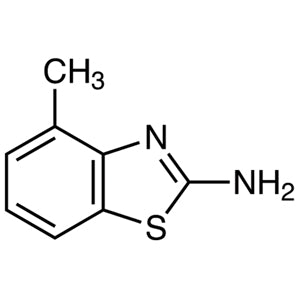
2,5-Dimethylbenzothiazole from TCI is a heterocyclic compound built on a benzothiazole core, which is a benzene ring fused to a thiazole ring. The molecule has one methyl group at position 2 on the thiazole ring and a second methyl group at position 5 on the benzene ring. In organic chemistry laboratories it is used as a building block for cyanine and hemicyanine dyes. It also serves as an intermediate for synthesizing benzothiazole derivatives and as a model compound in research on heterocycles that contain sulfur and nitrogen.
The methyl group at position 2 does most to determine how the compound is used. It sits next to the C=N bond of the ring, so its hydrogens are fairly acidic, and they become more acidic once the nitrogen is quaternized to form a benzothiazolium salt. This activated methyl group can condense with aldehydes or other electrophilic compounds to build extended conjugated systems. The methyl group at position 5 affects the electronic properties and solubility of the final product. That gives researchers another variable when they tune the color and behavior of a dye.
In Indonesia, this material is relevant to organic chemistry, materials chemistry, and biochemistry laboratories that develop fluorescent dyes, optical probes, or sensitizers. University research groups, institutional laboratories, and industrial research and development teams working on dye chemistry or sulfur- and nitrogen-containing heterocycles can use it as a starting material. It suits both exploratory synthesis and systematic studies of structure and properties in conjugated benzothiazole systems.
Related TCI products
- Cyanine dye synthesis: the methyl group at position 2 becomes activated after the nitrogen is quaternized, so it can condense with suitable partners to form the long conjugated systems that define cyanine dyes.
- Hemicyanine dye preparation: the activated benzothiazolium salt can condense with aldehydes, which makes this compound a practical starting point for hemicyanine structures used in dye and probe research.
- Synthesis of benzothiazole derivatives: the benzothiazole core and its two methyl substituents make it a useful intermediate for building more elaborate benzothiazole compounds in organic synthesis.
- Fluorescent probe and sensitizer development: the conjugated products made from this building block support work on fluorescent dyes, optical probes, and sensitizers in materials chemistry and biochemistry.
- Model compound for heterocycle research: its fused benzene and thiazole rings make it a convenient model for studying the reactivity and behavior of heterocycles that contain both sulfur and nitrogen.
| Brand | TCI (product code D1218) |
|---|---|
| CAS number | 95-26-1 |
| Molecular formula | — |
| Purity | — |
| Category | Chemistry > Building Blocks > Heterocyclic Building Blocks |
| Pack sizes | as listed in the available product options |
| Physical form | refer to the TCI product label and certificate of analysis |
| Storage | follow the conditions stated on the TCI label and safety data sheet |
Keep 2,5-Dimethylbenzothiazole in its original, tightly closed manufacturer's container in a cool, dry, well-ventilated place, away from direct sunlight, heat sources, and incompatible materials such as strong oxidizing agents. Label containers clearly and reseal them promptly after use to limit exposure to air and moisture. Handle the compound in a fume hood or another well-ventilated area. Wear standard personal protective equipment, including safety glasses, chemical-resistant gloves, and a laboratory coat. Avoid inhaling vapors and avoid contact with skin and eyes. Before first use, read the safety data sheet supplied by TCI for specific hazard information, first-aid measures, and disposal requirements, and dispose of waste according to local regulations and institutional procedures.
—
Produk Terkait
-
2-Amino-5,6-dimethylbenzothiazole TCI A1461
Regular price From Rp 5.485.200,00Regular priceRp 3.851.400,00Sale price From Rp 5.485.200,00 -
2,6-Dimethylbenzothiazole TCI D3674
Regular price From Rp 2.914.800,00Regular priceRp 2.053.800,00Sale price From Rp 2.914.800,00 -
2,5,6-Trimethylbenzothiazole TCI T1738
Regular price Rp 4.531.800,00Regular priceRp 3.184.650,00Sale price Rp 4.531.800,00 -
2-Amino-4-methylbenzothiazole TCI A1344
Regular price Rp 848.400,00Regular priceRp 609.000,00Sale price Rp 848.400,00 -
2-Amino-6-methylbenzothiazole TCI A0714
Regular price Rp 1.378.650,00Regular priceRp 979.650,00Sale price Rp 1.378.650,00 -
2-Phenylbenzothiazole TCI P1130
Regular price Rp 2.889.600,00Regular priceRp 2.035.950,00Sale price Rp 2.889.600,00 -
5-Methoxy-2-methylbenzothiazole TCI M1281
Regular price From Rp 3.472.350,00Regular priceRp 2.443.350,00Sale price From Rp 3.472.350,00 -
2-Methylbenzothiazole TCI M0516
Regular price From Rp 3.074.400,00Regular priceRp 2.165.100,00Sale price From Rp 3.074.400,00