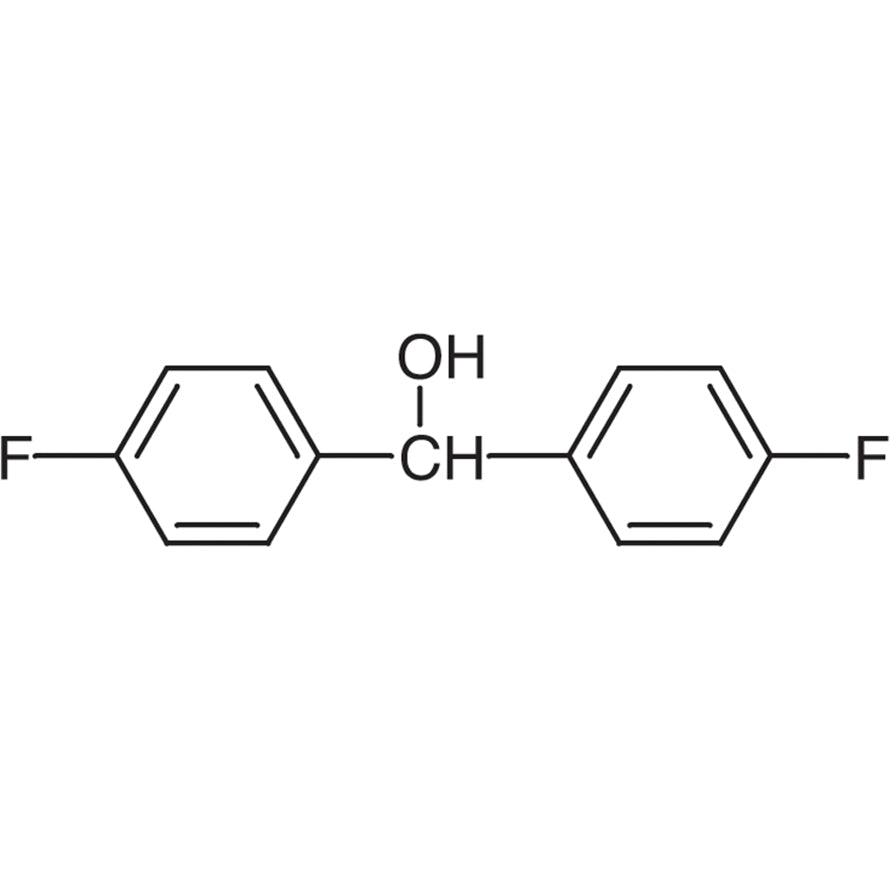
4,4'-Difluorobenzhydrol is a chemical compound widely used as a building block in the synthesis of complex organic compounds. This compound is particularly valuable in laboratory settings due to its unique molecular structure, which features two fluorine atoms attached to a benzene ring. Its presence in the molecular framework provides distinctive reactivity and stability, making it a versatile reagent in various chemical processes. As a fluorinated building block, it plays a crucial role in the development of new materials and pharmaceutical compounds. Its chemical properties allow it to participate in a range of reactions, including substitution and condensation, which are fundamental in organic chemistry.
The compound's fluorinated structure offers controlled reactivity, making it a preferred choice for chemists working on advanced synthesis projects. Its stability under various reaction conditions ensures predictable outcomes, reducing the risk of unwanted side reactions. Additionally, the compound's ability to interact with a wide range of reagents, such as alcohols, acids, and bases, enhances its utility in diverse synthetic pathways. These properties make it an essential component in both academic and industrial research environments.
In Indonesian laboratories, 4,4'-Difluorobenzhydrol is commonly used in research related to organic chemistry and pharmaceutical development. Its role in the synthesis of fluorinated compounds is particularly significant, as these compounds are often used in drug discovery and material science. The compound's reliability and adaptability make it a valuable tool for scientists aiming to create new chemical entities with specific functional properties.
TCI brochures (PDF)
- Fluorination Reagents, Fluorinated Building Blocks 2026-03-18 · p. 13
- Organic synthesis of fluorinated compounds due to its stable fluorinated structure and controlled reactivity.
- Pharmaceutical research for the development of new drugs with enhanced bioavailability and therapeutic properties.
- Polymer science applications where fluorinated building blocks are used to create materials with specific surface properties.
- Material development in the creation of advanced polymers and coatings with improved chemical resistance.
- Chemical research involving substitution and condensation reactions due to its versatile reactivity with various reagents.
| Brand | TCI |
|---|---|
| CAS number | 365-24-2 |
| Molecular formula | — |
| Purity | — |
| Category | Chemistry > Building Blocks > Fluorinated Building Blocks |
| Pack sizes | Available in various quantities as per standard laboratory supply |
| Physical form | Solid, crystalline |
| Storage | Store in a cool, dry place away from direct sunlight and moisture |
4,4'-Difluorobenzhydrol should be stored in a cool, dry environment to maintain its chemical integrity. It is recommended to keep the compound in a sealed container to prevent exposure to moisture and air, which could affect its stability. Suitable storage containers include glass or high-density polyethylene (HDPE) vessels that are resistant to chemical degradation. In laboratory settings, it is important to handle the compound with appropriate personal protective equipment, such as gloves and safety goggles, to ensure safety during handling. The compound should be stored away from incompatible materials, such as strong oxidizing agents, to prevent any potential chemical interactions. Regular inspection of storage conditions is advised to maintain optimal handling and safety standards.
—
Produk Terkait
-
4,4'-Dichlorobenzhydrol TCI D1915
Regular price From Rp 1.829.100,00Regular price -
Benzhydrol TCI D0898
Regular price From Rp 584.850,00Regular price -
4-Chlorobenzhydrol TCI C0989
Regular price From Rp 769.650,00Regular price -
4-Bromobenzhydrol TCI B4680
Regular price From Rp 955.500,00Regular price -
3,4-Dichlorobenzhydrazide TCI D5392
Regular price From Rp 1.749.300,00Regular price -
1-(4-Chlorobenzhydryl)piperazine TCI C1611
Regular price From Rp 743.400,00Regular price -
4-Nitrobenzhydrazide TCI N0149
Regular price From Rp 1.035.300,00Regular price -
2-Nitrobenzhydrazide TCI N0148
Regular price Rp 3.763.200,00Regular price