3,4-Dimethoxybenzyl Cyanide is a chemical compound widely used in organic synthesis reactions, particularly in the formation of heterocyclic compounds and aromatic derivatives. As a key building block in chemical research, it plays a crucial role in the development of complex molecules with specific structural features. This compound is essential for researchers working in organic chemistry, pharmacology, and materials science, providing a versatile foundation for various synthetic pathways. Its stability and reactivity make it a valuable tool in laboratory settings where precision and control are paramount.
The chemical and physical properties of 3,4-Dimethoxybenzyl Cyanide allow it to be used in a wide range of reaction conditions, including both polar and non-polar solvents. Its predictable behavior and controlled reactivity make it an ideal choice for experiments requiring consistency and accuracy. This compound is particularly favored for its ability to participate in multiple reaction types, enabling the synthesis of a broad spectrum of target molecules. Its reliability and adaptability have made it a staple in modern chemical research environments.
In Indonesian laboratories, 3,4-Dimethoxybenzyl Cyanide is commonly used in the synthesis of new compounds, drug development, and material characterization. Research institutions and universities across Indonesia rely on this compound as a fundamental reagent for experiments that require specific molecular structures. Its application is widespread in both academic and industrial research settings, supporting advancements in chemical science and related fields.
Related TCI products
- TCI B1455 772-59-8 3-Bromo-4-methoxybenzyl Cyanide
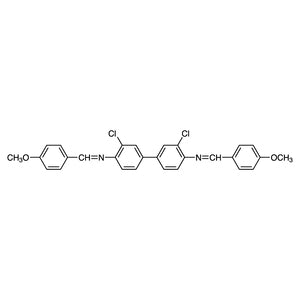
- TCI B0878 3540-78-1 3,3'-Dichloro-N,N'-bis(4-methoxybenzylidene)benzidine
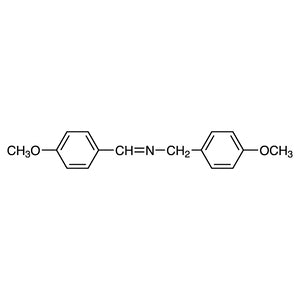
- TCI M3543 3261-60-7 N-(4-Methoxybenzyl)-1-(4-methoxyphenyl)methanimine
- TCI M0605 3230-39-5 N-(4-Methoxybenzylidene)-4-hydroxyaniline
- TCI M0588 25959-50-6 4-[(4-Methoxybenzylidene)amino]cinnamic Acid
- TCI M0586 5424-78-2 2-[(4-Methoxybenzylidene)amino]fluorene
- Organic synthesis reactions where precise structural control is required for the creation of heterocyclic compounds.
- Pharmaceutical research for the development of new drugs and bioactive molecules with specific functional groups.
- Material science experiments involving the synthesis of aromatic derivatives and functionalized polymers.
- Analytical chemistry applications requiring stable and reactive intermediates for compound characterization.
- Educational research in chemistry laboratories for teaching and training in synthetic organic chemistry techniques.
| Brand | TCI |
|---|---|
| CAS number | 93-17-4 |
| Molecular formula | — |
| Purity | — |
| Category | Chemistry > Building Blocks > Non-Heterocyclic Building Blocks |
| Pack sizes | Available in various quantities as per standard laboratory supply formats |
| Physical form | Liquid or solid, depending on the specific formulation and supplier packaging |
| Storage | — |
This compound should be stored in a cool, dry, and well-ventilated area away from direct sunlight and sources of heat. It is recommended to use sealed containers made of glass or high-density polyethylene to prevent contamination and maintain chemical integrity. Due to its potential reactivity, it should be handled with appropriate personal protective equipment, including gloves and safety goggles. Storage conditions should ensure that the compound remains stable and safe for use in laboratory environments. Regular monitoring of storage conditions is advised to maintain the quality and effectiveness of the material.
—
Produk Terkait
-
3-Bromo-4-methoxybenzylCyanide TCI B1455
Regular price From Rp 1.246.350,00Regular price -
3,3'-Dichloro-N,N'-bis(4-methoxybenzylidene)benzidine TCI B0878
Regular price Rp 2.809.800,00Regular price -
N-(4-Methoxybenzyl)-1-(4-methoxyphenyl)methanimine TCI M3543
Regular price From Rp 1.908.900,00Regular price -
N-(4-Methoxybenzylidene)-4-hydroxyaniline TCI M0605
Regular price Rp 1.724.100,00Regular price -
4-[(4-Methoxybenzylidene)amino]cinnamicAcid TCI M0588
Regular price Rp 1.961.400,00Regular price -
2-[(4-Methoxybenzylidene)amino]fluorene TCI M0586
Regular price Rp 3.392.550,00Regular price -
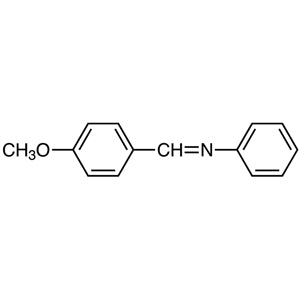
N-(4-Methoxybenzylidene)aniline TCI M0582
Regular price From Rp 637.350,00Regular price -
4-HydroxybenzylCyanide TCI H0657
Regular price From Rp 875.700,00Regular price


![25959-50-6 4-[(4-Methoxybenzylidene)amino]cinnamic Acid - AMI Scientific](http://amiscientific.com/cdn/shop/files/TCI2510M0588.jpg?v=1767123282&width=533)
![5424-78-2 2-[(4-Methoxybenzylidene)amino]fluorene - AMI Scientific](http://amiscientific.com/cdn/shop/files/TCI2510M0586.jpg?v=1767123278&width=533)