

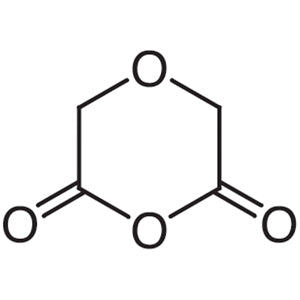
Diglycolic Anhydride (DGA), with the CAS number 4480-83-5, is a chemical compound widely used as a building block in organic synthesis. It serves as a key reagent in various laboratory processes due to its ability to participate in esterification and ester formation reactions. Its reactivity makes it a valuable tool for chemists seeking to create complex organic molecules efficiently. DGA is particularly favored for its versatility and effectiveness in producing compounds with specific functional groups, which are essential in pharmaceutical and industrial applications.
The chemical properties of DGA, including its reactivity with water and other reagents, make it a preferred choice in synthetic chemistry. It is highly reactive under certain conditions, which allows for rapid and efficient reactions. However, this reactivity also requires careful handling to prevent unintended side reactions. DGA is soluble in various organic solvents, such as ethylamine and dimethyl sulfoxide, which enhances its utility in different experimental setups. Its stability under controlled conditions ensures consistent results in laboratory experiments.
In Indonesian laboratories, Diglycolic Anhydride is commonly used in organic chemistry research, especially in the synthesis of compounds that require high reactivity. It is a staple in academic and research institutions, supporting the development of new chemical compounds and pharmaceuticals. Its availability in various packaging options makes it suitable for both small-scale experiments and larger research projects.
- Organic synthesis is a primary application where DGA is used for esterification reactions due to its reactivity and ability to form esters efficiently.
- Pharmaceutical research benefits from DGA as it enables the production of compounds with specific functional groups essential for drug development.
- Industrial chemical processes utilize DGA for the creation of organic compounds with tailored properties for various applications.
- Academic research relies on DGA for the synthesis of complex molecules, supporting both undergraduate and graduate-level experiments.
- Analytical chemistry uses DGA in the preparation of reference standards and in the study of reaction mechanisms under controlled conditions.
| Brand | TCI |
|---|---|
| CAS number | 4480-83-5 |
| Molecular formula | — |
| Purity | — |
| Category | Chemistry > Building Blocks > Non-Heterocyclic Building Blocks |
| Pack sizes | Available in various sizes to suit different experimental needs |
| Physical form | Solid |
| Storage | Store in a cool, dry place away from moisture and incompatible materials |
Diglycolic Anhydride should be stored in a cool, dry environment to maintain its chemical stability. It is recommended to keep it in a tightly sealed container to prevent exposure to moisture and air, which can lead to unwanted reactions. Due to its reactivity, it should be handled with care using appropriate personal protective equipment. It is best stored in glass or polyethylene containers to minimize the risk of chemical interactions. Always ensure proper ventilation in the laboratory when working with this compound to avoid inhalation of vapors. Regular monitoring of storage conditions is essential to maintain the integrity of the material.
—
Produk Terkait
-
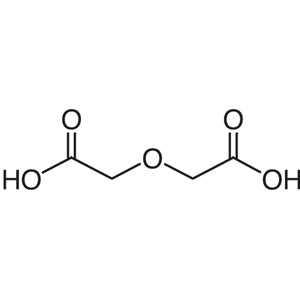
DiglycolicAcid TCI D0545
Regular price From Rp 1.087.800,00Regular price -
ValericAnhydride TCI V0006
Regular price From Rp 875.700,00Regular price -
3-BromophthalicAnhydride TCI B4061
Regular price From Rp 1.246.350,00Regular price -
Bicyclo[2.2.2]oct-5-ene-2,3-dicarboxylicAnhydride TCI B3038
Regular price Rp 3.605.700,00Regular price -
ButylsuccinicAnhydride TCI B2742
Regular price From Rp 5.274.150,00Regular price -
4-BromophthalicAnhydride TCI B1693
Regular price From Rp 2.386.650,00Regular price -
2-Buten-1-ylsuccinicAnhydride TCI B1613
Regular price From Rp 2.439.150,00Regular price -
BehenicAnhydride TCI B1531
Regular price From Rp 1.776.600,00Regular price


![6708-37-8 Bicyclo[2.2.2]oct-5-ene-2,3-dicarboxylic Anhydride - AMI Scientific](http://amiscientific.com/cdn/shop/files/TCI2510B3038.jpg?v=1767089273&width=533)


