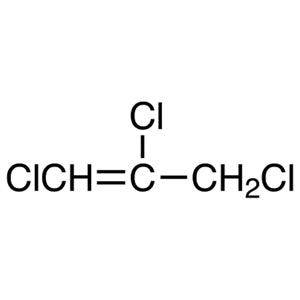
Trans-1,3-Dichloropropene is a chemical compound widely used in laboratory settings for the synthesis of complex organic compounds. As a building block in chemical reactions, it serves as a foundational material for creating more intricate molecular structures. This compound is particularly valuable in organic chemistry due to its versatility and reactivity, making it a key component in various synthetic pathways. Its role in the laboratory extends beyond mere reagent use, as it enables the development of new compounds with tailored properties for diverse applications.
One of the main reasons Trans-1,3-Dichloropropene is preferred is its stable chemical properties and controlled reactivity. These characteristics allow chemists to manipulate its behavior in different reaction conditions, ensuring predictable outcomes in synthesis processes. Additionally, its simple molecular structure facilitates participation in substitution and addition reactions, which are fundamental to organic chemistry. The compound’s ability to be selectively modified makes it a reliable choice for both academic and industrial research.
In Indonesian laboratories, Trans-1,3-Dichloropropene is commonly used in organic chemistry research, especially in educational and research institutions focused on the synthesis of new compounds. Its relevance extends to the development of environmentally friendly and sustainable chemical products, aligning with national policies in science and technology. The compound’s utility in controlled chemical reactions supports innovation in various scientific fields within Indonesia.
Related TCI products
- TCI D0405 542-75-6 1,3-Dichloropropene (cis- and trans- mixture)
- TCI T0396 96-19-5 1,2,3-Trichloropropene (cis- and trans- mixture)
- TCI T0686 598-77-6 1,1,2-Trichloropropane
- TCI T0395 96-18-4 1,2,3-Trichloropropane
- TCI D0870 29559-55-5 2,2-Dimethyl-1,3-dichloropropane
- TCI D0400 594-20-7 2,2-Dichloropropane
- Organic synthesis research, where it serves as a versatile building block for creating complex molecules.
- Pharmaceutical development, as it can be used in the synthesis of compounds with specific therapeutic properties.
- Material science experiments, due to its ability to participate in reactions that modify molecular structures.
- Environmental chemistry studies, where it is used to develop sustainable and eco-friendly chemical products.
- Academic teaching, as it is a fundamental compound used in demonstrating key chemical reactions and mechanisms.
| Brand | TCI |
|---|---|
| CAS number | 10061-02-6 |
| Molecular formula | — |
| Purity | — |
| Category | Chemistry > Building Blocks > Non-Heterocyclic Building Blocks |
| Pack sizes | Available in various sizes as per supplier specifications |
| Physical form | Liquid |
| Storage | Store in a cool, dry place away from light and incompatible materials |
Trans-1,3-Dichloropropene should be stored in a cool, dry environment to maintain its chemical stability. It is recommended to keep the compound in a tightly sealed container to prevent exposure to air and moisture. Due to its reactivity, it should be stored away from strong oxidizing agents and incompatible substances. Laboratory personnel should handle the compound with appropriate personal protective equipment, including gloves and safety goggles. Proper ventilation is essential when working with this material to minimize inhalation risks. Regular monitoring of storage conditions ensures the compound remains safe and effective for use in chemical experiments.
—
Produk Terkait
-
1,3-Dichloropropene(cis-andtrans-mixture) TCI D0405
Regular price From Rp 664.650,00Regular price -
1,2,3-Trichloropropene(cis-andtrans-mixture) TCI T0396
Regular price Rp 1.060.500,00Regular price -
1,1,2-Trichloropropane TCI T0686
Regular price Rp 2.757.300,00Regular price -
1,2,3-Trichloropropane TCI T0395
Regular price Rp 505.050,00Regular price -
2,2-Dimethyl-1,3-dichloropropane TCI D0870
Regular price From Rp 2.227.050,00Regular price -
2,2-Dichloropropane TCI D0400
Regular price Rp 3.100.650,00Regular price -
1,3-Dichloropropane TCI D0399
Regular price From Rp 1.696.800,00Regular price -
1,2-Dichloropropane TCI D0398
Regular price From Rp 717.150,00Regular price