![3-(1,2-Dimethyl-3-indolyl)-3-[4-(diethylamino)-2-methylphenyl]phthalide (CAS 36499-49-7) - TCI D3201 - AMI Scientific](http://amiscientific.com/cdn/shop/files/TCI2510D3201.jpg?v=1768817838&width=1946)
![3-(1,2-Dimethyl-3-indolyl)-3-[4-(diethylamino)-2-methylphenyl]phthalide (CAS 36499-49-7) - TCI D3201 - AMI Scientific](http://amiscientific.com/cdn/shop/files/TCI2510D3201.jpg?v=1768817838&width=1445)
3-(1,2-Dimethyl-3-indolyl)-3-[4-(diethylamino)-2-methylphenyl]phthalide is a complex chemical compound widely used in scientific research, particularly in the fields of optical and photonic materials. This compound plays a crucial role in laboratories where researchers need materials that can respond to physical stimuli such as temperature or pressure. Its unique ability to change color based on environmental conditions makes it an essential tool for monitoring and analyzing physical changes in real time. This material is especially valuable in experiments that require visual or instrumental detection of environmental variations.
The compound is preferred due to its high reactivity to temperature and pressure changes, as well as its ability to produce color changes that are easily observable. These properties make it ideal for applications where visual indicators are necessary. Additionally, the compound exhibits good chemical stability under certain conditions, which ensures reliable performance over time. Its sensitivity and responsiveness make it a go-to choice for researchers working with heat-sensitive or pressure-sensitive dyes.
In Indonesian laboratories, this compound is commonly used in materials science and optical research. It is often employed in experiments that require the detection of physical changes, such as temperature fluctuations or mechanical stress. Its reliability and consistent performance make it a trusted material for scientific investigations in both academic and industrial settings.
- Heat-sensitive dye applications benefit from its ability to change color with temperature variations, making it ideal for thermal monitoring in material testing.
- Pressure-sensitive dye use is enhanced by its responsiveness to mechanical stress, useful in stress analysis and material deformation studies.
- Optical material research leverages its color-changing properties for visual indicators in photonic and optical experiments.
- Environmental monitoring experiments utilize its sensitivity to physical changes for detecting subtle variations in experimental conditions.
- Material characterization studies benefit from its stability and reactivity, providing accurate data on material behavior under different stimuli.
| Brand | TCI |
|---|---|
| CAS number | 36499-49-7 |
| Molecular formula | — |
| Purity | — |
| Category | Materials Science > Photonic Materials and Optical Materials > Heat Sensitive Dyes, Pressure Sensitive Dyes |
| Pack sizes | Available in standard laboratory quantities as per supplier specifications |
| Physical form | Solid, as per standard chemical properties |
| Storage | Store in a cool, dry place away from direct light and moisture |
This compound should be stored in a cool, dry environment, away from direct sunlight and sources of heat to maintain its chemical stability. It is recommended to use airtight containers made of glass or high-density polyethylene to prevent contamination and moisture ingress. Due to its sensitivity to environmental factors, it should be handled with care to avoid exposure to extreme temperatures or pressure changes. In laboratory settings, it is important to ensure proper ventilation when working with this material. Always wear appropriate personal protective equipment, such as gloves and safety goggles, to minimize risk during handling. Regular monitoring of storage conditions is advised to ensure the material remains in optimal condition for use.
—
Produk Terkait
-
2'-(Dibenzylamino)-6'-(diethylamino)fluoran TCI D3204
Regular price Rp 3.419.850,00Regular price -
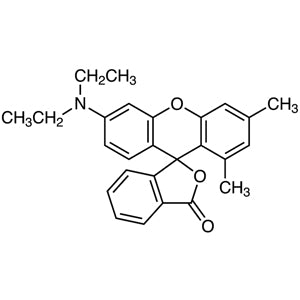
6'-(Diethylamino)-1',3'-dimethylfluoran TCI D3202
Regular price Rp 1.749.300,00Regular price -
2,4-Bis[4-(diethylamino)-2-hydroxyphenyl]squaraine TCI B4342
Regular price From Rp 3.367.350,00Regular price -
3-(2-Benzimidazolyl)-7-(diethylamino)coumarin TCI B2111
Regular price From Rp 1.193.850,00Regular price -
3-(2-Benzothiazolyl)-7-(diethylamino)coumarin TCI B2088
Regular price From Rp 2.016.000,00Regular price -
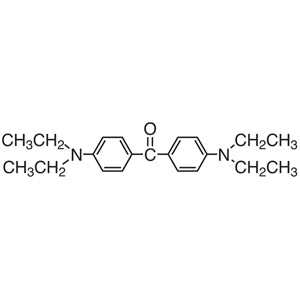
4,4'-Bis(diethylamino)benzophenone TCI B1275
Regular price From Rp 477.750,00Regular price -
2,5-Bis(4-diethylaminophenyl)-1,3,4-oxadiazole TCI B1066
Regular price Rp 1.378.650,00Regular price -
4,4'-Bis(diethylamino)benzophenone TCI B0139
Regular price From Rp 637.350,00Regular price

![68842-66-0 2,4-Bis[4-(diethylamino)-2-hydroxyphenyl]squaraine - AMI Scientific](http://amiscientific.com/cdn/shop/files/TCI2510B4342.jpg?v=1768815590&width=533)