1,3-Dimesitylimidazolium Chloride is a chemical compound widely used in catalytic reactions and metal complex studies. It functions as a highly effective carbon-donor ligand, playing a crucial role in catalytic processes, especially those involving transition metals. In laboratory settings, this compound is essential for accelerating chemical reactions by enhancing catalytic activity and expanding the range of reactions that can be achieved. Its stability and selectivity make it a valuable tool for researchers aiming to optimize reaction conditions and improve yield.
This compound is preferred due to its chemical inertness and ability to form stable complexes with transition metals. These properties contribute to its effectiveness in catalytic systems, reducing unwanted side reactions and ensuring controlled chemical transformations. Its selective binding to transition metals allows for the creation of unique catalytic complexes, which are essential in both organic and inorganic catalysis. The compound’s reliability and consistent performance make it a trusted choice for scientific research in various fields.
In Indonesian laboratories, 1,3-Dimesitylimidazolium Chloride is commonly used in organic chemistry and catalysis research. It is a key component in experiments that require efficient carbon-donor ligands. Many research institutions and universities rely on this compound for its proven performance in catalytic applications. Its widespread use underscores its importance in advancing chemical research and innovation in the region.
TCI brochures (PDF)
- N-Heterocyclic Carbene (NHC) Ligands and Metal Complexes 2026-02-10 · p. 1
- Ligands 2025-12-01 · p. 8
- Suzuki-Miyaura Cross Coupling Reaction 2025-12-01 · p. 26
Related TCI products
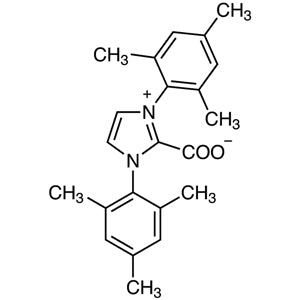
- TCI D5401 675877-56-2 1,3-Dimesitylimidazolium-2-carboxylate
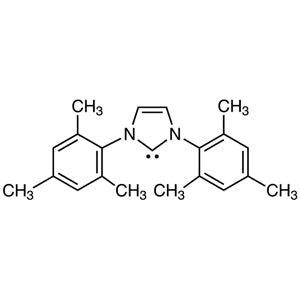
- TCI D3870 141556-42-5 1,3-Dimesitylimidazol-2-ylidene
- TCI B3158 173035-10-4 1,3-Bis(2,4,6-trimethylphenyl)imidazolinium Chloride
- TCI B3157 258278-25-0 1,3-Bis(2,6-diisopropylphenyl)imidazolinium Chloride
- TCI D3882 181422-72-0 1,3-Dicyclohexylimidazolium Chloride
- TCI D3611 250285-32-6 1,3-Bis(2,6-diisopropylphenyl)imidazolium Chloride
- Organic Catalysis: This compound is ideal for organic reactions where transition metal complexes are required to enhance reaction efficiency and selectivity.
- Metal Complex Formation: Its ability to bind with transition metals makes it suitable for synthesizing stable and reactive metal complexes.
- Homogeneous Catalysis: It is used in homogeneous systems where the catalyst needs to be soluble and active in the reaction medium.
- Ligand Screening: Researchers use it to test and compare the effectiveness of different ligands in catalytic processes.
- Green Chemistry Initiatives: Its chemical inertness and selectivity make it a preferred choice for sustainable and environmentally friendly reactions.
| Brand | TCI |
|---|---|
| CAS number | 141556-45-8 |
| Molecular formula | — |
| Purity | — |
| Category | Chemistry > Catalysis and Inorganic Chemistry > Carbon-Donor Ligands [Catalysis] |
| Pack sizes | Available in various quantities as per supplier specifications |
| Physical form | Solid powder |
| Storage | Store in a cool, dry place away from moisture and direct sunlight |
This compound should be stored in a cool, dry environment to maintain its chemical stability. It is recommended to keep it in a tightly sealed container to prevent exposure to moisture and air. Due to its chemical inertness, it generally does not react with common laboratory materials, but it is still important to handle it with care. Suitable containers include glass or high-density polyethylene vessels. Always ensure proper ventilation when handling, and avoid contact with skin or inhalation of dust. Regular inspection of storage conditions is advised to maintain the integrity of the compound.
—
Product Categories
- Catalysis and Inorganic ChemistryCarbon-Donor Ligands [Catalysis]Imidazolinium Salts, Cyclic Alkyl Amino Carbene (CAAC) Pecursors [Carbon-Donor Ligands]
- Catalysis and Inorganic ChemistryCross-coupling Reaction using Transition Metal Catalysts [C-C Bond Formation]N-Heterocyclic Carbene (NHC) Ligands [Cross-coupling Reaction using Transition Metal Catalysts]
- Synthetic ReagentsC-C Bond Formation [Synthetic Reagents]Cross-coupling Reaction using Transition Metal Catalysts [C-C Bond Formation]
Produk Terkait
-
1,3-Dimesitylimidazolium-2-carboxylate TCI D5401
Regular price Rp 2.491.650,00Regular price -
1,3-Dimesitylimidazol-2-ylidene TCI D3870
Regular price From Rp 4.161.150,00Regular price -
1,3-Bis(2,4,6-trimethylphenyl)imidazoliniumChloride TCI B3158
Regular price From Rp 2.094.750,00Regular price -
1,3-Bis(2,6-diisopropylphenyl)imidazoliniumChloride TCI B3157
Regular price From Rp 1.193.850,00Regular price -
1,3-DicyclohexylimidazoliumChloride TCI D3882
Regular price From Rp 1.856.400,00Regular price -
1,3-Bis(2,6-diisopropylphenyl)imidazoliumChloride TCI D3611
Regular price From Rp 1.008.000,00Regular price -
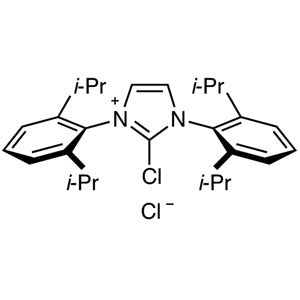
2-Chloro-1,3-bis(2,6-diisopropylphenyl)-1H-imidazoliumChloride TCI C3429
Regular price Rp 5.089.350,00Regular price -
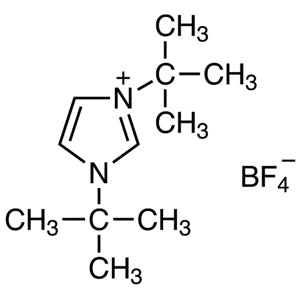
1,3-Di-tert-butylimidazoliumTetrafluoroborate TCI D3711
Regular price From Rp 1.273.650,00Regular price