TCI D3616 3,4-Dimethylphenylhydrazine Hydrochloride is the hydrochloride salt of an arylhydrazine that carries two methyl groups at the 3 and 4 positions of the benzene ring. Compounds in this class are classical reagents that remain important in organic synthesis because the hydrazine group is highly reactive toward carbonyl compounds. In the laboratory, this material is used to form hydrazones, to construct nitrogen-rich heterocyclic ring systems, and to introduce a specific dimethyl substitution pattern into the final product without requiring an additional and often troublesome alkylation step.
The property that makes this material a frequent choice is its supply as a hydrochloride salt. Free arylhydrazines tend to oxidise readily and darken on exposure to air, whereas the salt form is considerably more stable, easier to weigh accurately, and more convenient to store over long periods. The salt can be liberated to the reactive hydrazine directly in the reaction flask by adding a suitable base, which keeps handling simple. In addition, the two methyl groups on the ring provide extra electron density that supports directed cyclisation reactions while contributing lipophilic character to the resulting molecule.
In Indonesian laboratories, this type of building block is typically used in synthetic organic chemistry research, in academic work at universities and research institutes, and in method development where a defined substitution pattern is needed on the aromatic ring. It is normally ordered in research-scale quantities for use in multi-step synthesis, in the preparation of heterocyclic intermediates, and in exploratory reaction screening carried out by graduate students and research staff.
- Hydrazone formation — the reactive hydrazine group condenses readily with aldehydes and ketones, making this reagent a direct route to substituted hydrazone derivatives in the laboratory.
- Nitrogen-rich heterocycle construction — it serves as a nitrogen source for building heterocyclic ring systems, a common requirement in exploratory synthetic organic chemistry programmes.
- Introduction of a fixed dimethyl substitution pattern — using this building block places the 3,4-dimethyl arrangement into the product without an extra alkylation step that would complicate the route.
- Directed cyclisation chemistry — the added electron density from the two ring methyl groups supports cyclisation reactions that need to proceed with a defined orientation on the aromatic ring.
- Preparation of lipophilic intermediates — the methyl-substituted aromatic ring contributes lipophilic character, which is useful when a synthetic target requires that property in the final molecule.
| Brand | TCI |
|---|---|
| CAS number | 60481-51-8 |
| Molecular formula | — |
| Purity | — |
| Category | Chemistry > Building Blocks > Non-Heterocyclic Building Blocks |
| Pack sizes | research-scale catalogue pack sizes; please confirm the available packaging when ordering |
| Physical form | — |
| Storage | keep tightly closed and protected from air, as arylhydrazines are prone to oxidation |
- Chemical form: hydrochloride salt of an arylhydrazine (3,4-dimethylphenylhydrazine)
Store the container tightly closed in a cool, dry, well-ventilated place and keep it protected from air and moisture, since arylhydrazines are prone to oxidation even though the hydrochloride salt is the more stable form. Use the original tightly sealed container, or a clean, dry, chemically compatible container that can be closed securely, and reseal it promptly after each withdrawal. Weigh and transfer the material in a fume hood using gloves, safety glasses, and a laboratory coat, and avoid contact with skin, eyes, and inhalation of dust. Because the salt is converted to the reactive free hydrazine on addition of base, prepare and handle such mixtures with care. Keep the reagent away from incompatible materials, especially oxidising agents, and consult the manufacturer's safety data sheet before use and disposal.
—
Produk Terkait
-
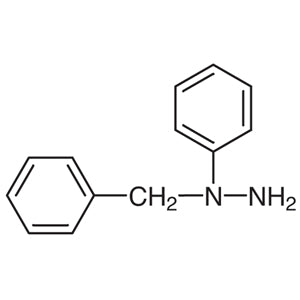
1-Benzyl-1-phenylhydrazine TCI B1157
Regular price Rp 2.782.500,00Regular price -
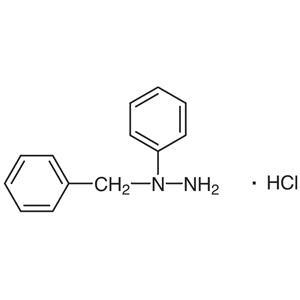
1-Benzyl-1-phenylhydrazineHydrochloride TCI B0434
Regular price From Rp 1.565.550,00Regular price -
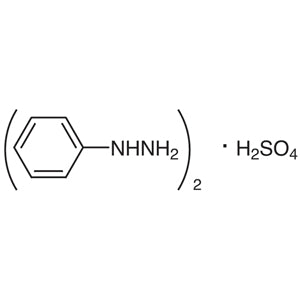
PhenylhydrazineSulfate TCI P0186
Regular price Rp 1.246.350,00Regular price -
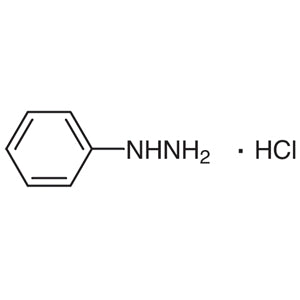
PhenylhydrazineHydrochloride TCI P0184
Regular price From Rp 1.008.000,00Regular price -
Phenylhydrazine TCI P0183
Regular price From Rp 557.550,00Regular price -
1-Methyl-1-phenylhydrazine TCI M0399
Regular price From Rp 1.060.500,00Regular price -
3-BromophenylhydrazineHydrochloride TCI B3847
Regular price Rp 2.491.650,00Regular price -
2-BromophenylhydrazineHydrochloride TCI B2147
Regular price From Rp 2.279.550,00Regular price