TCI D3683 Diphenylammonium Trifluoromethanesulfonate is a Brønsted acid catalyst supplied as an ammonium salt, formed from a diphenylammonium cation paired with a trifluoromethanesulfonate (triflate) anion. It is widely recognised as a mild yet effective condensation catalyst, particularly for direct esterification between carboxylic acids and alcohols, as well as for transesterification reactions. Unlike concentrated mineral acids or free sulfonic acids, this salt-type catalyst functions as a slow-release acid source, allowing condensation chemistry to proceed under far gentler conditions that are more compatible with sensitive functional groups on the substrate.
The properties that make this catalyst a preferred choice begin with its high effective acidity, which arises from the triflate anion being an extremely weak base and therefore a very poor competitor for the released proton. This acidity is combined with good thermal stability and the practical convenience of handling a solid rather than a corrosive liquid. Because the material is a salt, it can be weighed accurately in small quantities, does not present the corrosion problems associated with concentrated liquid acids, and can frequently be separated from the reaction mixture by a simple aqueous wash. It is also known to perform well at low catalyst loadings and with substrates that are prone to dehydration or isomerisation under harsher acidic conditions.
In Indonesian laboratories, this catalyst is typically used in university and institutional organic synthesis groups, in research on esters and fatty acid derivatives, and in industrial R&D laboratories developing fine chemicals, flavour and fragrance esters, or specialty ester intermediates. Its solid form suits local laboratory conditions, where accurate small-scale weighing, straightforward storage and reduced handling of corrosive liquid acids are practical advantages for routine synthetic work and method development.
Advantages (TCI brochure)
- Affords esters in high yields from equimolar acid and alcohol under mild conditions
- No dehydrating agent or azeotropic water removal needed
- Useful for substrates with high steric hindrance in fluorous solvent
TCI brochures (PDF)
- Powerful Condensation Organocatalysts 2018-01-25 · p. 2
- Condensing Agents 2025-11-18 · p. 3
Related TCI products
- TCI P1626 912823-79-1 Pentafluoroanilinium Trifluoromethanesulfonate
- TCI T1585 595-91-5 Triphenylacetic Acid
- TCI B1278 5728-52-9 4-Biphenylacetic Acid
- TCI D4075 1760-46-9 Diphenylacetic Anhydride
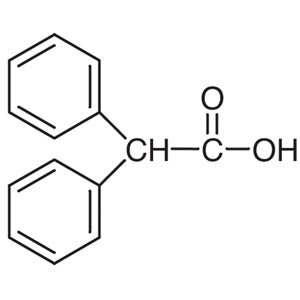
- TCI D0869 117-34-0 Diphenylacetic Acid
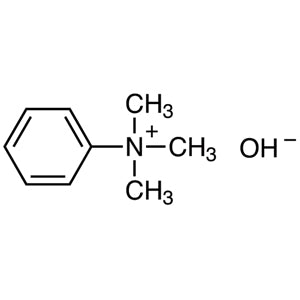
- TCI T3610 1899-02-1 Trimethylphenylammonium Hydroxide (ca. 8.5% in Methanol)
- Direct esterification of carboxylic acids with alcohols, where the slow-release acidity drives condensation efficiently without exposing the substrate to harsh concentrated mineral acid conditions.
- Transesterification reactions, in which the catalyst promotes exchange of the alkoxy group under mild thermal conditions while remaining easy to dose accurately at low loading.
- Synthesis of esters bearing acid-sensitive functional groups, since the gentler acid environment reduces the risk of decomposition compared with free sulfonic acids or concentrated mineral acids.
- Reactions with substrates prone to dehydration or isomerisation, where the moderated acidity of the ammonium salt helps preserve the substrate skeleton throughout the condensation.
- Method development and catalyst screening work in synthetic laboratories, because the solid form allows reproducible small-scale weighing and simple removal from the mixture by aqueous washing.
From the TCI brochure
- Esterification catalyst
| Brand | TCI |
|---|---|
| CAS number | 164411-06-7 |
| Molecular formula | — |
| Purity | — |
| Category | Chemistry > Catalysis and Inorganic Chemistry > Condensation [Catalysis] |
| Pack sizes | available in the standard TCI catalogue pack sizes for this product code; please confirm the required size when ordering |
| Physical form | solid (ammonium salt) |
| Storage | keep in a tightly closed container in a cool, dry place |
- Product code: D3683
Data from the TCI brochure
| Yield (R1 = PhCH2CH2, R2 = CH2=CH(CH2)8, 8 h) | 96% (1 mol%, toluene, 80 °C) |
|---|---|
| Yield (R1 = tBu, R2 = CH3(CH2)7, 24 h) | 92% (1 mol%, toluene, 80 °C) |
Source: TCI brochure R5113 (2025-11-18)
Store the material in its original tightly closed container in a cool, dry and well ventilated area, protected from moisture and away from heat sources and direct sunlight. Glass or chemically compatible plastic containers with secure closures are suitable, and the container should be resealed promptly after each use to limit exposure to atmospheric humidity. Keep the product separated from strong bases and from materials incompatible with acidic substances. Handle the solid in a fume hood or a well ventilated workspace, using safety glasses, gloves and a laboratory coat, and avoid generating or inhaling dust during weighing and transfer. Use clean, dry spatulas to prevent contamination, and always consult the manufacturer's safety data sheet before use and before disposal of residues.
—
Produk Terkait
-
PentafluoroaniliniumTrifluoromethanesulfonate TCI P1626
Regular price From Rp 2.677.500,00Regular price -
TriphenylaceticAcid TCI T1585
Regular price From Rp 3.630.900,00Regular price -
4-BiphenylaceticAcid TCI B1278
Regular price From Rp 1.644.300,00Regular price -
DiphenylaceticAnhydride TCI D4075
Regular price Rp 3.180.450,00Regular price -
DiphenylaceticAcid TCI D0869
Regular price From Rp 717.150,00Regular price -
TrimethylphenylammoniumHydroxide(ca.8.5%inMethanol) TCI T3610
Regular price From Rp 1.035.300,00Regular price -
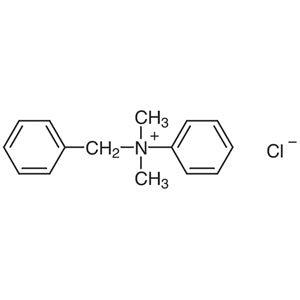
BenzyldimethylphenylammoniumChloride TCI B0416
Regular price Rp 3.207.750,00Regular price -
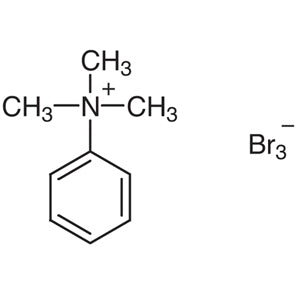
TrimethylphenylammoniumTribromide TCI P0928
Regular price From Rp 1.829.100,00Regular price