4,5-Diazafluoren-9-one is a chemical compound widely used in catalytic reactions and organic synthesis. As a nitrogen-donor ligand, it plays a crucial role in the formation of stable transition metal complexes, which are essential in various catalytic processes. This compound is particularly valued for its ability to interact effectively with metal centers, making it a key component in the field of catalysis and inorganic chemistry. Its heteroaromatic structure contributes to its reactivity and versatility in different chemical environments.
The compound's unique chemical properties make it a preferred choice for researchers. It exhibits chemical stability under specific conditions, which simplifies handling and processing in laboratory settings. Its solid form facilitates storage and use in laboratory-scale experiments, ensuring consistency and reliability in experimental outcomes. Additionally, its structural complexity allows for a wide range of applications in both synthetic and analytical chemistry.
In Indonesian laboratories, 4,5-Diazafluoren-9-one is commonly used in catalytic research and the synthesis of complex compounds. Due to its high reactivity and compatibility with various metal catalysts, it is a favored material for advancing chemical research and development. Its availability and quality make it a reliable choice for scientific institutions and research centers in Indonesia.
TCI brochures (PDF)
- Ligands 2025-12-01 · p. 13
- Building Blocks for Organic Semiconductor 2026-03-24 · p. 33
Related TCI products
- TCI D4636 1655490-79-1 4,5-Diazafluorene-9-one O-(p-Toluenesulfonyl)oxime
- TCI D6264 198142-63-1 2',7'-Dibromospiro[cyclopenta[2,1-b:3,4-b']dipyridine-5,9'-fluorene]
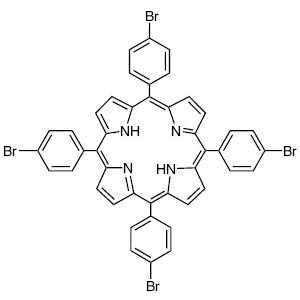
- TCI T3467 29162-73-0 5,10,15,20-Tetrakis(4-bromophenyl)porphyrin
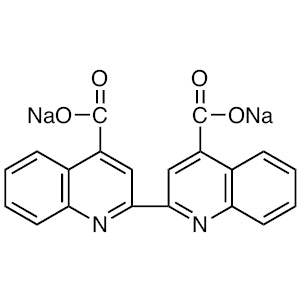
- TCI B4509 979-88-4 Bicinchoninic Acid Disodium Salt
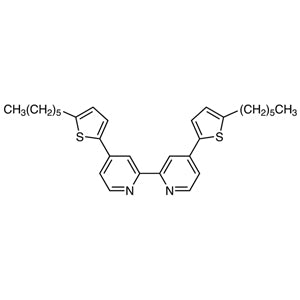
- TCI B4420 1047684-56-9 4,4'-Bis(5-hexyl-2-thienyl)-2,2'-bipyridyl
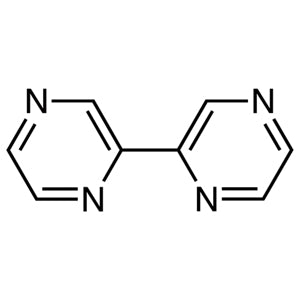
- TCI B4297 10199-00-5 2,2'-Bipyrazine
- Catalytic Reaction Development: This compound is ideal for designing and testing new catalytic systems due to its ability to form stable metal complexes.
- Organic Synthesis: Its heteroaromatic structure enables it to participate in a variety of organic reactions, enhancing the efficiency of synthetic pathways.
- Transition Metal Complex Formation: It serves as a nitrogen-donor ligand, facilitating the creation of stable and functional transition metal complexes.
- Inorganic Chemistry Research: Its role in metal coordination makes it a valuable tool for studying inorganic chemical systems and their properties.
- Advanced Material Synthesis: It is used in the development of new materials, where its reactivity and stability contribute to the formation of complex structures.
| Brand | TCI |
|---|---|
| CAS number | 50890-67-0 |
| Molecular formula | — |
| Purity | — |
| Category | Chemistry > Catalysis and Inorganic Chemistry > Nitrogen-Donor Ligands [Catalysis] |
| Pack sizes | Available in various quantities suitable for laboratory use |
| Physical form | Solid |
| Storage | Store in a cool, dry place away from moisture and direct sunlight |
This compound should be stored in a cool, dry environment to maintain its chemical stability. It is recommended to use airtight containers to prevent exposure to moisture and air, which may affect its properties. Due to its solid form, it is easy to handle and measure in laboratory settings. Always ensure proper ventilation when working with this material to minimize any potential risks. It is advisable to keep it away from incompatible substances to avoid any chemical interactions. Regular inspection of storage conditions ensures the compound remains in optimal condition for use in research applications.
—
Product Categories
Produk Terkait
-
4,5-Diazafluorene-9-oneO-(p-Toluenesulfonyl)oxime TCI D4636
Regular price Rp 2.068.500,00Regular priceRp 1.461.600,00Sale price Rp 2.068.500,00 -
2',7'-Dibromospiro[cyclopenta[2,1-b:3,4-b']dipyridine-5,9'-fluorene] TCI D6264
Regular price Rp 3.392.550,00Regular priceRp 2.387.700,00Sale price Rp 3.392.550,00 -
5,10,15,20-Tetrakis(4-bromophenyl)porphyrin TCI T3467
Regular price Rp 6.122.550,00Regular priceRp 4.296.600,00Sale price Rp 6.122.550,00 -
BicinchoninicAcidDisodiumSalt TCI B4509
Regular price Rp 1.008.000,00Regular priceRp 720.300,00Sale price Rp 1.008.000,00 -
4,4'-Bis(5-hexyl-2-thienyl)-2,2'-bipyridyl TCI B4420
Regular price Rp 2.227.050,00Regular priceRp 1.572.900,00Sale price Rp 2.227.050,00 -
2,2'-Bipyrazine TCI B4297
Regular price Rp 3.153.150,00Regular priceRp 2.220.750,00Sale price Rp 3.153.150,00 -
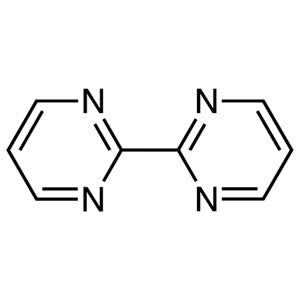
2,2'-Bipyrimidyl TCI B2496
Regular price Rp 2.518.950,00Regular priceRp 1.776.600,00Sale price Rp 2.518.950,00 -
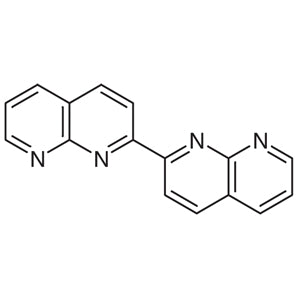
2,2'-Bi(1,8-naphthyridine) TCI B1423
Regular price Rp 7.128.450,00Regular priceRp 5.000.100,00Sale price Rp 7.128.450,00

![2',7'-Dibromospiro[cyclopenta[2,1-b:3,4-b']dipyridine-5,9'-fluorene] (CAS 198142-63-1) - TCI D6264 - AMI Scientific](http://amiscientific.com/cdn/shop/files/TCI2510D6264.jpg?v=1767109984&width=533)