


2,2'-Bi(1,8-naphthyridine) is a heterocyclic compound widely used as a building block in the synthesis of complex molecules. Its unique molecular structure provides a versatile platform for chemical modifications, making it a valuable resource in organic chemistry laboratories. This compound plays a crucial role in the development of new materials, pharmaceuticals, and functional compounds due to its stability and reactivity. It is particularly useful in reactions that require the presence of aromatic and heterocyclic frameworks, enabling the creation of advanced chemical structures.
The compound's chemical properties, including its aromaticity and heterocyclic stability, make it a preferred choice for researchers. Its resistance to degradation ensures long-term storage and consistent performance in laboratory settings. The molecule's ability to participate in substitution and ring-opening reactions further enhances its utility. Its complex structure also provides a high degree of reactivity, allowing it to be adapted to various synthetic strategies. These characteristics make it a reliable and efficient reagent for a wide range of chemical applications.
In Indonesian laboratories, 2,2'-Bi(1,8-naphthyridine) is commonly used in scientific research, especially in organic chemistry and pharmacology. It is a key component in the development of new drugs and functional materials. Many research institutions and universities in Indonesia rely on this compound for their experiments, as it supports the creation of innovative chemical compounds with broad applications. Its availability and reliability make it an essential tool for researchers in the field.
TCI brochures (PDF)
- Ligands 2025-12-01 · p. 14
- Organic synthesis is a key application where this compound is used to build complex molecular structures due to its aromatic and heterocyclic framework.
- Pharmaceutical research benefits from its use in the development of new drugs, as it can be modified to create bioactive molecules with therapeutic potential.
- Material science applications leverage its stability and reactivity to create advanced organic materials with unique properties.
- Functional compound development utilizes its versatile structure to design molecules with specific chemical and physical properties.
- Academic research in chemistry and pharmacology relies on this compound for experimental studies and innovation in synthetic methodologies.
| Brand | TCI |
|---|---|
| CAS number | 69110-33-4 |
| Molecular formula | — |
| Purity | — |
| Category | Chemistry > Building Blocks > Heterocyclic Building Blocks |
| Pack sizes | Available in various quantities as per supplier specifications |
| Physical form | Solid |
| Storage | Store in a cool, dry place away from light and moisture |
This compound should be stored in a cool, dry environment, away from direct sunlight and moisture to maintain its stability and integrity. It is recommended to use airtight containers to prevent exposure to air and humidity, which could affect its chemical properties. Due to its reactivity, it should be handled with care in a well-ventilated laboratory setting. Proper personal protective equipment, such as gloves and safety goggles, should be worn when handling the compound to ensure laboratory safety. Regular monitoring of storage conditions is essential to ensure the compound remains in optimal condition for use in research applications.
—
Product Categories
Produk Terkait
-
1,8-Naphthyridine TCI N0464
Regular price Rp 557.550,00Regular priceRp 405.300,00Sale price Rp 557.550,00 -
1,6-Naphthyridine TCI N0462
Regular price Rp 2.041.200,00Regular priceRp 1.442.700,00Sale price Rp 2.041.200,00 -
1,5-Naphthyridine TCI N0401
Regular price Rp 582.750,00Regular priceRp 423.150,00Sale price Rp 582.750,00 -
2-Methyl-1,8-naphthyridine TCI M2352
Regular price Rp 3.048.150,00Regular priceRp 2.147.250,00Sale price Rp 3.048.150,00 -
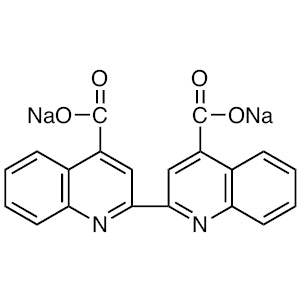
BicinchoninicAcidDisodiumSalt TCI B4509
Regular price Rp 1.008.000,00Regular priceRp 720.300,00Sale price Rp 1.008.000,00 -
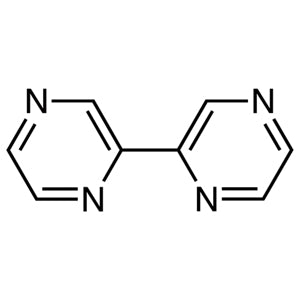
2,2'-Bipyrazine TCI B4297
Regular price Rp 3.153.150,00Regular priceRp 2.220.750,00Sale price Rp 3.153.150,00 -
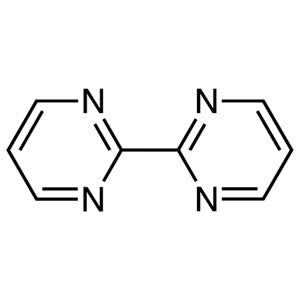
2,2'-Bipyrimidyl TCI B2496
Regular price Rp 2.518.950,00Regular priceRp 1.776.600,00Sale price Rp 2.518.950,00 -
2,2'-BicinchoninicAcidDipotassiumSalt[forDeterminationofCu] TCI B1077
Regular price Rp 1.618.050,00Regular priceRp 1.146.600,00Sale price Rp 1.618.050,00


![63451-34-3 2,2'-Bicinchoninic Acid Dipotassium Salt [for Determination of Cu] - AMI Scientific](http://amiscientific.com/cdn/shop/files/TCI2510B1077_501acb84-bbbd-4643-86c9-ab685c4638df.jpg?v=1767231122&width=533)