1,5-Naphthyridine is a heterocyclic compound with a complex structure that plays a vital role in organic chemistry synthesis. It is widely used in laboratory settings as a building block for the creation of various complex molecules. This compound is particularly important in reactions involving nitrogen and carbon bonding, especially in the development of bioactive compounds. Due to its unique chemical properties, it serves as a key reagent in the synthesis of pharmaceuticals, pesticides, and industrial chemicals. Its presence in laboratory workflows supports the advancement of chemical research and innovation.
The stability and reactivity of 1,5-Naphthyridine make it a preferred choice for many chemical processes. Its aromatic structure, featuring two nitrogen atoms within the heterocyclic ring, contributes to its chemical versatility. This compound is well-suited for substitution reactions and ring-opening reactions, where its ability to maintain structural integrity under various conditions is highly advantageous. The compound’s resistance to degradation ensures consistent performance in experimental setups, making it a reliable material for researchers.
In Indonesian laboratories, 1,5-Naphthyridine is commonly used in organic synthesis and medicinal chemistry research. Its role in creating bioactive compounds aligns with the goals of both academic and industrial research. The compound’s stability and reactivity make it a valuable resource for chemists working on drug development and chemical innovation. Its application in the Indonesian scientific community supports the growth of advanced chemical research and development.
Related TCI products
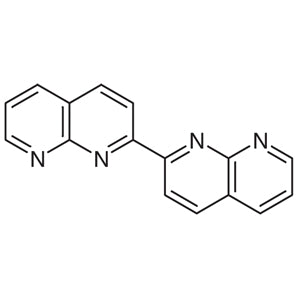
- TCI B1423 69110-33-4 2,2'-Bi(1,8-naphthyridine)
- TCI N0464 254-60-4 1,8-Naphthyridine
- TCI N0462 253-72-5 1,6-Naphthyridine
- TCI M2352 1569-16-0 2-Methyl-1,8-naphthyridine
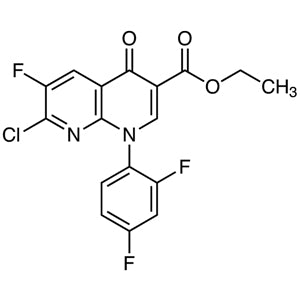
- TCI E1180 100491-29-0 Ethyl 7-Chloro-1-(2,4-difluorophenyl)-6-fluoro-4-oxo-1,4-dihydro-1,8-naphthyridine-3-carboxylate
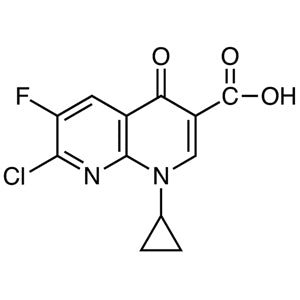
- TCI C2650 100361-18-0 7-Chloro-1-cyclopropyl-6-fluoro-1,4-dihydro-4-oxo-1,8-naphthyridine-3-carboxylic Acid
- Organic synthesis is a primary application for 1,5-Naphthyridine due to its ability to participate in complex chemical reactions that form nitrogen-carbon bonds.
- Medicinal chemistry research benefits from this compound as it is used in the development of bioactive molecules with pharmaceutical applications.
- Pesticide formulation relies on 1,5-Naphthyridine for its role in creating compounds with specific biological activity against target organisms.
- Industrial chemical production utilizes this compound as a building block for the synthesis of various functional materials and chemical intermediates.
- Analytical chemistry applications involve the use of 1,5-Naphthyridine as a standard for spectroscopic and chromatographic analysis due to its distinct chemical properties.
| Brand | TCI |
|---|---|
| CAS number | 254-79-5 |
| Molecular formula | — |
| Purity | — |
| Category | Chemistry > Building Blocks > Heterocyclic Building Blocks |
| Pack sizes | Available in various quantities as per standard laboratory supply |
| Physical form | Solid |
| Storage | Store in a cool, dry place away from direct sunlight |
1,5-Naphthyridine should be stored in a cool, dry environment to maintain its chemical stability. It is recommended to keep the compound in a tightly sealed container to prevent moisture absorption and contamination. Due to its reactivity, it should be handled with care in a well-ventilated laboratory setting. Avoid exposure to strong oxidizing agents or incompatible substances. Proper personal protective equipment, such as gloves and safety goggles, should be worn during handling. The compound’s stability under normal storage conditions ensures long-term usability without significant degradation.
—
Produk Terkait
-
2,2'-Bi(1,8-naphthyridine) TCI B1423
Regular price Rp 7.075.950,00Regular price -
1,8-Naphthyridine TCI N0464
Regular price From Rp 505.050,00Regular price -
1,6-Naphthyridine TCI N0462
Regular price From Rp 1.988.700,00Regular price -
2-Methyl-1,8-naphthyridine TCI M2352
Regular price Rp 2.995.650,00Regular price -
Ethyl7-Chloro-1-(2,4-difluorophenyl)-6-fluoro-4-oxo-1,4-dihydro-1,8-naphthyridine-3-carboxylate TCI E1180
Regular price From Rp 875.700,00Regular price -
7-Chloro-1-cyclopropyl-6-fluoro-1,4-dihydro-4-oxo-1,8-naphthyridine-3-carboxylicAcid TCI C2650
Regular price From Rp 664.650,00Regular price