1,6-Naphthyridine is a heterocyclic compound with a complex structure that plays a crucial role in organic synthesis within laboratory settings. It serves as a fundamental building block in the creation of various organic molecules, particularly those with significant biological activity. This compound is widely used in chemical reactions that require the incorporation of heterocyclic structures, making it an essential tool for researchers in chemistry and pharmaceutical sciences. Its versatility and chemical stability make it a valuable resource for synthetic chemists aiming to develop new compounds with specific functional properties.
The chemical properties of 1,6-Naphthyridine, including its controlled reactivity and ability to undergo substitution and cyclization reactions, make it a preferred choice in laboratory applications. It can react with a variety of reagents such as alkyl halides, acids, and bases, enabling the synthesis of complex molecules with high precision. This adaptability allows it to be used in a wide range of chemical processes, from drug development to industrial chemical production. Its predictable behavior under different reaction conditions ensures reliable results, which is essential for scientific research.
In Indonesian laboratories, 1,6-Naphthyridine is commonly used in chemical and pharmaceutical research projects. It is frequently involved in the synthesis of new compounds, the development of pharmaceuticals, and the study of organic compounds' biological activities. Its availability in the local market ensures that researchers and institutions can easily access this compound for their experimental needs. This makes it an integral part of the laboratory supply chain in Indonesia.
Related TCI products
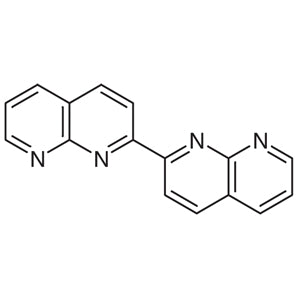
- TCI B1423 69110-33-4 2,2'-Bi(1,8-naphthyridine)
- TCI N0464 254-60-4 1,8-Naphthyridine
- TCI N0401 254-79-5 1,5-Naphthyridine
- TCI M2352 1569-16-0 2-Methyl-1,8-naphthyridine
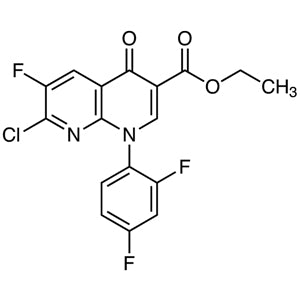
- TCI E1180 100491-29-0 Ethyl 7-Chloro-1-(2,4-difluorophenyl)-6-fluoro-4-oxo-1,4-dihydro-1,8-naphthyridine-3-carboxylate
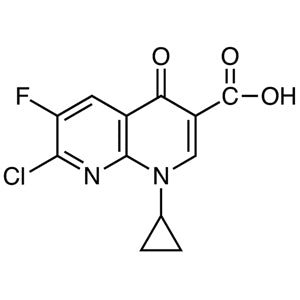
- TCI C2650 100361-18-0 7-Chloro-1-cyclopropyl-6-fluoro-1,4-dihydro-4-oxo-1,8-naphthyridine-3-carboxylic Acid
- Organic synthesis projects benefit from 1,6-Naphthyridine due to its ability to participate in substitution and cyclization reactions, enabling the creation of complex molecular structures.
- Pharmaceutical research utilizes this compound to develop new drugs, as its heterocyclic structure is often found in bioactive molecules with therapeutic potential.
- Industrial chemical production relies on 1,6-Naphthyridine for the synthesis of various compounds used in agriculture and manufacturing, owing to its chemical stability and reactivity.
- Bioactive compound studies leverage the compound’s structural versatility to investigate the biological effects of organic molecules in different experimental models.
- Academic research in chemistry and pharmacology frequently incorporates 1,6-Naphthyridine to explore new synthetic pathways and understand molecular interactions in biological systems.
| Brand | TCI |
|---|---|
| CAS number | 253-72-5 |
| Molecular formula | — |
| Purity | — |
| Category | Chemistry > Building Blocks > Heterocyclic Building Blocks |
| Pack sizes | Available in various quantities as per standard laboratory supply options |
| Physical form | Solid |
| Storage | Store in a cool, dry place away from direct sunlight and moisture |
1,6-Naphthyridine should be stored in a cool, dry environment to maintain its chemical stability and prevent degradation. It is recommended to keep the compound in a tightly sealed container to avoid exposure to moisture and air, which can affect its reactivity. Suitable storage containers include glass or high-density polyethylene (HDPE) vessels that are resistant to chemical interaction. In laboratory settings, it is important to handle the compound with appropriate personal protective equipment (PPE) such as gloves and safety goggles to ensure safe handling. Proper ventilation should be maintained when working with this compound to minimize inhalation risks. Regular inspection of storage conditions is advised to ensure the compound remains in optimal condition for use in research applications.
—
Produk Terkait
-
2,2'-Bi(1,8-naphthyridine) TCI B1423
Regular price Rp 7.075.950,00Regular price -
1,8-Naphthyridine TCI N0464
Regular price From Rp 505.050,00Regular price -
1,5-Naphthyridine TCI N0401
Regular price From Rp 530.250,00Regular price -
2-Methyl-1,8-naphthyridine TCI M2352
Regular price Rp 2.995.650,00Regular price -
Ethyl7-Chloro-1-(2,4-difluorophenyl)-6-fluoro-4-oxo-1,4-dihydro-1,8-naphthyridine-3-carboxylate TCI E1180
Regular price From Rp 875.700,00Regular price -
7-Chloro-1-cyclopropyl-6-fluoro-1,4-dihydro-4-oxo-1,8-naphthyridine-3-carboxylicAcid TCI C2650
Regular price From Rp 664.650,00Regular price