2-Methyl-1,8-naphthyridine is an aromatic heterocyclic compound built from two fused pyridine rings in which both nitrogen atoms occupy the 1 and 8 positions, with an additional methyl group at position 2. In the laboratory it serves a dual role as a heterocyclic building block and as a ligand scaffold, because the face-to-face arrangement of its two nitrogen atoms creates a characteristic bidentate coordination pocket. The 1,8-naphthyridine framework is also a widely recognised core in bioactive compounds and luminescent materials, which makes it a frequent starting point for the design of functional molecules.
The properties that make this compound a preferred choice are the combination of metal-binding ability and ease of derivatisation. As a ligand, the 1,8-naphthyridine framework can bridge two adjacent metal centres or bind a single metal in a bidentate fashion, a feature exploited in coordination chemistry and in C–H bond activation catalysis. At the same time, the methyl group at position 2 is relatively acidic because it sits adjacent to a ring nitrogen, so it can be deprotonated and then condensed with aldehydes or dialkylated to form derivatives with extended frameworks. Its extended aromatic system contributes further to the behaviour of the molecules built from it.
In Indonesian laboratories, this compound is typically encountered in university and institutional research groups working on synthetic organic chemistry, coordination chemistry, and functional materials. It is usually ordered in small research quantities as an intermediate for a specific synthetic route rather than as a bulk consumable, and is handled within the general framework of chemical research practice: weighed out in a fume hood, recorded in a laboratory inventory, and stored alongside other heterocyclic building blocks until the planned reaction step is carried out.
Related TCI products
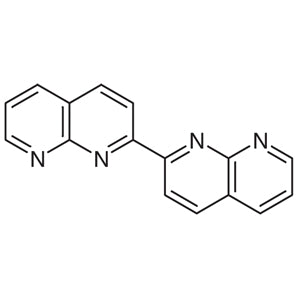
- TCI B1423 69110-33-4 2,2'-Bi(1,8-naphthyridine)
- TCI N0464 254-60-4 1,8-Naphthyridine
- TCI N0462 253-72-5 1,6-Naphthyridine
- TCI N0401 254-79-5 1,5-Naphthyridine
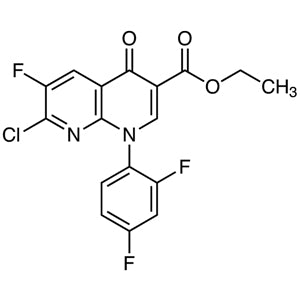
- TCI E1180 100491-29-0 Ethyl 7-Chloro-1-(2,4-difluorophenyl)-6-fluoro-4-oxo-1,4-dihydro-1,8-naphthyridine-3-carboxylate
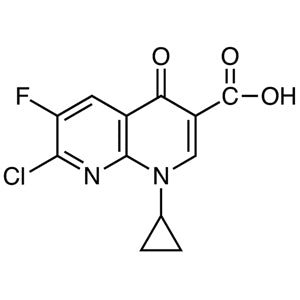
- TCI C2650 100361-18-0 7-Chloro-1-cyclopropyl-6-fluoro-1,4-dihydro-4-oxo-1,8-naphthyridine-3-carboxylic Acid
- Heterocyclic building block synthesis: the 1,8-naphthyridine core provides a ready-made fused bicyclic framework, sparing researchers the effort of constructing the ring system from simpler precursors.
- Ligand preparation for coordination chemistry: the two opposing nitrogen atoms form a defined bidentate coordination pocket, allowing straightforward assembly of metal complexes from a single reagent.
- Dinuclear complex construction: the framework is able to bridge two adjacent metal centres, making it suitable for studies that require two metals held in close proximity.
- C–H bond activation catalysis studies: naphthyridine-based ligands are used in this field precisely because of the metal-binding geometry that this scaffold provides to the catalytic centre.
- Functional and luminescent molecule design: the extended aromatic system and the recognised bioactive naphthyridine core make this a practical starting point for designing new target molecules.
| Brand | TCI |
|---|---|
| CAS number | 1569-16-0 |
| Molecular formula | — |
| Purity | — |
| Category | Chemistry > Building Blocks > Heterocyclic Building Blocks |
| Pack sizes | available in the research-scale pack sizes offered by the manufacturer for this catalogue item |
| Physical form | — |
| Storage | store in a cool, dry place in a tightly closed container, following the manufacturer's label and safety data sheet |
- Product code: M2352
Store the product in its original tightly closed container in a cool, dry, well-ventilated area, away from direct sunlight, moisture, and sources of ignition, and keep it separated from strong oxidising agents. Use chemically compatible glass or amber glass containers for any aliquots, and label every transfer clearly with the compound name and CAS number. Handle the material in a working fume hood while wearing a laboratory coat, safety goggles, and chemically resistant gloves, avoiding inhalation of dust and direct skin contact. Always consult the manufacturer's safety data sheet before use, and dispose of residues and contaminated materials through the laboratory's chemical waste procedure.
—
Produk Terkait
-
2,2'-Bi(1,8-naphthyridine) TCI B1423
Regular price Rp 7.075.950,00Regular price -
1,8-Naphthyridine TCI N0464
Regular price From Rp 505.050,00Regular price -
1,6-Naphthyridine TCI N0462
Regular price From Rp 1.988.700,00Regular price -
1,5-Naphthyridine TCI N0401
Regular price From Rp 530.250,00Regular price -
Ethyl7-Chloro-1-(2,4-difluorophenyl)-6-fluoro-4-oxo-1,4-dihydro-1,8-naphthyridine-3-carboxylate TCI E1180
Regular price From Rp 875.700,00Regular price -
7-Chloro-1-cyclopropyl-6-fluoro-1,4-dihydro-4-oxo-1,8-naphthyridine-3-carboxylicAcid TCI C2650
Regular price From Rp 664.650,00Regular price