
![1,5-Dihydropyrrolo[3,2-d]pyrimidine-2,4-dione (CAS 65996-50-1) - TCI D5183 - AMI Scientific](http://amiscientific.com/cdn/shop/files/TCI2510D5183.jpg?v=1767108488&width=1946)
![1,5-Dihydropyrrolo[3,2-d]pyrimidine-2,4-dione (CAS 65996-50-1) - TCI D5183 - AMI Scientific](http://amiscientific.com/cdn/shop/files/TCI2510D5183.jpg?v=1767108488&width=1445)
1,5-Dihydropyrrolo[3,2-d]pyrimidine-2,4-dione is a chemical compound widely used in pharmaceutical research and drug discovery. It serves as a key building block in the synthesis of active pharmaceutical ingredients, playing a crucial role in the development of molecules with specific biological activities. This compound is commonly employed in experimental settings where precise chemical reactions are required to construct complex molecular structures. Its versatility makes it an essential tool for researchers aiming to explore new therapeutic agents and optimize existing drug formulations.
The compound's stability and controlled reactivity make it a preferred choice for laboratory applications. It exhibits a unique heterocyclic structure that allows it to participate in various chemical reactions, particularly those involving electron donation and acceptance. These properties enable it to act as a versatile intermediate in synthetic pathways. Its ability to interact with different reagents under specific conditions enhances its utility in creating compounds with desired pharmacological profiles.
In Indonesian laboratories, this compound is frequently used in research projects focused on drug development and pharmacological studies. It is commonly found in academic and industrial settings where scientists are working on synthesizing new compounds or modifying existing ones. Its reliability and consistency in performance make it a trusted component in experimental workflows, supporting high-precision chemical research.
Related TCI products
- TCI D3969 850583-75-4 3,6-Di(2-thienyl)-2,5-dihydropyrrolo[3,4-c]pyrrole-1,4-dione
- TCI D3743 54660-00-3 3,6-Diphenyl-2,5-dihydropyrrolo[3,4-c]pyrrole-1,4-dione
- TCI D6462 657428-42-7 tert-Butyl 4,6-Dihydropyrrolo[3,4-c]pyrazole-5(1H)-carboxylate
- TCI M2760 739364-95-5 2-Methylpyrazolo[1,5-a]pyrimidine-6-carboxylic Acid
- TCI D4318 55921-65-8 2,6-Diamino-4-(pyrrolidin-1-yl)pyrimidine 1-Oxide
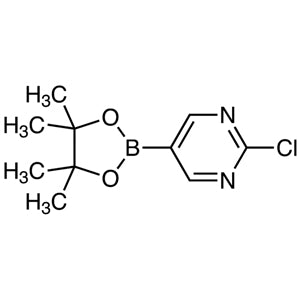
- TCI C3436 1003845-08-6 2-Chloro-5-(4,4,5,5-tetramethyl-1,3,2-dioxaborolan-2-yl)pyrimidine
- Pharmaceutical Development: This compound is ideal for drug discovery as it serves as a building block for synthesizing active pharmaceutical ingredients with targeted biological activities.
- Biochemical Research: Its unique heterocyclic structure makes it suitable for studying molecular interactions and reaction mechanisms in biochemical experiments.
- Organic Synthesis: The controlled reactivity of the compound allows it to be used in complex organic synthesis pathways, enabling the creation of diverse chemical structures.
- Drug Optimization Studies: Researchers use it to modify existing drug molecules, enhancing their efficacy and reducing side effects through structural alterations.
- Research and Development: It is a key reagent in R&D projects where precise chemical reactions are required to develop new therapeutic agents.
| Brand | TCI |
|---|---|
| CAS number | 65996-50-1 |
| Molecular formula | — |
| Purity | — |
| Category | Chemistry > Pharmaceutical Development and Drug Discovery Research Reagents > Building Blocks for Pharmaceutical Ingredients (for Research and Experimental Use) |
| Pack sizes | Available in various quantities suitable for both small-scale and large-scale research applications |
| Physical form | Solid, typically in crystalline or powder form |
| Storage | Store in a cool, dry place away from light and moisture |
This compound should be stored in a cool, dry environment, away from direct sunlight and sources of heat. It is recommended to keep it in airtight containers to prevent moisture absorption and maintain its chemical integrity. Due to its chemical properties, it should be handled with appropriate personal protective equipment, such as gloves and safety goggles, to ensure laboratory safety. It is important to avoid exposure to incompatible substances and to store it in a well-ventilated area. Regular monitoring of storage conditions is advised to ensure the compound remains stable and suitable for use in research applications.
—
Product Categories
Produk Terkait
-
3,6-Di(2-thienyl)-2,5-dihydropyrrolo[3,4-c]pyrrole-1,4-dione TCI D3969
Regular price Rp 2.702.700,00Regular priceRp 1.905.750,00Sale price Rp 2.702.700,00 -
3,6-Diphenyl-2,5-dihydropyrrolo[3,4-c]pyrrole-1,4-dione TCI D3743
Regular price Rp 2.942.100,00Regular priceRp 2.072.700,00Sale price Rp 2.942.100,00 -
tert-Butyl4,6-Dihydropyrrolo[3,4-c]pyrazole-5(1H)-carboxylate TCI D6462
Regular price Rp 2.227.050,00Regular priceRp 1.572.900,00Sale price Rp 2.227.050,00 -
2-Methylpyrazolo[1,5-a]pyrimidine-6-carboxylicAcid TCI M2760
Regular price Rp 2.650.200,00Regular priceRp 1.869.000,00Sale price Rp 2.650.200,00 -
2,6-Diamino-4-(pyrrolidin-1-yl)pyrimidine1-Oxide TCI D4318
Regular price Rp 1.298.850,00Regular priceRp 924.000,00Sale price Rp 1.298.850,00 -
2-Chloro-5-(4,4,5,5-tetramethyl-1,3,2-dioxaborolan-2-yl)pyrimidine TCI C3436
Regular price Rp 1.801.800,00Regular priceRp 1.275.750,00Sale price Rp 1.801.800,00 -
6-Methyleneandrost-4-ene-3,17-dione TCI M3121
Regular price Rp 1.087.800,00Regular priceRp 775.950,00Sale price Rp 1.087.800,00 -
[1,2,4]Triazolo[1,5-a]pyrimidine TCI T4348
Regular price Rp 2.544.150,00Regular priceRp 1.794.450,00Sale price Rp 2.544.150,00
![3,6-Di(2-thienyl)-2,5-dihydropyrrolo[3,4-c]pyrrole-1,4-dione (CAS 850583-75-4) - TCI D3969 - AMI Scientific](http://amiscientific.com/cdn/shop/files/TCI2510D3969.jpg?v=1768817986&width=533)
![3,6-Diphenyl-2,5-dihydropyrrolo[3,4-c]pyrrole-1,4-dione (CAS 54660-00-3) - TCI D3743 - AMI Scientific](http://amiscientific.com/cdn/shop/files/TCI2510D3743.jpg?v=1767106482&width=533)
![tert-Butyl 4,6-Dihydropyrrolo[3,4-c]pyrazole-5(1H)-carboxylate (CAS 657428-42-7) - TCI D6462 - AMI Scientific](http://amiscientific.com/cdn/shop/files/TCI2510D6462.jpg?v=1767110245&width=533)
![739364-95-5 2-Methylpyrazolo[1,5-a]pyrimidine-6-carboxylic Acid - AMI Scientific](http://amiscientific.com/cdn/shop/files/TCI2510M2760.jpg?v=1767127156&width=533)


![275-02-5 [1,2,4]Triazolo[1,5-a]pyrimidine - AMI Scientific](http://amiscientific.com/cdn/shop/files/TCI2510T4348.jpg?v=1767145111&width=533)