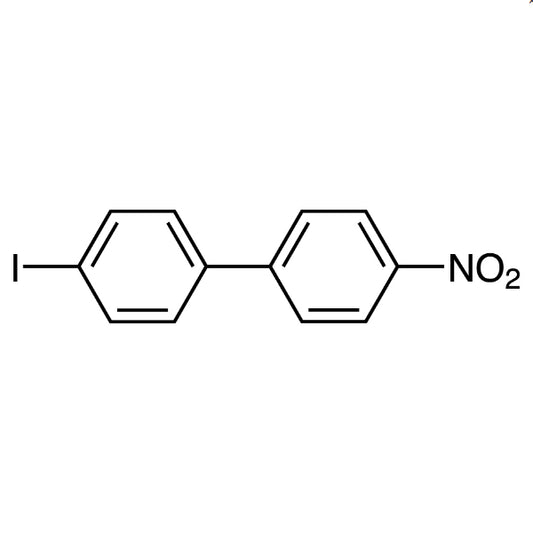
4,4'-Dibromo-2-nitrobiphenyl is a chemical compound widely used in laboratory settings for the synthesis of complex molecules. As a building block in organic chemistry, it plays a crucial role in the development of new materials and pharmaceutical compounds. This compound is commonly found in chemical laboratories, particularly in research focused on organic synthesis and material science. Its versatility makes it a valuable resource for scientists seeking to construct molecules with specific structural and functional properties.
The compound's unique chemical properties make it a preferred choice in laboratory applications. It exhibits stability under certain chemical conditions and is capable of participating in various substitution and electrophilic reactions. The biphenyl structure provides a stable base, while the bromo and nitro groups introduce reactivity that can be precisely controlled. These characteristics allow researchers to tailor the compound for specific synthetic pathways, ensuring predictable outcomes in complex chemical processes.
In Indonesian laboratories, 4,4'-Dibromo-2-nitrobiphenyl is used in a variety of chemical research projects. It is particularly relevant in the synthesis of pharmacological compounds and advanced materials. Its application extends to both academic and industrial research, where controlled reactivity and predictable molecular behavior are essential. The compound is a key component in the development of new chemical products and scientific innovations in the region.
Related TCI products
- Organic synthesis where controlled reactivity and predictable molecular behavior are essential for constructing complex structures.
- Material science research to develop new compounds with specific functional properties and structural characteristics.
- Pharmaceutical research for the synthesis of drug molecules requiring precise chemical modifications and reactivity.
- Chemical reaction studies focusing on substitution and electrophilic mechanisms in biphenyl derivatives.
- Industrial chemical development for the creation of advanced materials and specialty chemicals.
| Brand | TCI |
|---|---|
| CAS number | 439797-69-0 |
| Molecular formula | — |
| Purity | — |
| Category | Chemistry > Building Blocks > Non-Heterocyclic Building Blocks |
| Pack sizes | Available in standard laboratory quantities as per supplier specifications |
| Physical form | Solid, crystalline appearance |
| Storage | Store in a cool, dry place away from direct sunlight and incompatible materials |
This compound should be stored in a cool, dry environment to maintain its chemical stability. It is recommended to use airtight containers to prevent exposure to moisture and air, which may affect its reactivity. Due to its bromo and nitro groups, it is important to handle the compound with appropriate personal protective equipment, including gloves and safety goggles. Avoid contact with incompatible substances such as strong acids or bases. Keep the material away from heat sources and ensure proper ventilation in the laboratory to minimize any potential risks associated with its chemical nature.
—
Produk Terkait
-
4'-Nitrobiphenyl-4-carboxaldehyde TCI N0967
Regular price From Rp 3.710.700,00Regular price -
4-Hydroxy-3-nitrobiphenyl TCI N0560
Regular price From Rp 2.757.300,00Regular price -
4-Iodo-4'-nitrobiphenyl TCI I0537
Regular price From Rp 2.809.800,00Regular price -
4-Hydroxy-2'-nitrobiphenyl TCI H0753
Regular price From Rp 3.155.250,00Regular price -
2,4-Dichloro-4'-nitrobiphenylEther TCI D3912
Regular price Rp 6.943.650,00Regular price -
1,2-Dibromo-4-nitrobenzene TCI D5486
Regular price From Rp 689.850,00Regular price -
1,3-Dibromo-5-nitrobenzene TCI D5383
Regular price Rp 2.625.000,00Regular price -
2,4-Dibromo-6-nitrophenol TCI D5323
Regular price Rp 1.881.600,00Regular price